Array Waveguides Heat Up, SRG Capacity Expands, VHG Commercializes: Waveguide Competition Enters a New Phase
阵列升温、SRG扩产、VHG落地,2026年光波导竞争进入新阶段
Topics and contents
Topic
On this page
Yan Tuoluo reviews the 2026 optical waveguide landscape: array waveguides gain momentum, SRG diffractive waveguides expand production, and VHG volume holographic gratings reach commercialization.
A Waveguide Revolution Is Underway
By Wickey, VR Gyro
As the core optical component linking microdisplays with the human visual system, the optical waveguide is a key technology path for making AR glasses lightweight and suitable for everyday wear, distinguishing them from Birdbath and hybrid waveguide solutions. Its core function is to efficiently transmit light generated by the microdisplay and project it in front of the user's eyes.
By coupling elements and optical principles, optical waveguides fall mainly into two categories: geometric waveguides and diffractive waveguides. Geometric waveguides include sawtooth waveguides and arrayed waveguides, which use geometric reflection to propagate light and expand the eyebox, offering advantages in full-color display, color uniformity and optical efficiency.
Diffractive waveguides use gratings for light in-coupling, pupil expansion and out-coupling, mainly covering technologies such as surface relief gratings (SRG) and volume holographic gratings (VHG). Thanks to their thin and light form factor, high design freedom and relatively mature manufacturing ecosystem, SRGs have become one of the most widely used waveguide solutions in consumer AR devices. VHG, meanwhile, has attracted growing attention in recent years for its high diffraction efficiency, thin and transparent form factor and potential for low-cost manufacturing.
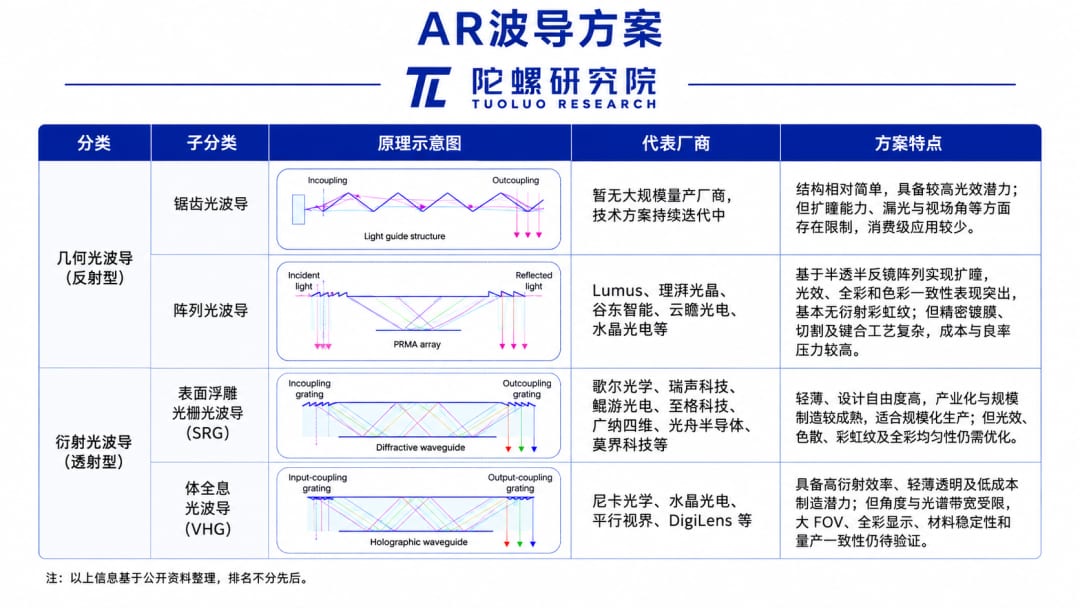
Image source: Gyro Research Institute
As AI glasses with displays move faster toward commercialization, the optical waveguide industry is entering a new round of technology iteration and capacity expansion. Since 2026, optics makers including Zhige Technology and Guangna Siwei have closed new funding rounds, while new waveguide production lines built by companies such as Nika Optics and Yunzhan Optoelectronics have come online one after another. At the same time, competition among different technical approaches has extended to full-color display, optical efficiency, thin-and-light design, manufacturing yield and volume delivery.
01
Array waveguides heat up again as domestic supply chain expands capacity
The launch of Meta Ray-Ban Display last year put array waveguides back in the market spotlight. It is also one of the waveguide approaches with the most mature industrialization to date.
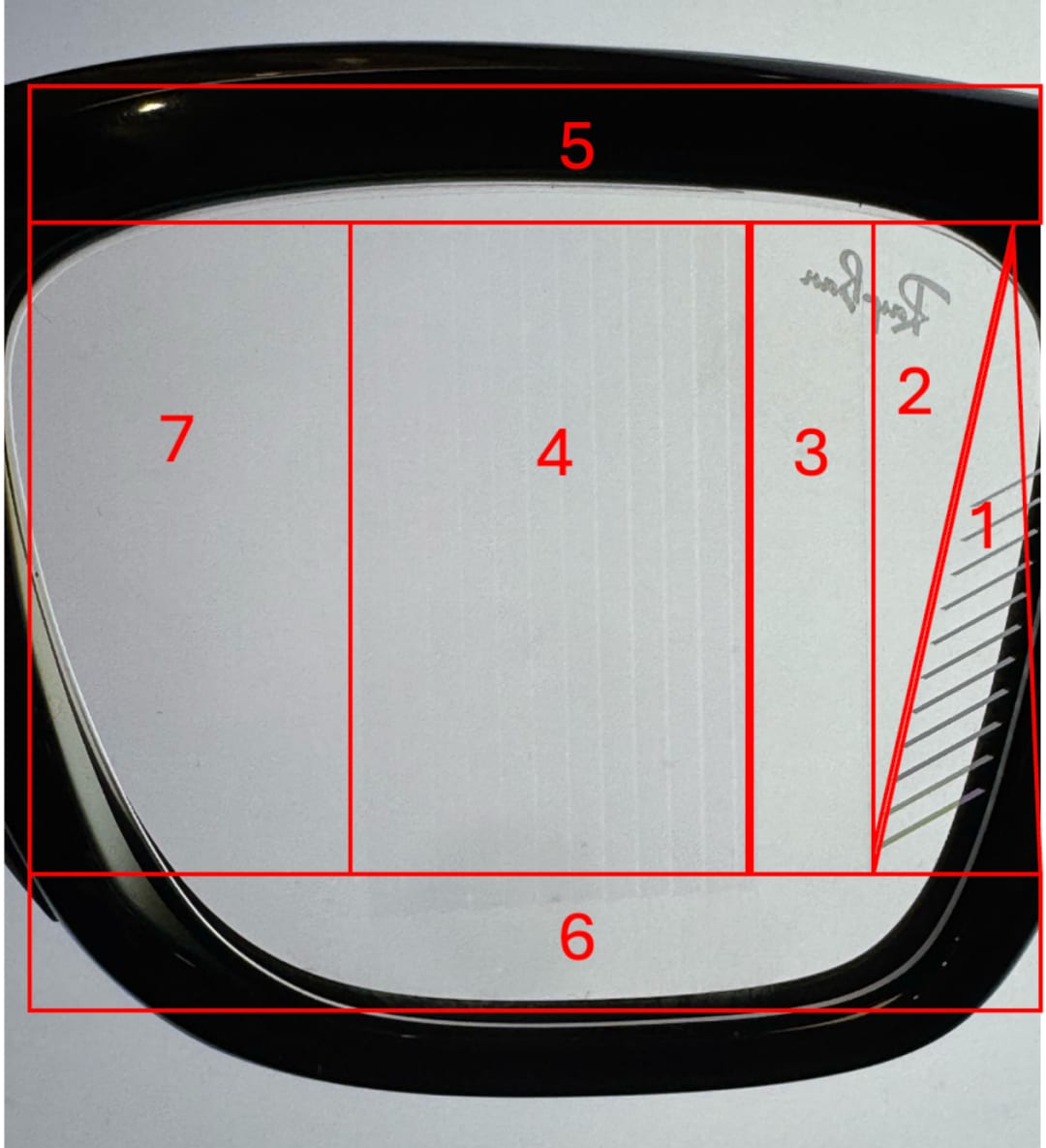
Image source: Optical Display Watch
The lens zoning diagram of Meta Ray-Ban Display, dissected by Optical Display Watch, illustrates how array waveguides work. Light from the LCoS microdisplay optical engine enters the waveguide and propagates through the glass by total internal reflection. It is first homogenized and mixed by the mixing element in Zone 3, then reaches the out-coupling area in Zone 4, where it is reflected and coupled out step by step by a mirror array. Finally, a built-in multilayer half-mirror array in the eye-expansion zone of Zone 1 enlarges the exit pupil, enabling near-eye display with a wide field of view and high uniformity.
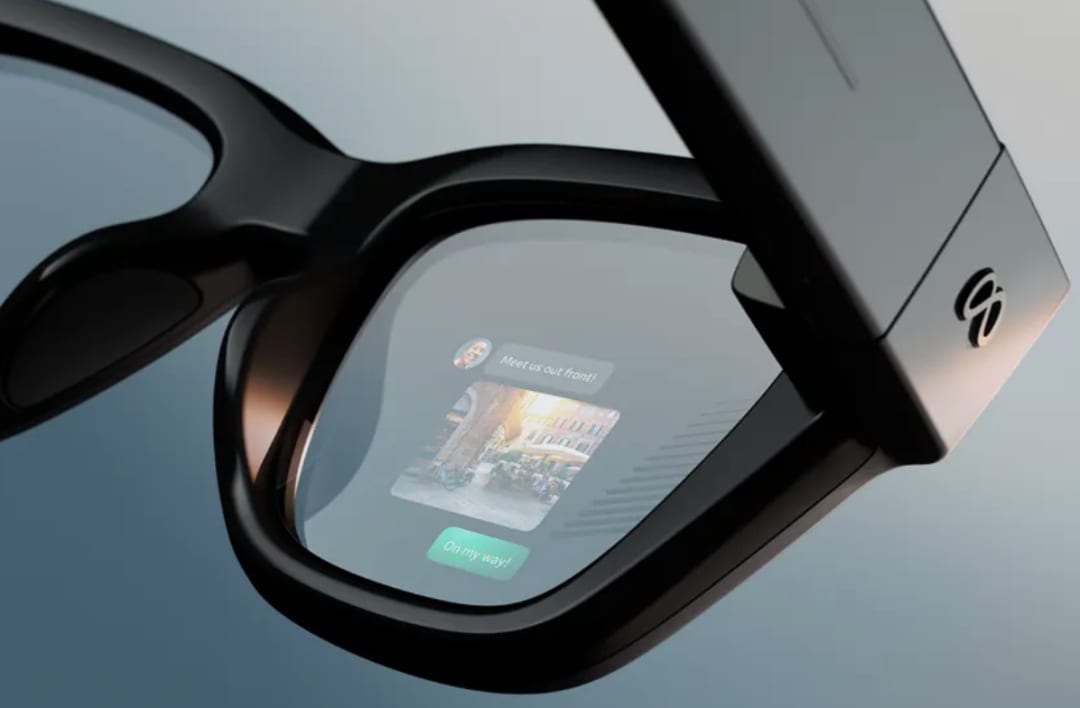
Image source: Meta
Meta Ray-Ban Display uses a 2D arrayed waveguide solution. Its optical architecture is similar to 2D geometric waveguide schemes such as Lumus Z-Lens, using light-mixing elements and mirror arrays to achieve bidirectional pupil expansion, forming a larger rectangular eyebox that keeps the image intact even with significant eye movement. This differs from 1D schemes, which rely on a single set of mirror arrays for pupil expansion in only one direction, resulting in a narrow, elongated eyebox.
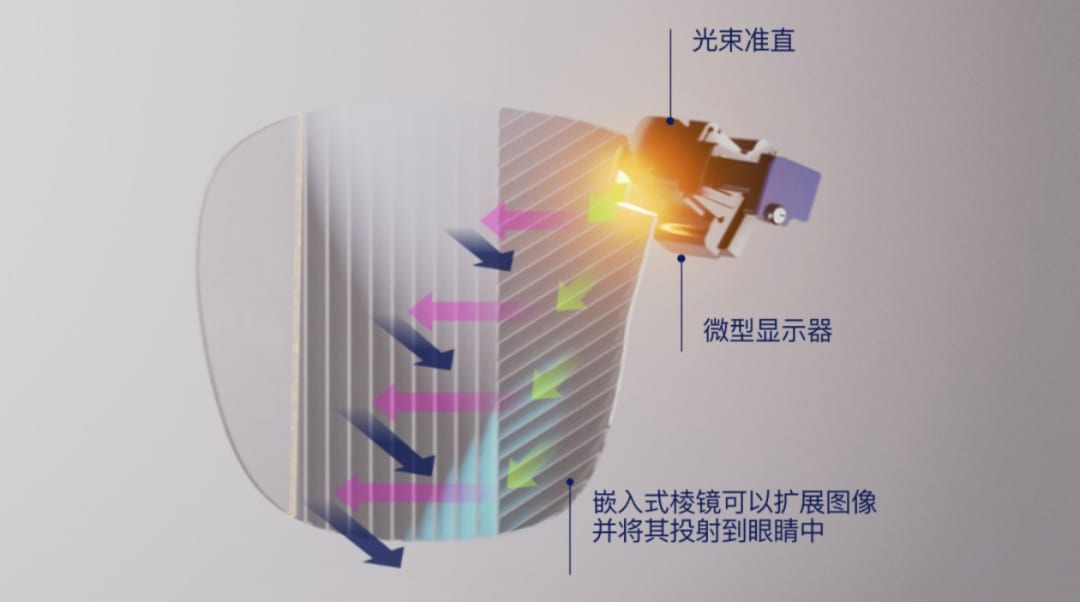
Image source: Lumus
Arrayed waveguides are based on the reflection principle of light and do not rely on nano-gratings, fundamentally eliminating diffraction dispersion. This makes full color easier to achieve, and chromatic aberration control is also better than in diffractive solutions, where ΔE remains 0.02 even after optimization. Moreover, the rainbow-like fringing common in diffractive waveguides is almost nonexistent in arrayed waveguides. Because the optical path is simpler, light efficiency is high; relevant data indicate a light leakage rate below 5%, with light efficiency utilization of 5%-10% for 1D arrayed waveguides and around 5% for 2D arrayed waveguides. Higher light efficiency utilization helps reduce device power consumption and extend battery life.
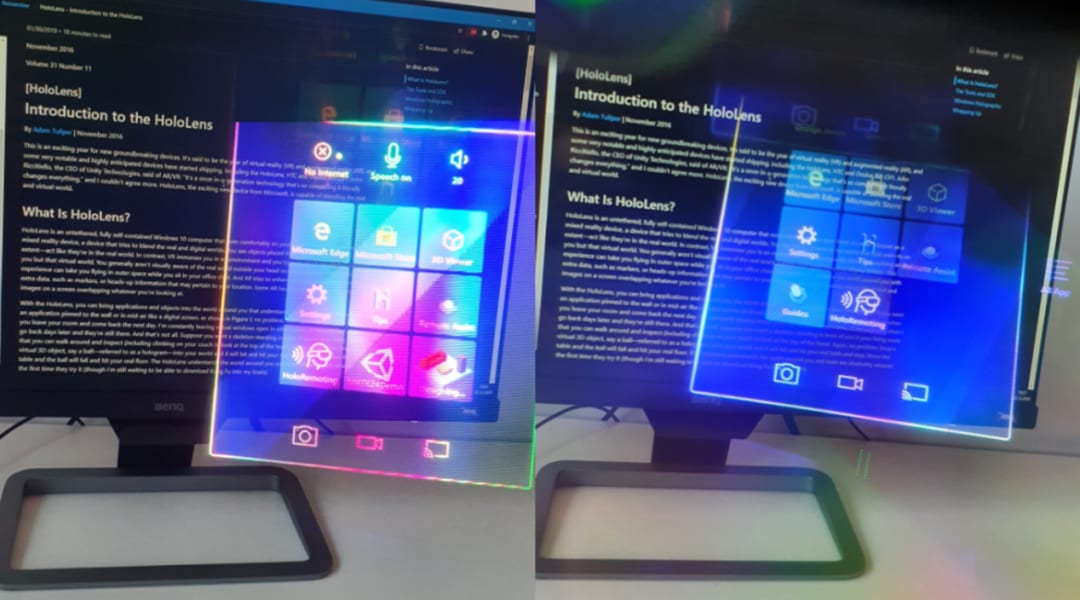
Left: "Rainbow effect" in diffractive waveguides; right: arrayed waveguides
Specifically, arrayed waveguides are based on conventional geometric optics principles, and their fabrication relies mainly on relatively mature cold-working processes. The main steps include coating, bonding, cutting/grinding, injection molding, and inspection. Coating is the key to forming the "semi-reflective, semi-transmissive" mirror array, and coating precision directly determines the beam-splitting ratio and exit pupil uniformity. In addition, due to the glass structure, the lenses can show stripe-like textures visible to the naked eye at certain angles.

Image source: Huaxi Securities Research Institute
Arrayed waveguides have already entered mass production, but they remain concentrated in industrial AR and high-end products. In the consumer market, apart from Meta Ray-Ban Display, the INMO Air3 uses a LiPERS arrayed waveguide solution paired with binocular full Micro-OLED displays; most other mass-produced devices featuring arrayed waveguides target B2B scenarios, with representative models including Rokid Glass 2, Shixiang G510, and Shoujing MG1, all using LiPERS arrayed waveguides, as well as Lenovo ThinkReality A6 with a Lumus optical solution.

Image source: INMO
Turning to the domestic supply chain, LiPERS announced the completion of its B+++ funding round in June this year. The company's new headquarters and production base under construction in Kunshan is expected to begin production in September 2026, with annual capacity set to exceed 1 million units once completed. Gudong Intelligence had also announced the start of mass production of its self-developed W2D30 two-dimensional arrayed waveguide. The waveguide sheet is about 0.8 mm thick, weighs about 4 g per piece, and has an average transmittance of over 95%.
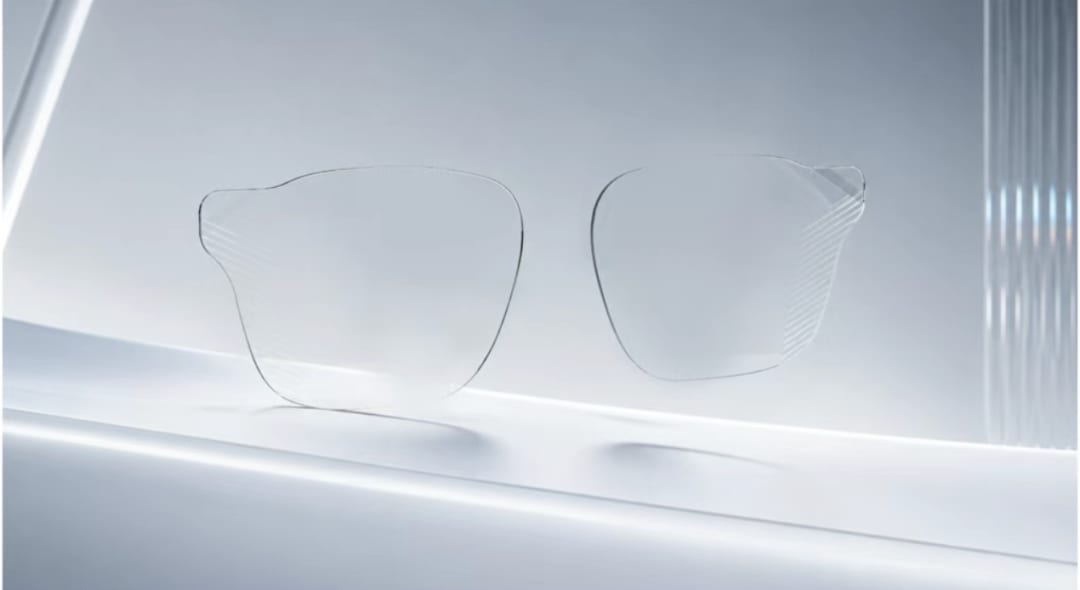
Image source: Gudong Intelligence
In addition to the companies mentioned above, Yunzhan Photonics, founded in 2024, announced in July 2026 that its full-process production line for arrayed optical waveguides had officially entered operation, with a designed annual capacity of 200,000 wafers. Its "Cicada Wing" series of arrayed optical waveguide products are about 0.8–1 mm thick and weigh about 3–4 g, covering AR glasses and automotive HUD applications. The entry of new players adds a few market variables to this long-dormant optical technology direction.
Overall, arrayed waveguides offer clear advantages in full-color display, color uniformity, optical efficiency and stray-light control, and Meta's adoption has reopened the possibility of their entry into the consumer market. However, precision coating, bonding and 2D pupil expansion still bring high manufacturing complexity and yield requirements.
02
SRG capacity keeps expanding; etching processes and SiC emerge as new variables
Unlike arrayed waveguides, which expand the eyebox through mirror reflection, SRGs modulate light using surface micro- and nano-gratings, making them better suited to thin form factors and wafer-level manufacturing. They have therefore become one of the most widely used waveguide solutions in consumer AR glasses.
Where arrayed waveguides require multiple semi-reflective layers to be fabricated inside the glass, SRGs modulate light through surface micro- and nano-gratings. The simpler structure offers greater potential for thinness and lightness and is easier to adapt to conventional eyeglass form factors. SRG has thus become a major technology route for consumer AR glasses. According to Tuoluo Research Institute data, of the 31 AR glasses featuring waveguide solutions released in the first half of 2026, about 18 used SRG diffractive waveguides.
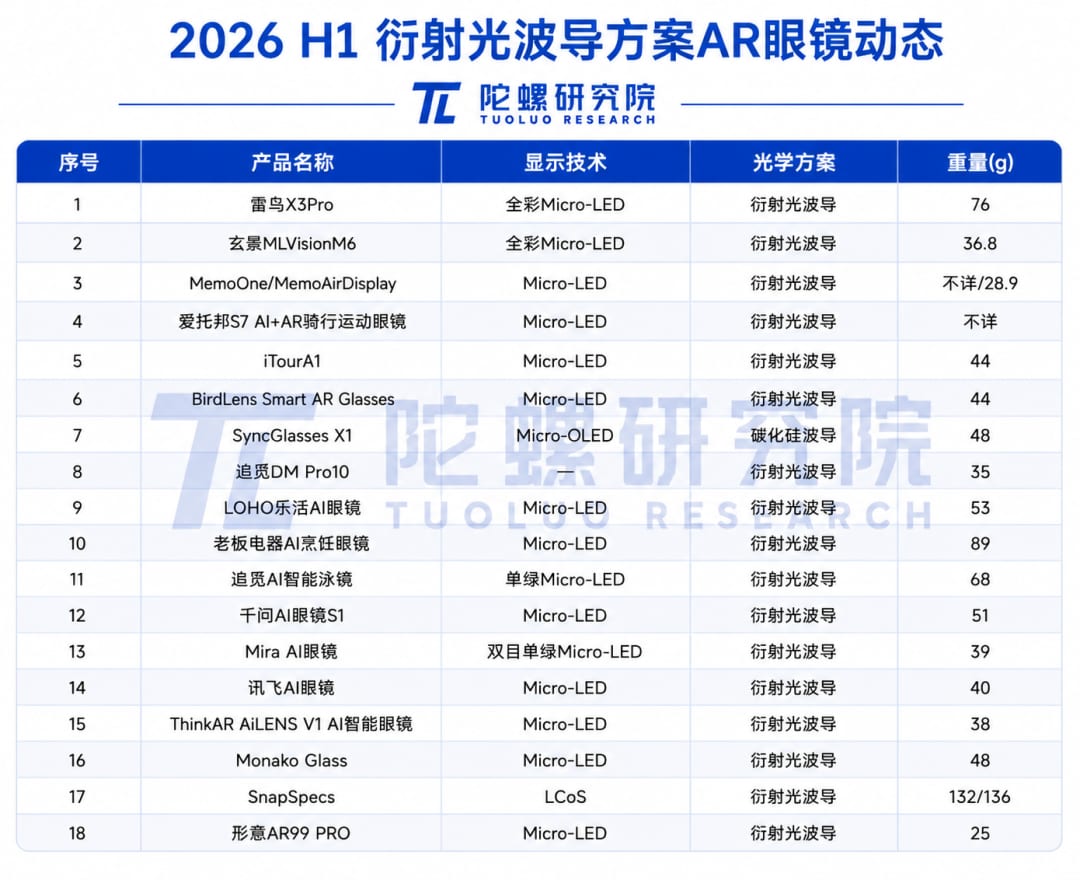
Image source: Tuoluo Research Institute
In principle, an SRG is a periodic micro- and nano-scale grating structure fabricated on the surface of a glass, resin, or silicon carbide (SiC) substrate using processes such as nanoimprint lithography and photolithography. When light emitted by the microdisplay enters the waveguide, the input grating couples the light into the substrate, where it propagates via total internal reflection. The output grating then couples the light out, while eye-expansion structures enlarge the user's viewing area.
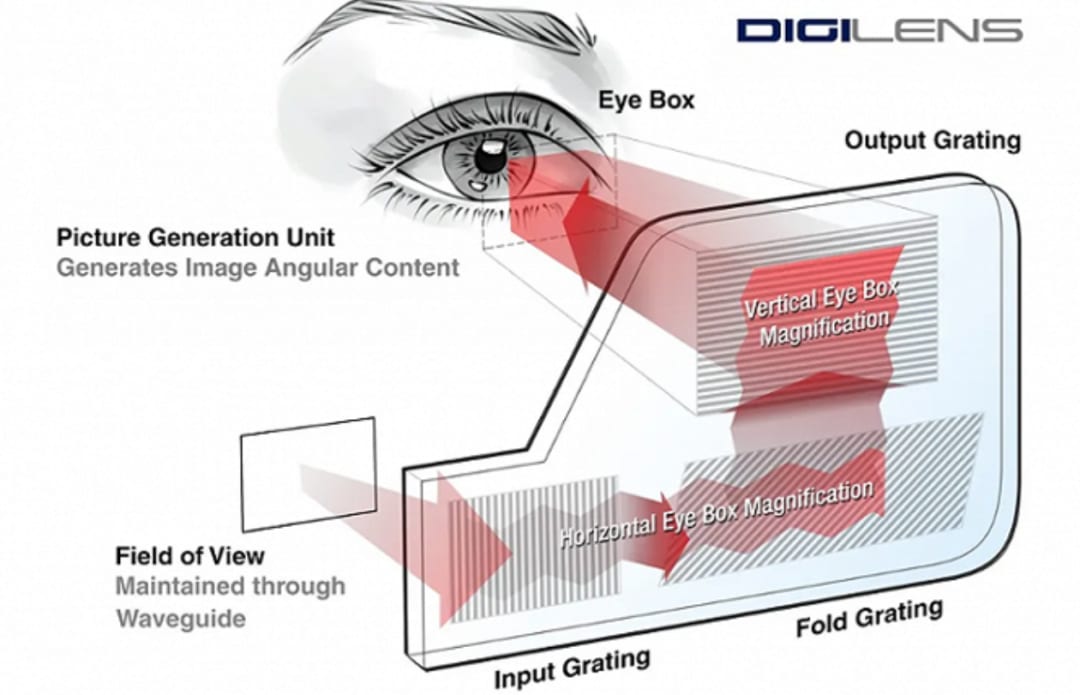
Image source: Digilens
In practical engineering applications, grating structures come in more than one form, and their microscopic geometry directly determines diffraction efficiency, field of view (FOV), and eyebox. Using NIL (nanoimprint lithography), grating structures of various profiles can be produced, including the rectangular, trapezoidal, and quasi-sinusoidal shapes shown below. Parameters such as sidewall angle, duty cycle, and etch depth are the key factors affecting optical performance.
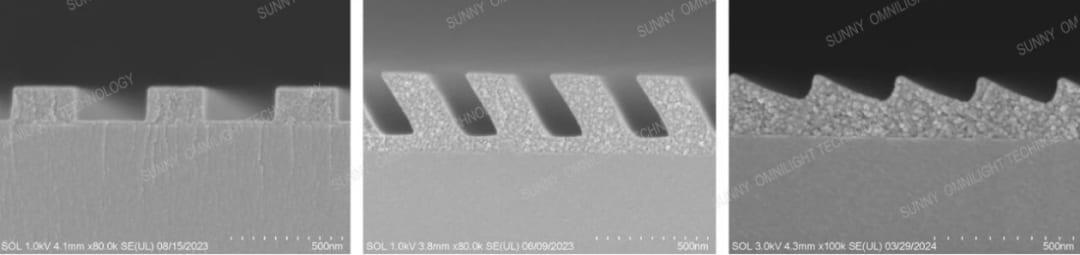
Image source: Sunny Aolei Technology (several typical grating structures fabricated by NIL)
Because SRG diffractive waveguides use grating structures to diffract and steer light of different wavelengths, different colors undergo varying degrees of offset during propagation, leading to the rainbow effect and color uniformity issues. Achieving high-quality full-color display has therefore remained the core challenge for the SRG approach.
Today, many lightweight display glasses in the industry still use monochrome green Micro-LEDs. On the one hand, the human eye is highly sensitive to the green band, making it easier to control power consumption at the same perceived brightness. On the other hand, monochrome display avoids the complexity of simultaneously calibrating colors and matching gratings for multiple RGB wavelengths in a diffractive waveguide, striking a good balance among display quality, cost, and mass-production difficulty.
However, as grating design and fabrication processes continue to mature, some manufacturers are also trying to break through the bottlenecks of full-color SRG displays. For example, the RayNeo X3 Pro features a full-color "Firefly optical engine," using a single-layer etched diffractive optical waveguide solution co-developed with Applied Materials, combined with nano-lithography etching processes, achieving a peak brightness of 6,000 nits. The company claims a rainbow artifact anti-interference efficiency of 95%, making it one of the few AR glasses products to adopt a binocular full-color SRG diffractive optical waveguide solution.

Image source: RayNeo
Beyond new processes, new materials are also drawing significant attention. Recently, the Nimbo X1 made its official debut, adopting a Guangna SiWei SiC full-color diffractive optical waveguide combined with a Micro-LED solution. The optical engine volume is about 0.40cc, peak brightness reaches 1,500 nits, and the refresh rate is 60Hz, with mass production expected to begin in October. Whether in end products or the core supply chain, the industry is continuing to explore the path toward full color.
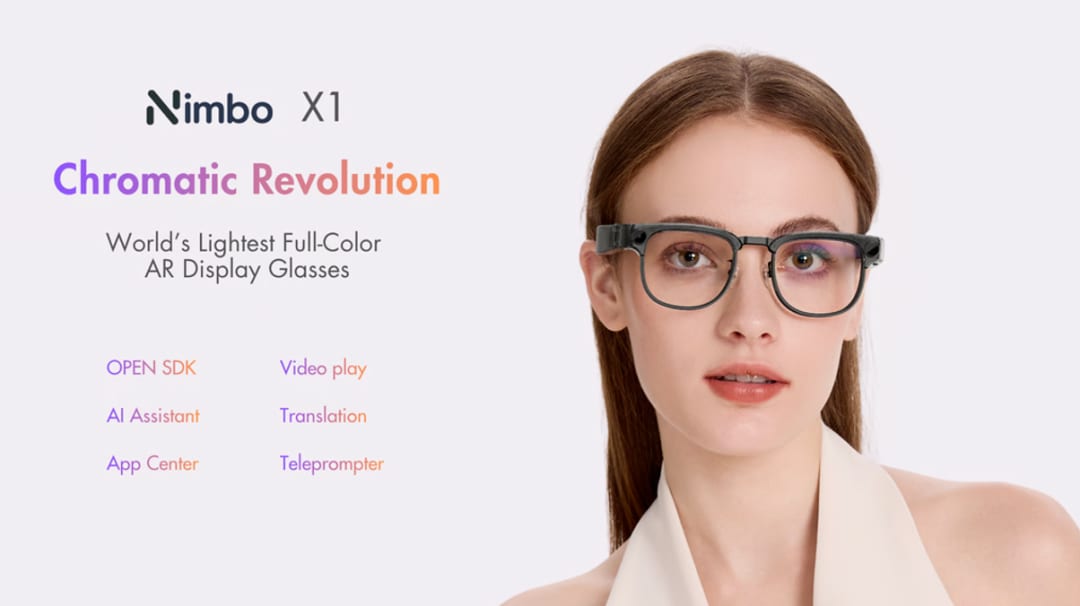
Image source: Nimbo
Compared with conventional optical glass, SiC has a refractive index of 2.6-2.7, nearly twice that of ordinary glass, providing greater freedom in grating structure design and helping to achieve a wider field of view (FOV). Its excellent thermal conductivity can also ease heat dissipation pressure in high-brightness display systems, laying a material foundation for future high-brightness AR displays.
Of course, SiC is not without trade-offs. Its material cost, wafer processing difficulty, and etching precision requirements are significantly higher than those of conventional glass, and its high hardness further increases manufacturing difficulty. Previously, the Coray Air2, a full-color AR glasses product with SiC waveguides, launched at a price of 4,999 yuan.
Rising SiC market demand is also forcing a comprehensive upgrade of the supply chain. In June 2026, Lante Optics raised more than 500 million yuan to build an AR optics industrialization project, which is expected to add 50,000 12-inch silicon carbide wafer units of capacity once operational. In the same month, AAC Technologies announced that the mass-production yield of its SRG diffractive optical waveguides has stabilized above 80%, with its existing plants planned for an annual capacity of 1 million units; high-end solutions using SiC substrates can achieve an ultra-wide 52° field of view (FOV), and some projects have entered volume ramp-up delivery, with large-scale shipments expected in the second half of 2026.
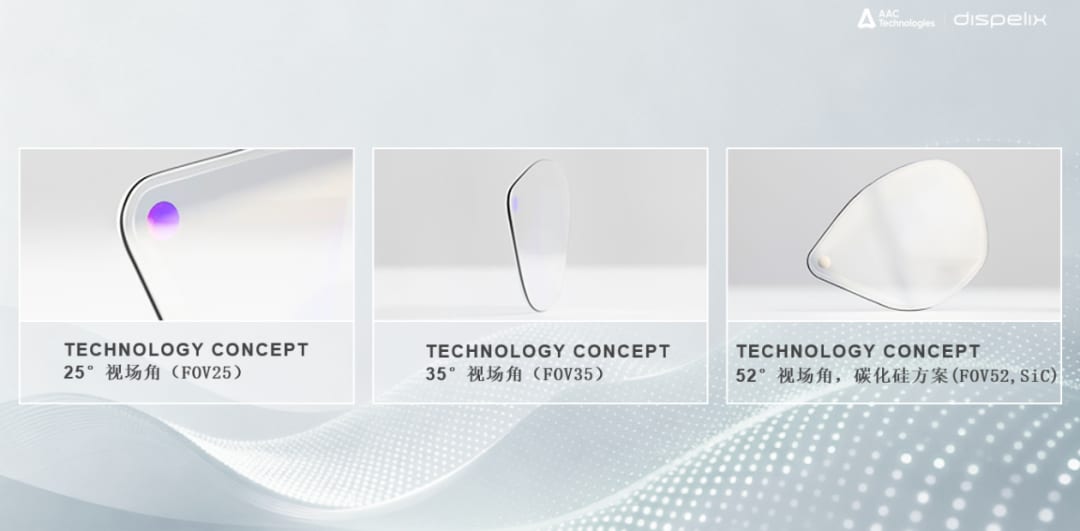
Image source: AAC Technologies
Meanwhile, Goertek Optical's subsidiary Goertek Aolai Optical has started production in Shanghai Lingang on a 12-inch transparent substrate wafer project with total investment of 3.28 billion yuan, whose SiC optical waveguide modules achieve a 50° FOV. In addition, Guangna Siwei recently raised 200 million yuan to develop full-color SiC optical waveguides; its C45C product has entered mass production in Guangyu Gaowei's Coray Air2. With new production lines under construction, the company expects its full-line annual delivery capacity to rise to 1 million–1.5 million sets in 2026. According to industry chain sources, Mude Weina's phase-one line already has capacity of 5,000 wafers per month for 8-inch wafer imprinting and etched waveguides, and will advance phase-two construction. In January this year, the company unveiled full-color 30° and 50° silicon carbide waveguide samples, accelerating the mass production of SiC waveguide solutions.
These capacity expansion moves show that SRG competition is extending further toward manufacturing. Grating design remains important, but once scale production begins, substrate materials, wafer size, etching precision, mass-production yield and customer delivery capability become another set of metrics that determine a supplier's position.
However, although SRG diffractive optical waveguides are moving toward industrialization at an accelerating pace, their technical challenges remain unresolved. Most SRG solutions still have optical efficiency in the single-digit percentage range, placing higher brightness demands on microdisplays such as Micro-LED and LCoS. Diffractive optical waveguides also suffer from forward and reverse grating leakage, allowing bystanders to see colorful reflections from the lenses in bright environments and compromising private displays; further process optimization is still needed.
03
Mass-Production Line Ready, Volume Holographic Optical Waveguides Earn Their Ticket
Compared with the arrayed waveguides already commercialized by major players and the diffractive optical waveguides (SRG) widely adopted in the consumer market, volume holographic grating (VHG) waveguides are also beginning to see limited trials.
VHG forms a three-dimensional periodic grating structure inside a holographic photosensitive polymer medium through laser interference. Unlike SRG, which etches the grating onto the lens surface, VHG keeps the grating structure hidden within the material, using the volume grating to couple light in, guide it through, and couple it out. Today, VHG mainly encompasses monochromatic VHG, multilayer full-color VHG, and routes such as PVG (Polarization Volume Grating) based on polarization volume holography.
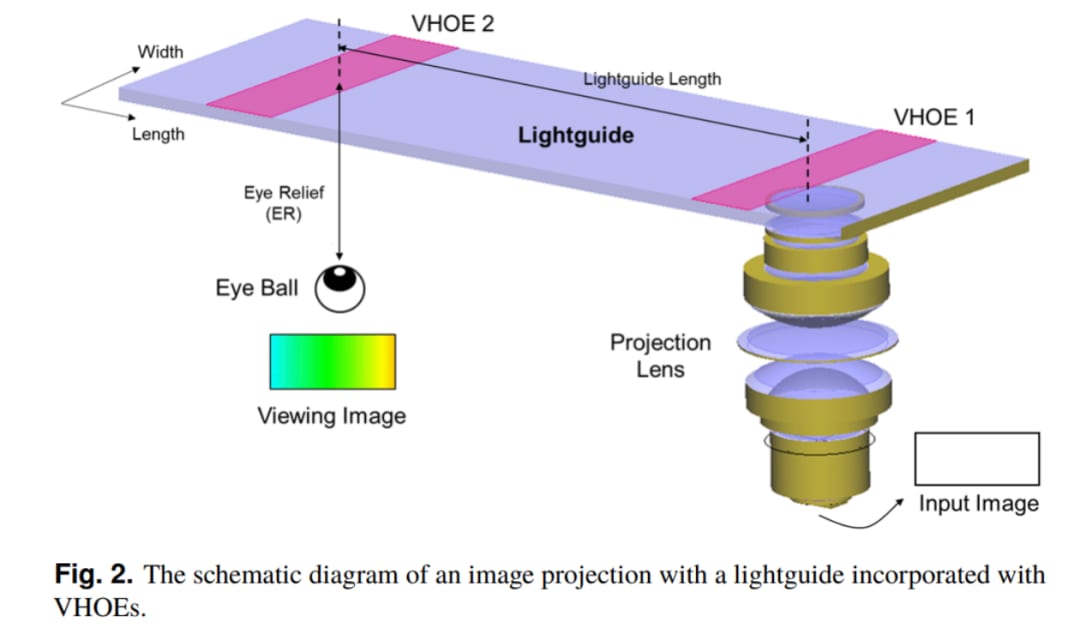
The key difference between VHG and SRG is that one acts on the "internal structure" while the other acts on the "surface structure." SRG uses micro- and nano-scale relief patterns etched on the waveguide surface to diffract light at the surface. VHG, by contrast, writes periodic refractive index fringes inside the glass through processes such as laser holographic exposure, forming a structure akin to a three-dimensional hologram. By Bragg's law, only light meeting the specific matching relationship among wavelength, incident angle and grating period can be efficiently diffracted, allowing selective control of particular wavelengths and angles.
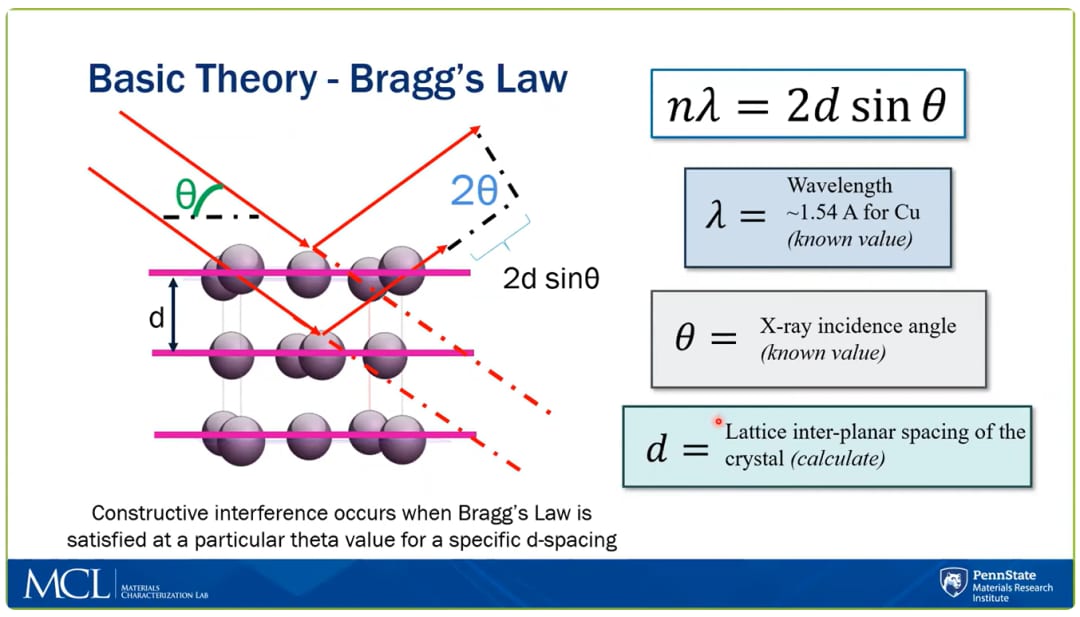
Image source: MCL
Specifically, in terms of optical performance, because the grating is located inside the material, almost no visible pattern can be seen on its front surface, which can reduce the rainbow effect common in conventional diffractive optical waveguides. At the same time, VHG theoretically offers high diffraction efficiency, reducing the display system's dependence on the brightness of Micro-LED and Micro-OLED sources.
Meanwhile, VHG uses a holographic polymer system, offering a wider choice of materials than glass-based optical waveguides. In the future, resin-based materials could enable larger-area, lower-cost manufacturing while further reducing weight. For this reason, beyond AR glasses, VHG is also seen as suitable for automotive AR-HUDs and other applications requiring large-format displays.

However, compared with SRG, VHG currently faces major challenges in volume manufacturing. Consistency of holographic materials, control of the exposure process, and yield in large-format mass production all slow its commercialization. As a result, few consumer AR products on the market have actually adopted VHG solutions to date, with most remaining at the technology-validation stage.
This situation is changing as industrialization advances. The world's first automated production line for volume holographic optical waveguides with a capacity of one million units, built by Nika Optics (尼卡光学) in Tianjin Binhai High-tech Zone, officially began production in June 2026, with an annual capacity of 1 million units. Combined with its Guangzhou base, the company's total capacity will rise to 1.3 million units.
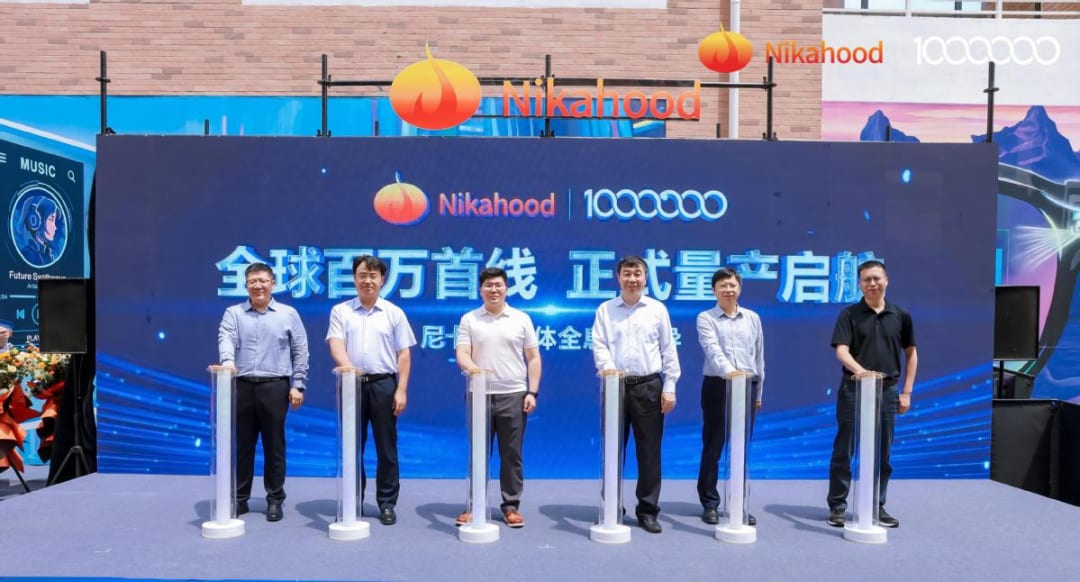
Image source: Nika Optics (尼卡光学)
Mimosa AR99, a consumer AR glasses model released by ODM/OEM maker Xingyi Intelligence (形意智能) earlier this year, uses Nika Optics' volume holographic optical waveguide technology. It delivers monocular monochrome green display with front light leakage kept below 1:140, weighs just 28 g, and starts at RMB 999.
The NIMO AI glasses, released in April, also use Nika Optics' 2D pupil-expansion VHG solution. Its "Starburst" waveguide lens weighs just 3.1 g and is 0.6 mm thick, with light transmittance above 95%, light leakage also below 1:140, and an efficiency of 1,400 nits/lumen. With this ultra-light optical solution, the NIMO AI glasses weigh about 29 g in total, achieving a lightweight design, and are priced at just RMB 2,499.
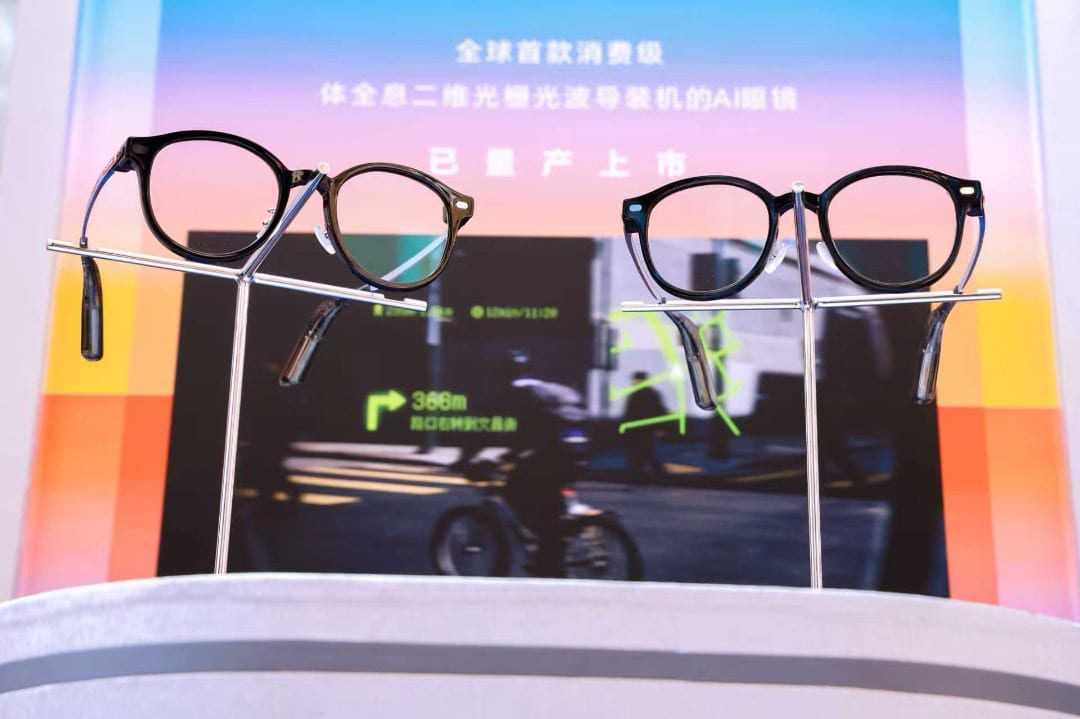
Image source: NIMO
In addition to Nika Optics, representative companies in the volume holographic optical waveguide sector at home and abroad include Crystal Optech, Parallel Vision and the US-based DigiLens. Crystal Optech pursues a dual-track strategy covering reflective and diffractive optical waveguides, and works closely with DigiLens as its exclusive licensed manufacturer in China. It has completed a technology upgrade of its 30° full-color volume holographic waveguide sheets and achieved small-batch commercial shipments, mainly for the To B market.
Parallel Vision focuses on its independently developed polarization volume grating/holography (PVG/PVH) technology route. In 2024, it teamed up with Luxshare Precision to launch the world's first PVG optical waveguide AR glasses, "Yunque," and in 2025 built the world's first PVG optical waveguide pilot production line, continuing to push toward mass production.
In terms of technology routes, although volume holographic optical waveguides have not yet seen large-scale product deployment at this stage, their cost advantage has brought them to the fore and attracted a degree of industry attention. Whether they can achieve large-scale commercialization in the future will hinge on whether their subsequent optical performance can match that of diffractive optical waveguides based on surface relief gratings.
04
Final Thoughts
In 2026, no single AR optical waveguide technology has rapidly displaced the others; instead, the three approaches have settled into a clearer division of labor across the industry. SRG continues to dominate the consumer market thanks to its mature supply chain and thin, lightweight form factor; arrayed waveguides are reopening consumer market space on the strength of flagship devices such as Meta's, with domestic capacity also ramping up; and VHG has cleared a key hurdle in volume manufacturing and entered end-product and mass-production yield validation.
More noteworthy than the technology roadmaps themselves is the expanding set of competitive dimensions. Comparisons used to focus largely on FOV, optical efficiency, rainbow artifacts and lens thickness. Now, with genuine consumer deployment demand rising, wafer size, material cost, manufacturing yield, full-color capability, myopia correction and the stability of million-unit deliveries are all beginning to shape device makers' choices.
Original title : Arrayed waveguides heat up, SRG capacity expands, VHG lands: optical waveguide competition enters a new stage in 2026
Source: OFweek Optics Network · News · optics.ofweek.com