Xi'an Institute of Optics and Mechanics Proposes New Framework for AUV Underwater Optical Docking
中国科学院西安光机所在复杂水环境自主水下航行器光学对接领域取得重要进展
Topics and contents
A team led by Wu Guojun at the Xi'an Institute of Optics and Mechanics has proposed PGF-ULB, an underwater light beacon detection and localization framework combining physics guidance and geometric constraints, for AUV optical docking in complex underwater environments.
The original text provides specific data and details that help assess the actual progress in this direction
Recently, a team led by Researcher Wu Guojun at the Marine Optics Laboratory of Xi'an Institute of Optics and Precision Mechanics (XIOPM), Chinese Academy of Sciences, made significant progress in optical docking for autonomous underwater vehicles (AUVs) in complex water environments, proposing a physics-guided and geometry-constrained framework for salient underwater light beacon detection and localization (PGF-ULB). The findings were published in Information Fusion. The first author is XIOPM engineer Miao Yuhong, and the corresponding author is Researcher Wu Guojun.
AUV optical docking is a key enabling technology for long-endurance marine missions such as persistent underwater observation, facility inspection and resource exploration. Accurate detection and localization of beacons in underwater imagery directly determine docking reliability and safety. However, absorption and scattering by water and suspended particles cause severe and variable degradation of beacon images, including reduced contrast, blurred edges and structural distortion, with the degree of degradation changing in real time with turbidity, illumination and target distance. Conventional methods offer limited robustness, while deep learning methods rely on large-scale annotated training samples and GPU computing power, making them difficult to deploy in AUV-mounted scenarios with limited computing and power budgets.
To address this challenge, the team proposed the PGF-ULB framework, which fuses physics guidance with geometric constraints: an underwater imaging physics model suppresses backscatter and attenuates forward-scattering halos to highlight the beacon body; the beacon's radially symmetric geometry is used to build degradation-resistant structural cues; and a conditional random field (CRF) adaptively fuses the two cues according to their respective reliability. The entire framework requires no deep learning training or manual parameter tuning and does not depend on GPU computing power, running in real time on a standard CPU for easy AUV-mounted deployment.
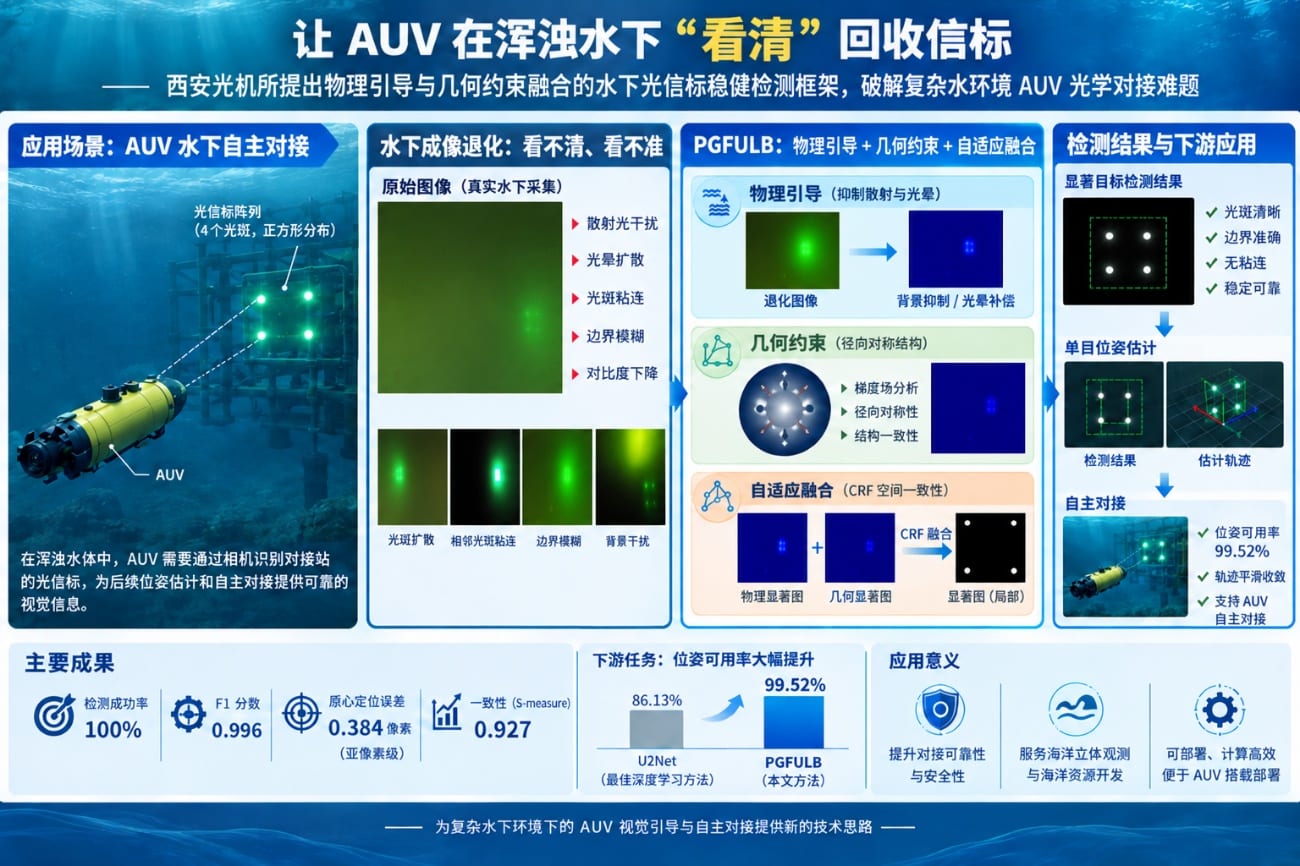
Figure 1: Schematic of robust underwater light beacon detection technology for AUV optical docking
Based on lake trials and nearshore field tests, the team built the ULBSOD benchmark dataset of 800 pixel-level annotated images, covering bottom-mounted, cage-type and grasping-type docking station configurations as well as varying turbidity, illumination and target scale conditions, and compared it with nine representative algorithms spanning conventional methods, deep learning methods and underwater-specific methods. The results show that on the ULBSOD benchmark dataset, PGF-ULB achieved a detection success rate of 100%, an F1 score of 0.996, a mean centroid localization error of just 0.384 pixels (less than one pixel, reaching sub-pixel accuracy), and a structural consistency (S-measure) of 0.927, leading across all major metrics
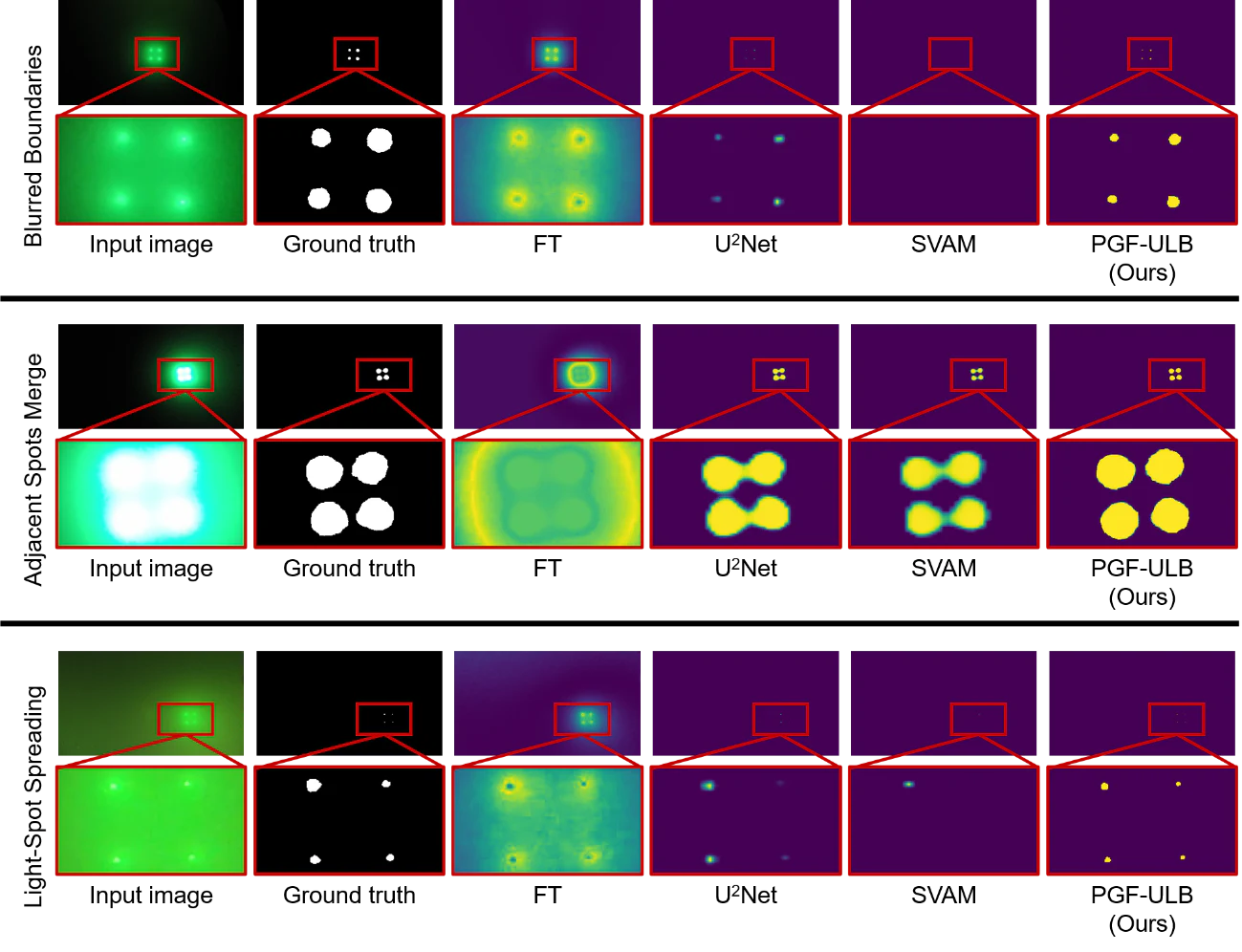
Figure 2: Qualitative comparison under different degradation conditions
The team further integrated PGF-ULB into a downstream monocular pose estimation pipeline and conducted visual guidance experiments for practical docking, testing the full-chain performance of "detection - pose estimation - visual guidance." Results show that the availability of vehicle pose estimates rose sharply from 86.13% with the best deep learning method (U2Net) to 99.52%, meaning pose output was nearly continuous throughout the docking process. The estimated docking trajectory was smooth and continuous and converged accurately onto the docking station, providing continuous and reliable pose information for automatic docking control and greatly improving the stability and safety of underwater docking operations in complex marine environments.
Wu Guojun explained, "Underwater docking is like a ship berthing at a wharf: the vehicle must accurately identify the docking station's 'signal light' to moor stably. The new technology is like equipping the vision system with both a 'defogging filter' and a 'shape checker'; the two cues corroborate each other, enabling precise target lock-on even in turbid water and avoiding the 'misjudgment' problems to which traditional methods are prone. It offers an interpretable, computationally efficient technical pathway that is easy to deploy on AUVs for robust perception of active optical beacons in turbid and variable underwater environments."
The related results are expected to support the above scenarios and serve national needs such as integrated ocean observation, underwater engineering operation and maintenance, and marine resource development.
The research was funded by the National Key R&D Program of China.
Source: Xi'an Institute of Optics and Fine Mechanics (XIOPM) · Research Progress · opt.cas.cn