Behind Engo Optics' 700 Million Yuan Long-term Order: What Are the Barriers in PC Window Process and Delivery Capability?
Topics and contents
Engo Optics recently began formal production, with supply of PC transparent parts locked in through 2032 and a total value of about 700 million yuan; the long-term order is closely tied to Ceer. Its process of hardening first and then hot-press bending reduces processing costs by about 40% compared with injection molding, and the products have passed European E-mark and US DOT certification. The delay in Ceer's mass production schedule creates uncertainty for order fulfillment and capacity utilization.
Recently, Yangzhou Engao Optics Technology Co., Ltd. (Engao Optics) officially began production. Its annual demand for PC transparent parts is about tens of thousands of pieces, with supply locked through 2032 and a total value of about 700 million yuan.
Why did Engao Optics win this order? What exactly does this long-term contract lock in?
Engao Optics' competitive moat lies in turning materials into automotive window assemblies that can be mass-produced, installed on vehicles and delivered. The real mass-production challenges for PC windows are coating scratch resistance, UV aging resistance, yellowing resistance, and optical distortion control after forming large-curvature curved surfaces. Engao Optics' hardened hot-pressing process hardens the material first and then hot-presses it into shape, cutting processing costs by about 40% compared with injection molding while overcoming the limits on large-size forming.
The PC glass used in XPeng AeroHT's flying car can bend nearly 90 degrees and offers significantly higher impact resistance than conventional glass, directly validating this process route. The second phase, due to be completed by the end of November, will fill in the entire process chain from surface treatment to coating, targeting precisely the segment with the highest added value and the greatest difficulty to outsource in PC automotive window mass production.
Engao Optics is also the first domestic manufacturer of transparent plastic automotive glazing to pass both European E-mark and US DOT certification, a status with first-mover significance in the PC glazing front-fit supply chain. Engao Optics also helped draft the national standard GB/T 44570-2024, "Plastic Products - Polycarbonate Sheets," which is a modified adoption of ISO 11963:2019 and took effect in April 2025. Participation in standard-setting does not necessarily translate directly into orders, but it gives the company a position from which to define test methods and performance boundaries in discussions with automakers and material suppliers.
The customer base also bears out this transferability: from Ceer to XPeng AeroHT, and from explosion-proof rail transit windows to the exterior shell of the unmanned torch relay vehicle at the Beijing Winter Olympics, Engao Optics' PC transparent components have moved beyond validation in a single vehicle model or a single scenario. The tens of millions of yuan Series A round completed in May 2023, co-invested by Xiaogan Innovation Industry Guidance Fund and Western Advantage Capital, provided a financial cushion for the ramp-up of capacity at the Yangzhou base.
But the other side of the long-term order must be faced just as squarely. The 700 million yuan order is heavily tied to a single customer, Ceer, and Ceer's mass production schedule is itself uncertain. Ceer was established as a joint venture between Saudi Arabia's Public Investment Fund (PIF) and Foxconn. The mass production start for its first model has already been pushed back from earlier expectations; public information indicates that mass production will begin in January 2027, with first customer deliveries in March 2027, a substantial delay from the originally promised 2025 milestone.
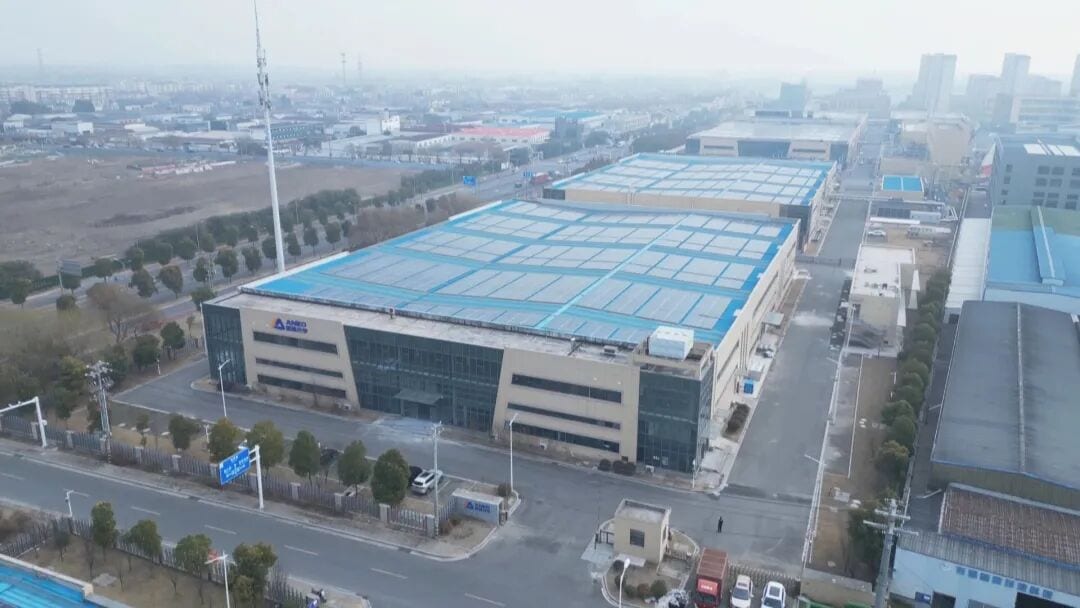
Engao Optics expects full-year 2026 revenue of more than 60 million yuan. Between that figure and the scale of the 700 million yuan order lies a steep ramp-up curve from project nomination to volume delivery. The environmental impact approval for the Yangzhou base sets capacity at 20,000 sets of laminated photochromic PC glass plus 80,000 sets of smart window and body components per year, 100,000 sets in total. A single Ceer project clearly cannot fill all of that capacity.
A long-term order locks in the floor, but if end-market sales from a single customer fall short of expectations, capacity utilization will immediately become a real pressure point. Engao Optics' 700 million yuan order shows exactly that the value is high, but replicability depends on whether PC vehicle windows can move from being a "technology showcase piece" on flagship models to a more mainstream production configuration.
Engao Optics has already secured a rare ticket to entry. Certification first-mover advantage locks in the timing of entry, coating and forming engineering capabilities lock in delivery quality, and participation in standards plus cross-scenario customer validation provide institutional positioning and evidence of transferability. Layered together, these give it a position in PC vehicle window processing that will be hard to displace in the short to medium term.
But a long-term order does not automatically equal long-term competitiveness. Once the phase-two process chain is closed-looped, the real test is whether Engao Optics can distill the photochromic, coating and system integration capabilities proven on the Ceer project into standardized solutions that more automakers are willing to select directly. The order locks in the floor through 2032; standardization capability is what determines the ceiling beyond that.
Source: OFweek Optics Network · News · optics.ofweek.com