The Price Dilemma of Micro-Optical Engines for AR Glasses, Seen Through the Supply Chain
一量产就“死”?供应链角度看微型光机的价格困局
Topics and contents
Topic
On this page
The article argues that the core bottleneck keeping AR glasses from the mass market lies not in chips or software, but in the micro-optical engine inside the temples. The micro-optical engine is the image-generation core of AR glasses, and prices remain high even after mass production, with most volume-produced models still selling for several thousand yuan or even more than ten thousand yuan.
By now, many consumers have seen the slick AR glasses footage in short videos: put on the device and virtual images float before your eyes, with navigation and messages overlaid directly on the real world.

Yet most mass-produced models still cost several thousand yuan, or even more than 10,000 yuan. Industry insiders know that the core bottleneck keeping AR devices out of mainstream pockets is neither the chip nor the software, but a palm-sized component hidden inside the temple — the micro display engine.
The micro display engine is the image-generation core of AR glasses, essentially a miniaturized display that projects images onto the retina. Capital continues to pour into AR, and large AI models and spatial interaction features keep evolving, but product commercialization is stalled by hardware cost.
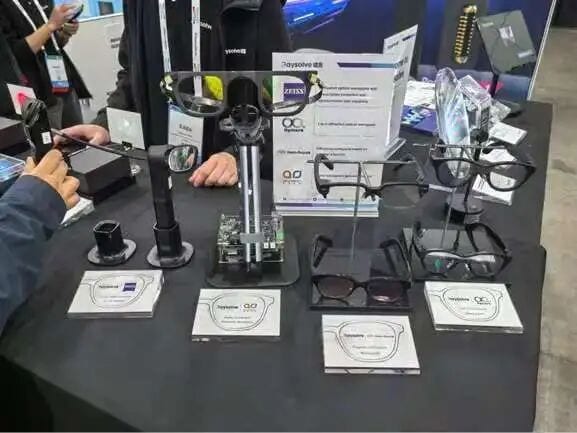
Beyond cost, the biggest contradiction in the micro display engine field today is that lab prototypes look stunning, but once production scales to millions of units, cost and yield problems erupt all at once.
Why is that?
01 The “small player” inside AR glasses
At first glance, you cannot see the micro-optical engine in AR glasses. Yet every image it displays depends on it.
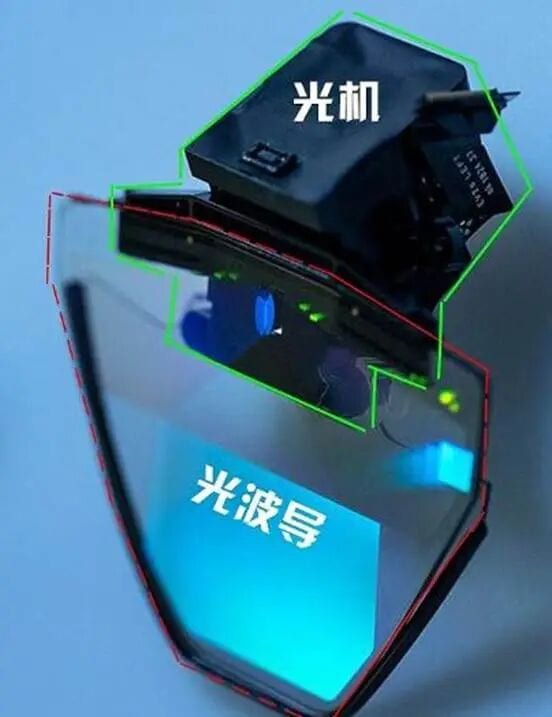
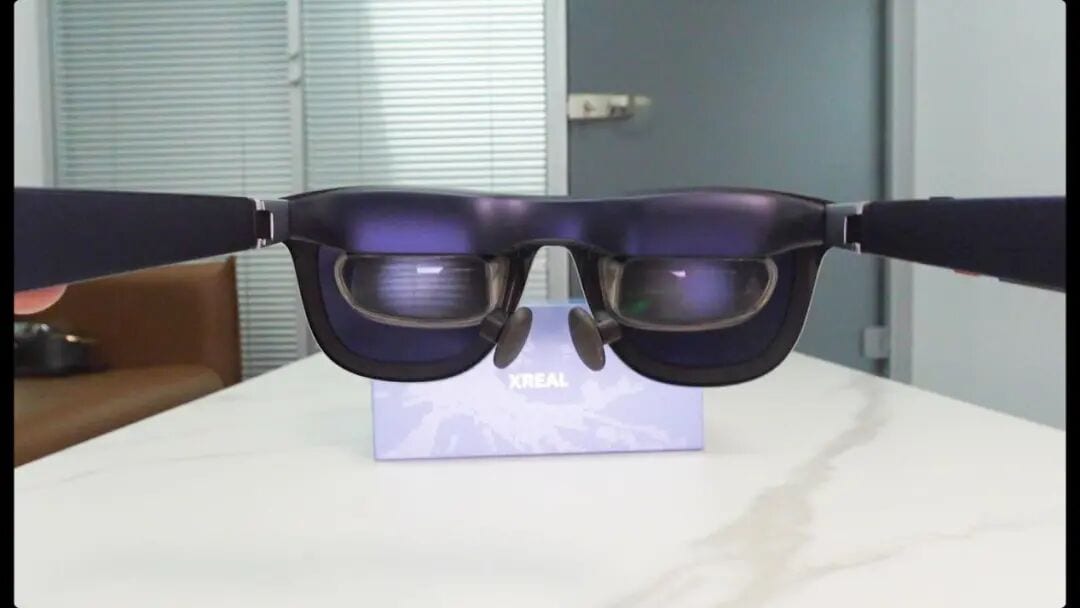
Put simply, a micro-optical engine is a highly compact projection system that packs the image light source, optics lenses and driving components into an extremely small space to project images into the eye — much like the human cornea, which responds to and processes incoming light. At the same time, weight and volume must not burden the wearer.
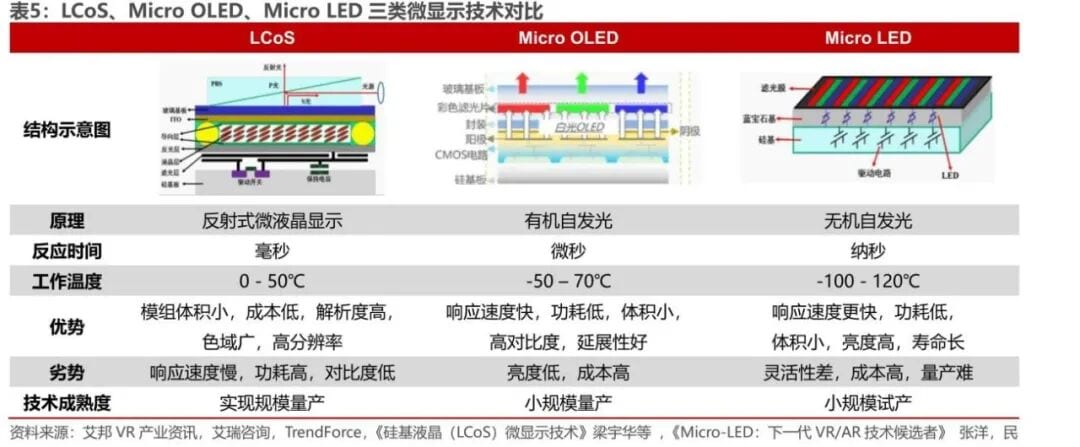
The mainstream approaches on the market fall into three categories: LCoS, Micro OLED and DLP. Micro OLED and Micro LED are the two leading display technologies in consumer AR today, with Micro LED holding the stronger market position thanks to its brightness advantage.
According to estimates in a Great Wall Securities industry weekly, all-in-one AR glasses will account for 18% of online smart glasses sales in China in 2024, rising to roughly 22%-27% in 2025. The micro-optical engines in many mainstream models are assembled from more than ten precision parts, including display chips, collimating optics and polarizing films, with assembly tolerances required at the micron level — a fraction of the diameter of a human hair.
This explains why lab prototypes can be stunning but fall short after mass production. At the prototype stage, manufacturers need to build only tens or hundreds of units, and engineers can hand-tune each lens group, making it easy to hit the target image quality. Once mass production begins, even tiny assembly deviations directly cause blurry images, ghosting and uneven color, and the product is rejected outright.
In fact, most AR brands cannot buy mature optical engines off the shelf; they must either develop them in-house or commission custom procurement from a small number of optical solution providers. The mature supply chain division of labor seen in other consumer electronics categories has yet to be established in the micro optical engine segment. AR device makers can easily purchase mature general-purpose chips, but micro optical engines are customized components with no standardized, off-the-shelf products available.
The tougher cost challenges lie deeper in the supply chain and manufacturing.

02 Why are lab samples cheap but mass production drives up prices?
Currently, cost pressures on micro-opto-mechanical systems stem from constraints such as yield, scale and components.
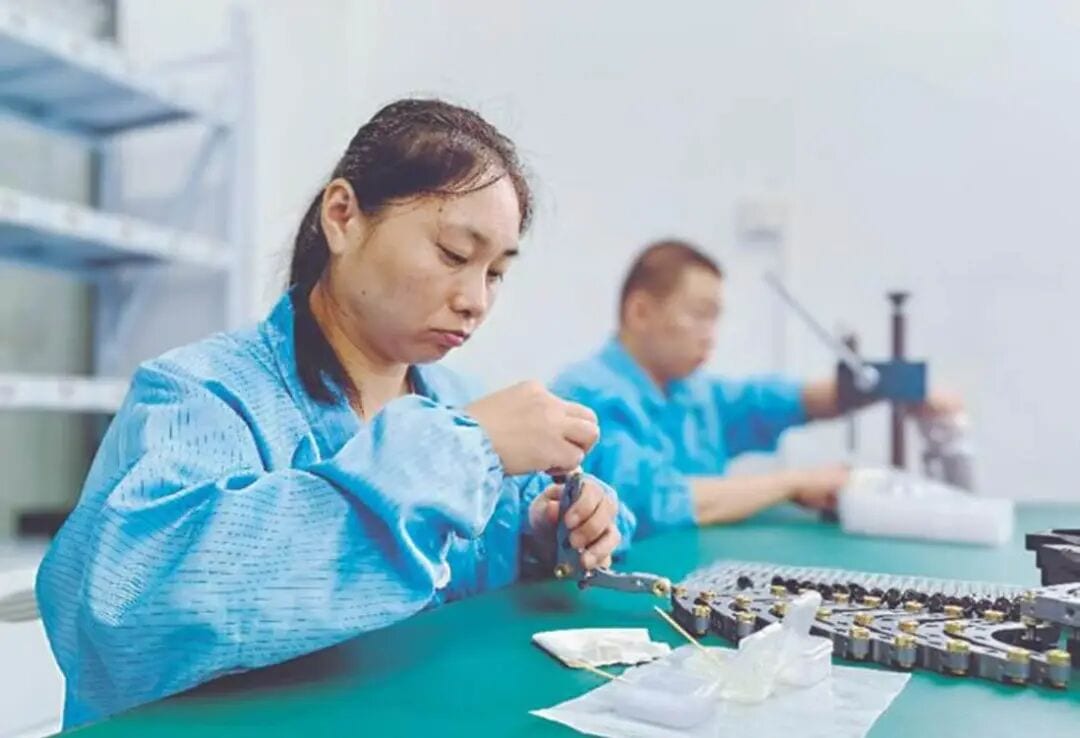
Production yield is a critical barrier. Because optical assembly is ultra-precision manufacturing, dust, temperature fluctuations and tiny errors in assembly tooling can all cause optomechanical failures. In the early mass-production stage, yields in optical coupling and lens processing were relatively low, and some processes had high scrap rates.
On production lines, a large number of products are scrapped outright during inspection. The raw material and labor costs of these rejects are all spread across the qualified units, directly driving up the price per machine.
Another awkward point is that the promised economies of scale have been slow to materialize.
According to IDC's 2025 China Smart Glasses Market Tracker, total shipments of AR/VR devices in China reached 742,000 units that year. Compared with the hundreds of millions of smartphones shipped each year, this market is far too small. Upstream component makers are reluctant to invest in dedicated production lines to expand capacity; without large-scale lines, unit component costs cannot come down; and high-priced finished products deter ordinary consumers, making a sales surge difficult and trapping the industry in a classic chicken-and-egg cycle.
At the component level, key optical films and microdisplay chips are concentrated in the hands of a few overseas suppliers. According to relevant research, the microdisplay module (emitter chip plus driver circuitry) is the most expensive part of the optical engine, accounting for about 50 percent of the total BOM cost. High-end optical lenses and polarizing films are likewise heavily dependent on imports.
High costs, then, are holding back consumer AR adoption, and the supply chain is looking for viable ways to break through.
03 Is there a realistic path to solving mass-production costs?
Cost reduction in micro-opto-mechanical systems is a hurdle the entire AR industry cannot avoid. If the supply chain can clear the twin barriers of yield and cost, it could help AR glasses achieve mass adoption, much like the smartphone.
The prerequisite is solving the mass-production cost problem. Industry players are attacking micro-opto-mechanical costs from multiple angles: domestic substitution, structural simplification and process iteration. Each approach involves trade-offs, and no perfect solution exists.
Domestic substitution of optical components is the most direct short-term solution. Chinese optical makers are gradually moving into the production of polarizers, optical waveguide lenses and other components, breaking the monopoly of overseas suppliers.
Once core optical materials are sourced domestically, waveguide costs fall by more than 60% versus imported solutions; localizing ordinary auxiliary optical films can cut costs by 15%–20%, as confirmed by public technical disclosures from domestic solution providers such as Gudong Technology. However, localization of high-end Micro LED chips is progressing slowly, and supply bottlenecks remain in core display chips.

Simplifying the optical architecture can trade some performance for lower cost. Many AR products aimed at the mass market have abandoned complex waveguide solutions in favor of relatively simple optical architectures such as BirdBath. These designs deliver slightly lower image sharpness, but with fewer parts, easier assembly and higher yields, the per-unit optical engine cost can drop substantially.
Most lightweight AR glasses focused on video and entertainment today follow this route, prioritizing mainstream viewing needs. After all, consumer users care less about the technology you use than about the viewing experience.
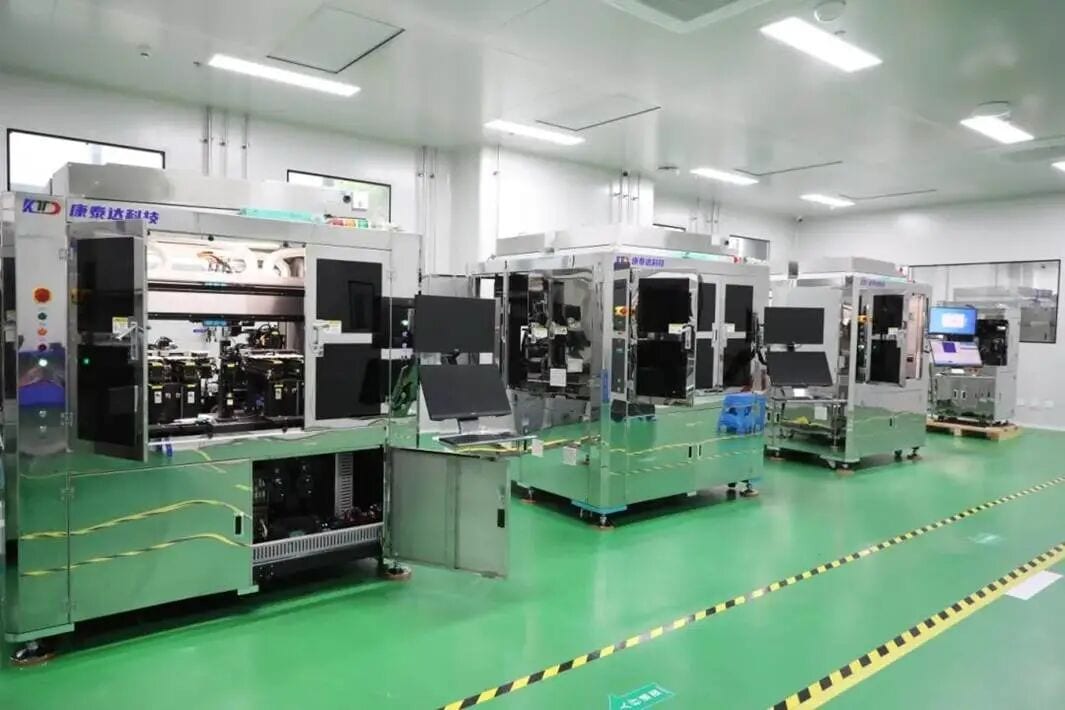
In addition, full-color MicroLED optical engines have long been regarded as the core direction for next-generation display technology in the AR/VR industry. For example, Kangtaida has launched its first mass-production equipment for full-color MicroLED optical engines. The equipment's key advantages are said to be cost reduction and efficiency gains: modular assembly cuts footprint by 22%, with changeover in 30 minutes; the full-color first-pass yield reaches 99% (excluding material-related causes), cycle time is under 60 seconds, and UPH rises 100%. Overall, the equipment can reduce the cost of MicroLED optical engine products by 28% and shorten delivery cycles by 50%.
Clearly, the entire supply chain needs coordinated engineering. Optical materials, chips, precision assembly, inspection equipment — if any link falls behind, it will hold up the pace of price cuts. Even if optical engine costs fall, weight, image quality and battery life must still be balanced; cutting costs alone can easily come at the expense of the wearing experience.
Meanwhile, capital's vision for AR spatial computing largely focuses on AI interaction and future scenarios blending the real and virtual. Many investors are eyeing software capabilities such as spatial computing and large-model interaction, while overlooking the practical constraints of hardware manufacturing.
The history of consumer electronics has repeatedly shown that for a product to truly enter ordinary people's lives, the price barrier can never be bypassed. Software algorithms can be iterated quickly and upgraded over the cloud, but micro optical engines must be built up bit by bit through factories, production lines and processes — there are no shortcuts.
By / R星人
Original title : Dead as soon as it goes into mass production? The price dilemma of micro optical engines from a supply chain perspective
Source: OFweek Optics Network · News · optics.ofweek.com