Optics Giant SCHOTT Changes Leadership: Stefan Brandl Takes Over as CEO in November
光学巨头换帅:业绩承压期的交接与挑战
Topics and contents
Topic
On this page
SCHOTT announced that CEO Torsten Derr will step down on October 31 for family reasons, with Stefan Brandl taking over from November 1. The article notes that the transition comes as SCHOTT faces performance pressure and a strategic transformation window.
Recently, SCHOTT announced that CEO Torsten Derr will step down on October 31 for family reasons. The company has appointed Stefan Brandl as his successor, effective November 1.
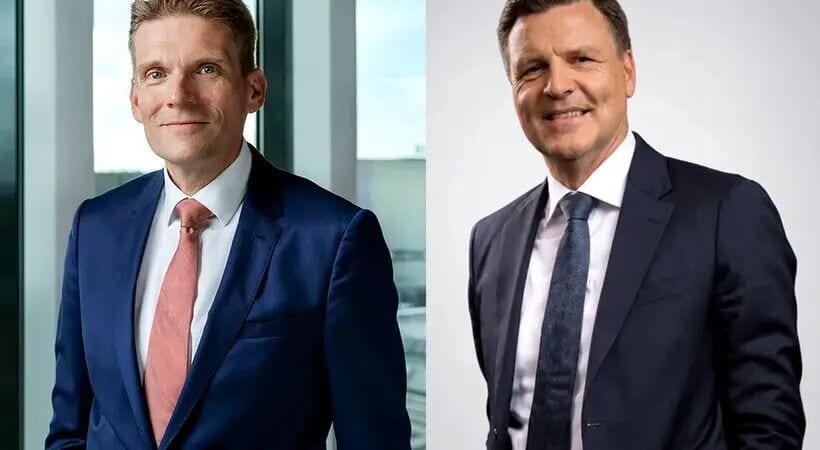
Torsten Derr (left) and Stefan Brandl (right)
In fact, Brand's appointment comes at a critical window in SCHOTT's strategic transformation, as the company grapples with sharply pressured profits while placing big bets on emerging fields such as AR and semiconductors.
Brand previously served for several years as a member of Schott's Supervisory Board, giving him a deep understanding of the company's strategy and the distinctive governance structure of a foundation-owned business. He also brings extensive hands-on experience from international CEO roles, having led electric motor and fan manufacturer ebm-papst Group from 2017 to 2021 and serving since 2021 as Vice Chairman of the Board of Management and CEO of automotive supplier Draexlmaier Group.
The annual report shows that in fiscal year 2024/2025, SCHOTT posted global revenue of €2.83 billion, broadly flat year on year. EBIT fell sharply from about €400 million in the previous fiscal year to €230 million, while net profit was €165 million. The decline in profit was driven mainly by three overlapping factors: asset impairments in the Precision Materials and Home Appliances business segments, high energy costs in Germany, and uncertainty stemming from US tariff policy.
Nevertheless, SCHOTT's financial foundation remains solid. An equity ratio of 68 percent implies a net asset cushion of about EUR 3.3 billion, providing ample room for strategic transformation. Despite pressure on profits, SCHOTT's strategic direction is remarkably clear. The company has explicitly identified AR, semiconductors, and healthcare as its three future growth markets, and continues to step up investment worldwide.
Although Dörr's departure was officially attributed to "family reasons," a tenure of less than two years is unusual for a major industrial group. Industry insiders note that SCHOTT's core challenge is not strategic direction, but execution efficiency and the speed of its profit recovery.
Brand's automotive background may be exactly what the supervisory board is looking for — a sector renowned for supply chain management and cost control. During his time at the Draexlmaier Group, he managed a major automotive parts supplier with dozens of production sites worldwide. That experience in balancing cost and innovation across complex supply chains is directly relevant to SCHOTT's current need to invest in the future while repairing its margins.
The optics sector is currently undergoing a period of structural change. According to LightCounting, the market for pluggable optical modules at 100G and above will grow from nearly $20 billion in 2025 to more than $50 billion in 2030, while the CPO market could reach $10 billion by 2030. Meanwhile, AR glasses are widely seen as the "next-generation human-machine interface." IDC forecasts that China's smart glasses shipments will reach 4.51 million units in 2026, up 78 percent year on year, with the global market also expected to maintain rapid growth.
Against a backdrop of accelerating consolidation in the optics industry, Brand must maintain SCHOTT's technological lead while converting that advantage into financial returns more quickly. The ultimate outcome of this leadership change remains to be seen.
Source: OFweek Optics Network · News · optics.ofweek.com