XIOPM Team Advances Resilient Coordinated Control of Multiple Devices
Topics and contents
A team led by researchers Hao Wei and Xie Meilin at the Xi'an Institute of Optics and Precision Mechanics (XIOPM), Chinese Academy of Sciences, has proposed a resilient neural network-assisted model reference adaptive sliding mode control strategy to address deceptive attacks, actuator gain faults and coupled parametric uncertainties in multi-device systems. The results were published in IEEE Transactions on Industrial Electronics.
Recently, a team led by researchers Hao Wei and Xie Meilin from the Key Laboratory of Space Precision Measurement Technology, Chinese Academy of Sciences, made progress in resilient coordinated control of multiple devices. The findings were published in IEEE Transactions on Industrial Electronics. The first author is Tang Huilin, a doctoral student at the Xi'an Institute of Optics and Precision Mechanics, and the corresponding author is Associate Researcher Wang Fan.
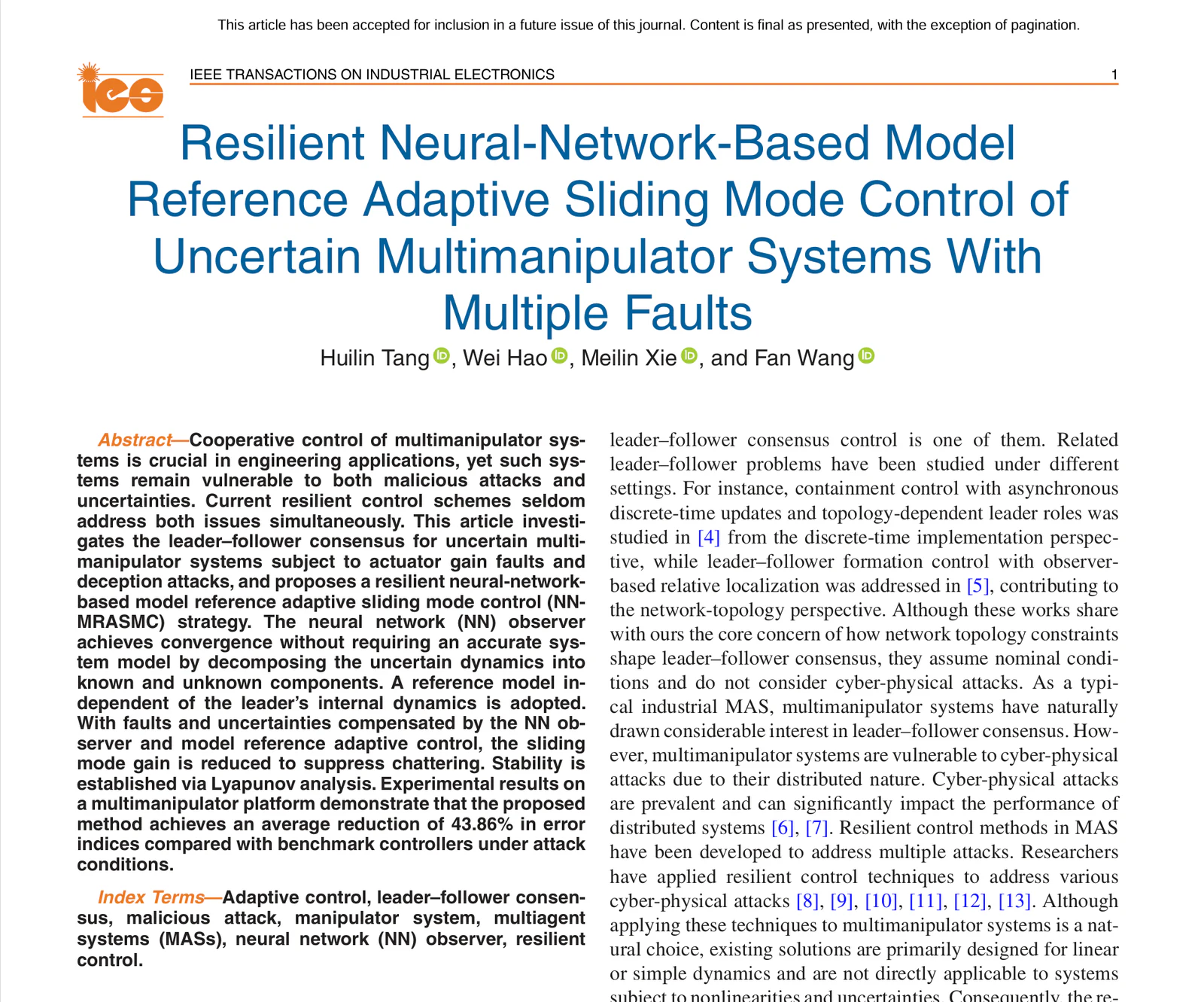
Coordinated control of multiple devices is one of the core enabling technologies for distributed networks and large-scale intelligent systems. However, its distributed open architecture is vulnerable to cyber-physical threats such as deception attacks, while system operation is often complicated by actuator gain faults, parameter uncertainties, and multiple couplings. Existing control methods are mostly designed for a single problem and struggle to handle complex conditions in which attacks and faults overlap, creating a technical bottleneck for the reliable operation of multi-device systems.
To address this challenge, the research team proposed a resilient neural network-assisted model reference adaptive sliding mode control strategy, systematically enhancing control resilience through three aspects: dynamics decomposition, observer design, and control law reconstruction.
The strategy decomposes the uncertain system dynamics into a known nominal part and a composite unknown part, and uses a radial basis function neural network to approximate in real time the composite unknown term formed by the coupling of faults and uncertainties. The reference model is driven solely by the leader's output signal, without requiring the leader's own dynamics parameters, greatly reducing the communication and computational burden of the coordinated architecture. Reference model tracking error is embedded in the sliding surface, and a state observer and adaptive control law actively compensate for the main effects of faults and uncertainties. Sliding mode control then suppresses residual error with a lower switching gain, effectively mitigating chattering in conventional sliding mode control at its source while balancing control accuracy and robust system stability.
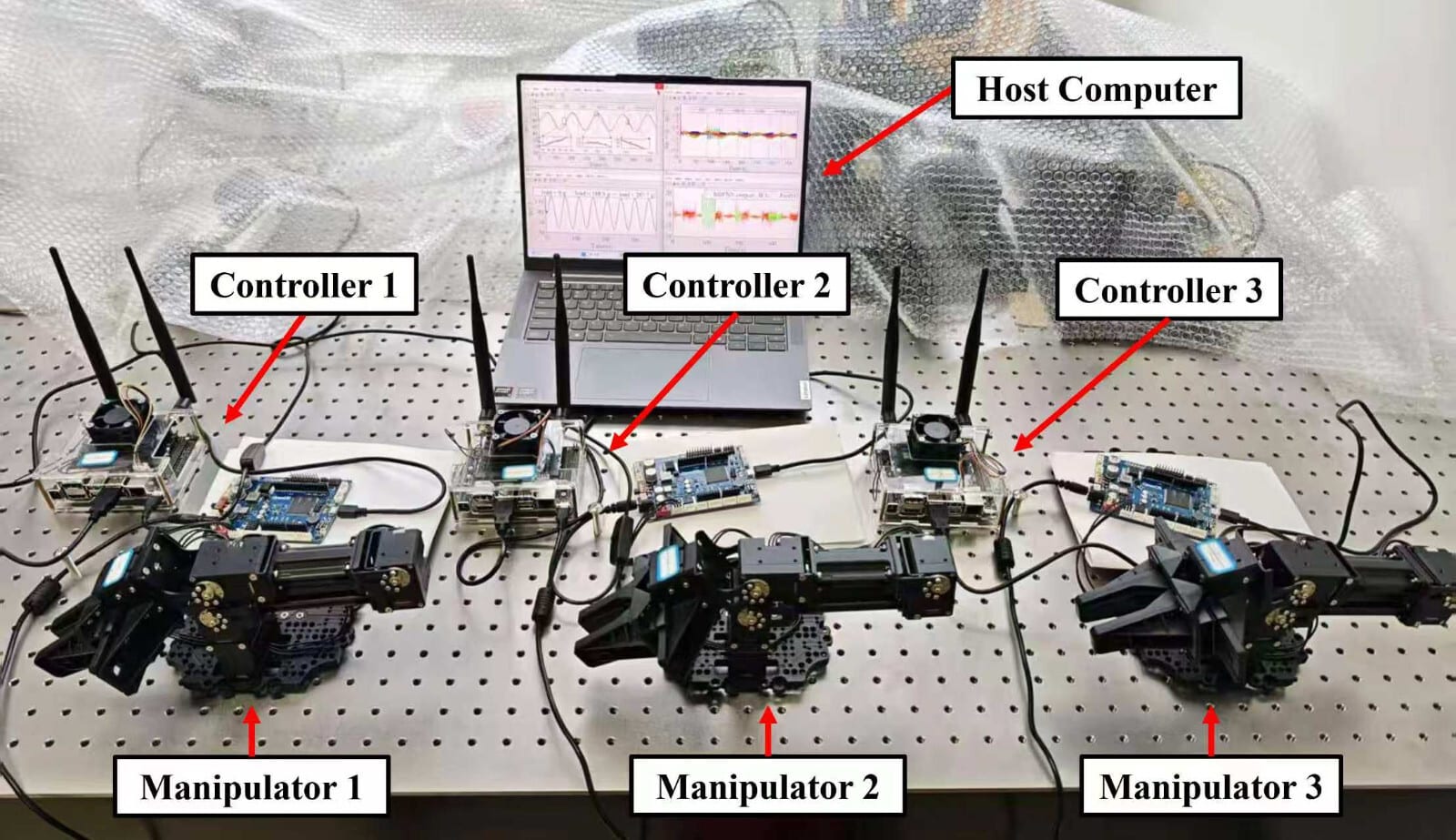
Figure 1 Experimental system for coordinated control of multiple robotic arms
Based on the OpenManipulator platform, the research team built an experimental system for coordinated control of multiple robotic arms, set up multiple attack-injection and fault-simulation conditions, and conducted systematic comparative experiments against mainstream methods including PID control, sliding mode control, model reference adaptive control, and disturbance observer control. Experimental results show that the method offers significant advantages in dynamic tracking accuracy, convergence speed, and disturbance-rejection robustness, and can maintain stable coordinated control performance in complex scenarios where attacks and faults coexist.
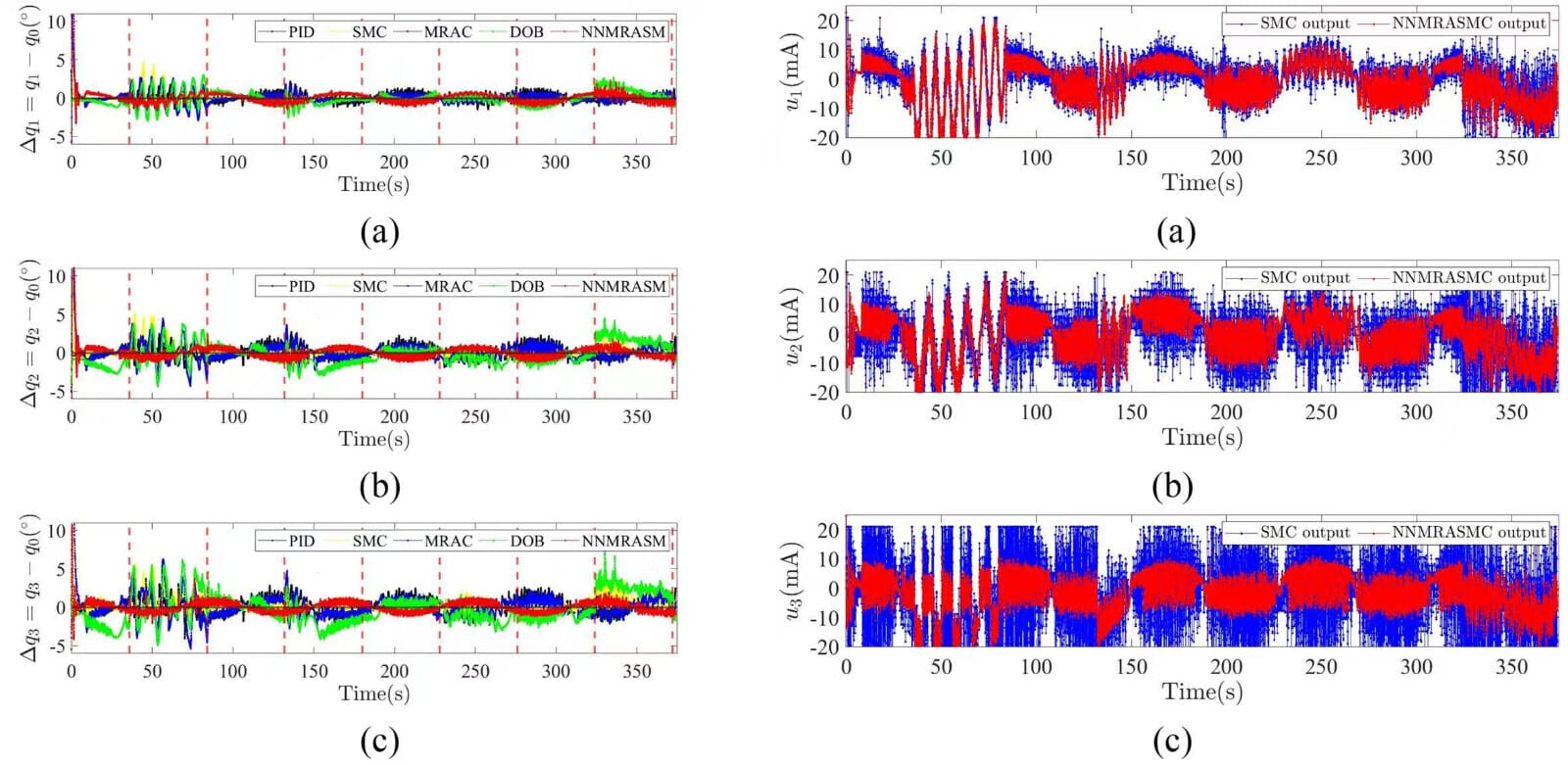
Figure 2 Multi-device cooperative tracking results under coupled multi-uncertainty scenarios
(Left: tracking error comparison; right: control input comparison)
Tang Huilin explained, "Multi-device cooperation is like an orchestra playing a symphony, but if a hacker deliberately tampers with the score (deception attacks), or if an instrument suddenly goes out of tune or a string loosens, the whole performance falls apart. The new technique we propose is like giving every musician an 'intelligent error-correcting conductor' who can not only detect in real time who is being interfered with or has malfunctioned, but can also automatically fill in and correct the tempo without interrupting the performance. This approach breaks down complex system problems and handles them one by one, allowing the orchestra to deliver a precise, smooth ensemble even when facing the dual challenges of malicious disruption and equipment aging."
The research provides new ideas and theoretical support for resilient cooperative control of distributed multi-device systems under scenarios coupling malicious attacks and multiple uncertainties. It breaks through the limitations of traditional methods that adapt to only a single scenario, and holds important application value and broad development prospects in fields such as wide-area target surveillance, networked cooperation of multiple optoelectronic devices, and low-altitude counter-swarm UAV defense.
The work was supported by the Key Laboratory Fund of the Chinese Academy of Sciences.
Source: Xi'an Institute of Optics and Fine Mechanics (XIOPM) · Research Progress · opt.cas.cn