Qwen N1 Pro and Wigain Flow Add Eye Awareness as AI Glasses Fill the Personal Context Gap
千问N1 Pro、Wigain Flow加码眼部感知,AI眼镜补齐个人上下文入口
Topics and contents
Topic
On this page
An article by VR Tuoluo notes that the Qwen AI Glasses N1 Pro, unveiled on September 22, adds high-precision eye tracking for visual question answering, object recognition and iris payment. Wigain Flow, a full-color AI glasses model that Qiuguo plans to release later, also places an iris camera in the nose pads for identity verification. Eye data is emerging as a new data source for AI glasses to understand users.
Your Gaze Is Becoming New Data for AI Glasses
By VR Tuoluo Wickey
Eye data is emerging as another key data source for AI glasses to understand users.
On September 22, the new-generation Qianwen AI Glasses N1 series debuted at the 2026 Yunqi Conference. The N1 Pro adds high-precision eye tracking and uses gaze information for visual question answering, object recognition and iris payment. A few days later, Qiuguo Plan unveiled the Wigain Flow full-color AI glasses, which also add eye-sensing capabilities and place an iris camera at the nose pads for identity verification and frictionless payment.
Meanwhile, low-power eye-sensing solutions are multiplying. In June this year, Inseye launched its Tiny solution, pitched on sub-10mW power consumption, 100Hz and always-on operation. In August, ZEISS Ventures led a €2.2 million funding round in SeeTrue Technologies to accelerate commercialization of its low-power, miniaturized eye-tracking solution. Tobii and Prophesee, meanwhile, continue to advance event-based eye-tracking technology, aiming to further reduce data volume and power consumption in smart glasses.
As AI glasses move toward everyday wear and continuous sensing, eye data is increasingly involved in understanding user intent, authentication and building personal context. How to make eye sensing lighter and more power-efficient, and how the collected data is used and protected, are becoming new technical challenges for AI glasses.
01
Gaze and Identity: Why Eye Sensing Is Entering AI Glasses
In past XR devices, eye tracking has been widely used for foveated rendering, gaze-based interaction, and digital avatar expressions. With AI glasses, the uses of eye sensing are beginning to expand further.
Functionally, eye sensing falls broadly into two categories. One relates to behavior and intent, such as gaze direction, fixation points, and eyeball pose, used to determine where the user is looking and what has captured their attention. The other relates to identity, such as biometric recognition based on iris texture.
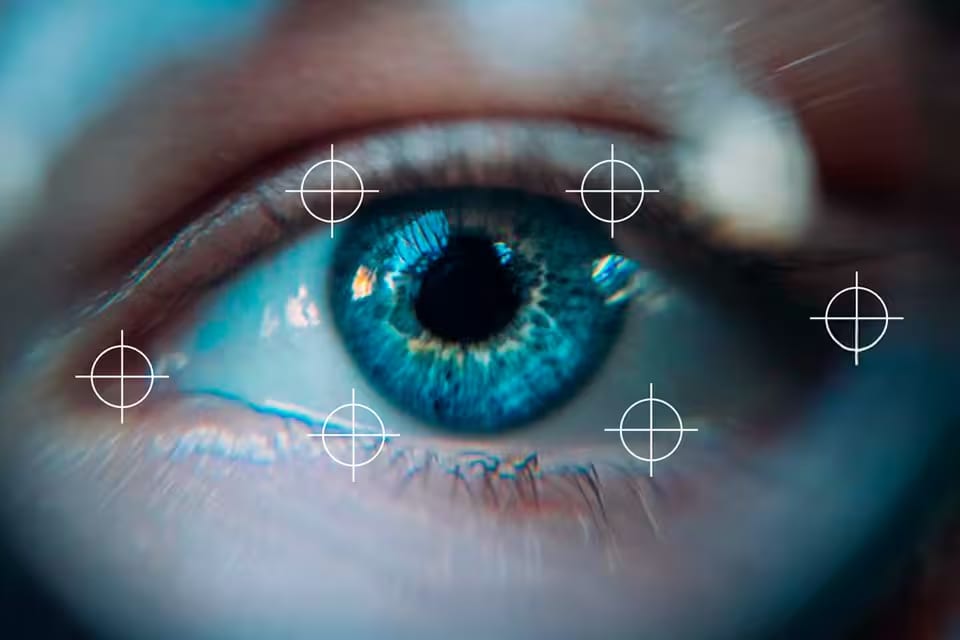
Eye sensing is already relatively mature in VR/MR headsets, mainly in two areas: display optimization and interaction. Foveated rendering uses the user's gaze to render only the fixation region at high quality, reducing GPU load. On the interaction side, devices such as Vision Pro already use eye tracking for interface selection, target positioning, and click actions combined with hand gestures.
As AI enters XR devices, hardware requirements for environmental understanding and intelligent interaction rise accordingly. Cameras and microphones capture visual, speech, and other environmental information, while eye-tracking data can further supplement the user's gaze position and object of attention, forming part of how AI understands the current context and user intent.
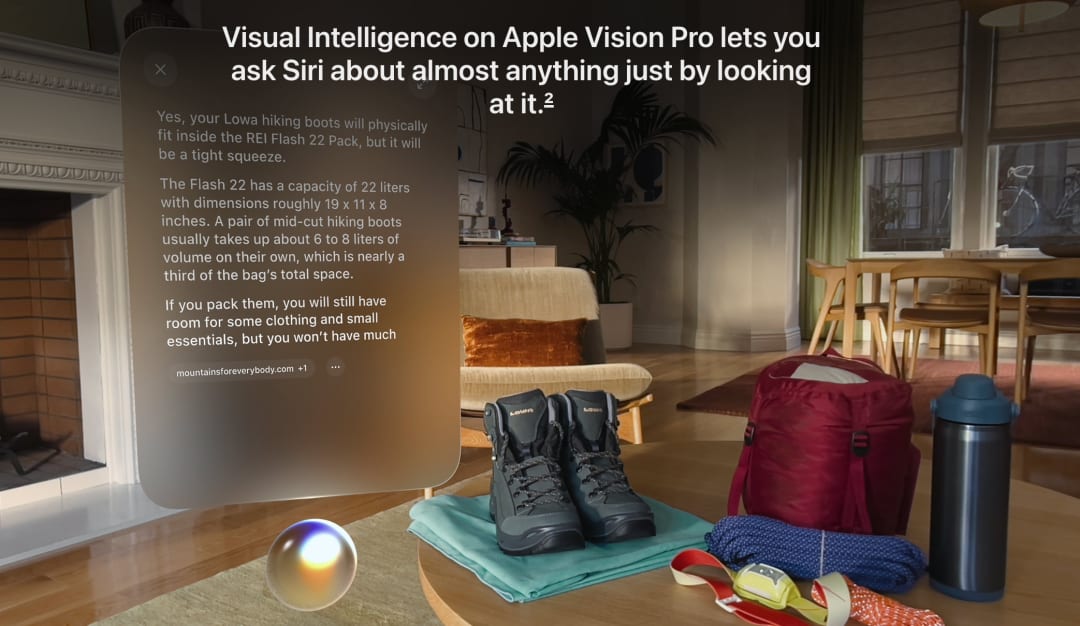
On VR/MR headsets, eye tracking is already a relatively mature interaction method. With the addition of Visual Intelligence in visionOS 27, Vision Pro users can simply look at real-world objects or window content and ask Siri questions, with gaze information now feeding into the AI's assessment of the current content.
AI glasses, by contrast, are designed for everyday wear. Their cameras, microphones and sensors can continuously capture environmental and interaction data, building a more continuous first-person dataset. The Qianwen N1 Pro, unveiled at the Apsara Conference in September, features a miniature eye-tracking module that uses the wearer's gaze to determine what they are focusing on, enabling a "your eyes are the pointer" interaction. In payment scenarios, for example, gaze can be used to locate a QR code or payment target, while iris recognition handles identity verification, eliminating extra steps such as voiceprint confirmation.
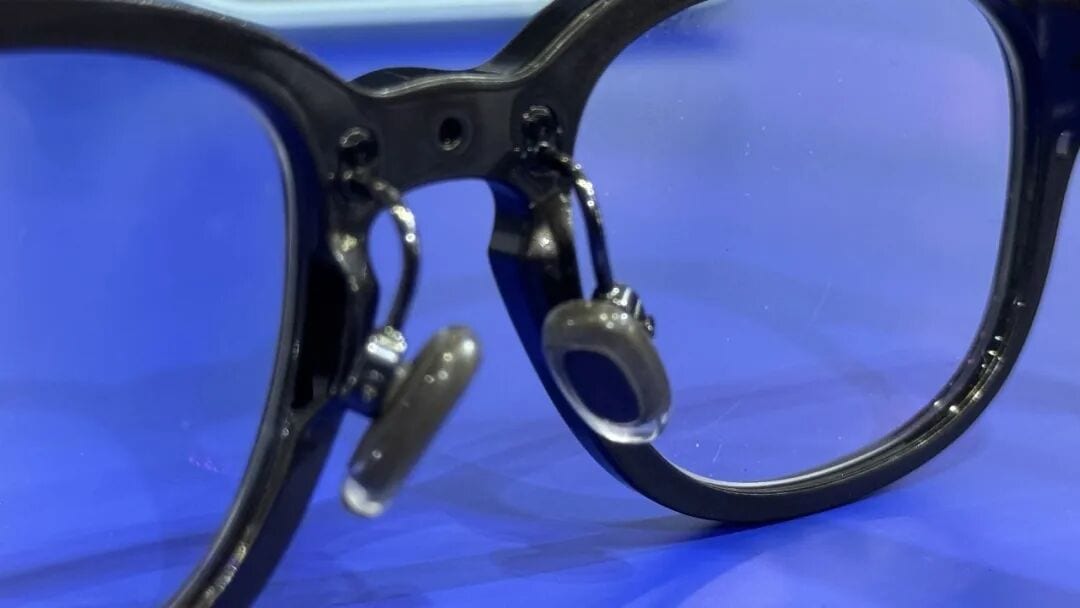
Iris recognition has long been used in smartphones and security applications, and XR devices sit naturally close to the eyes, making them well suited to related sensors. Vision Pro already uses Optic ID for iris unlock and authentication, the Qianwen N1 Pro likewise supports iris-based identity verification, and the recently unveiled Wigain Flow adds similar capabilities for identity verification and payments.
The pattern is clear: VR/MR headsets are used mainly in specific scenarios for limited periods, while AI glasses are intended for long daily wear. If gaze and iris data must continuously support environmental understanding, interaction and authentication, eye sensing needs to shift from on-demand use to always-on operation, placing higher demands on power consumption, size and hardware integration.
02
Eye sensing goes always-on as hardware starts to slim down
Making eye perception a persistent capability in AI glasses requires solving power consumption and size constraints.
Today's mainstream PCCR approaches track the pupil and corneal reflections using near-infrared LEDs and an inward-facing camera, and have been proven in VR/MR devices such as Vision Pro and PS VR2. But for lightweight AI glasses, size and power consumption remain the main constraints, so vendors are continuing to shrink the system through sensor, data-acquisition and computing-architecture changes.
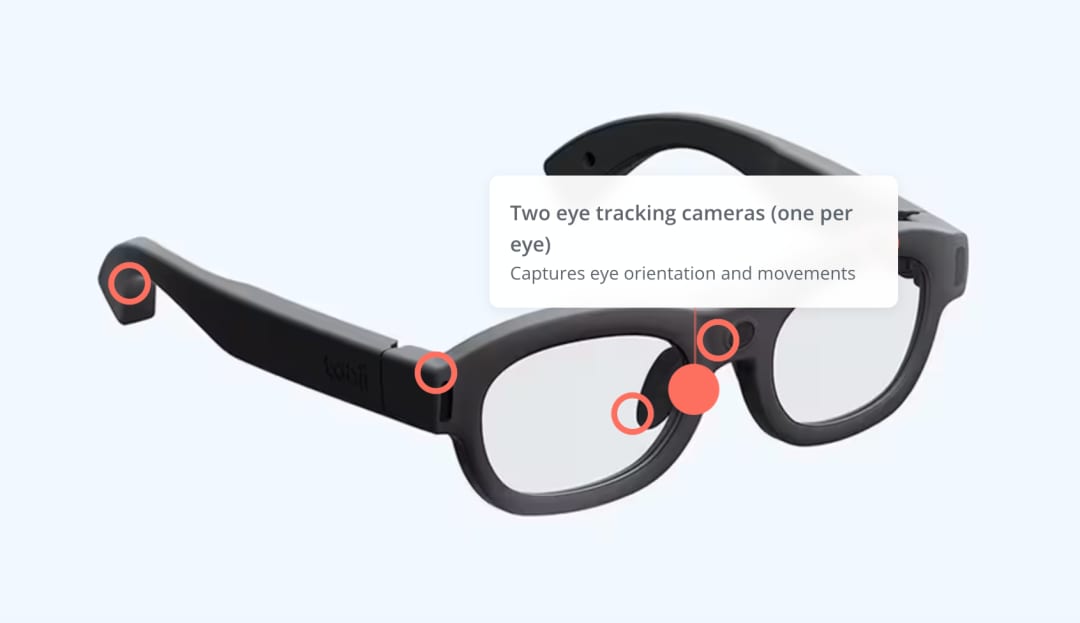
Among eye-tracking vendors, Tobii's new-generation solution for smart glasses has reduced the hardware to one camera and one LED per eye, and uses an ONNX model to run on low-power machine-learning processors. The "Xiao Qi" AI glasses prototype shown by 7invensun uses miniature infrared sensors to further reduce the space occupied by the eye-tracking module in the frame.
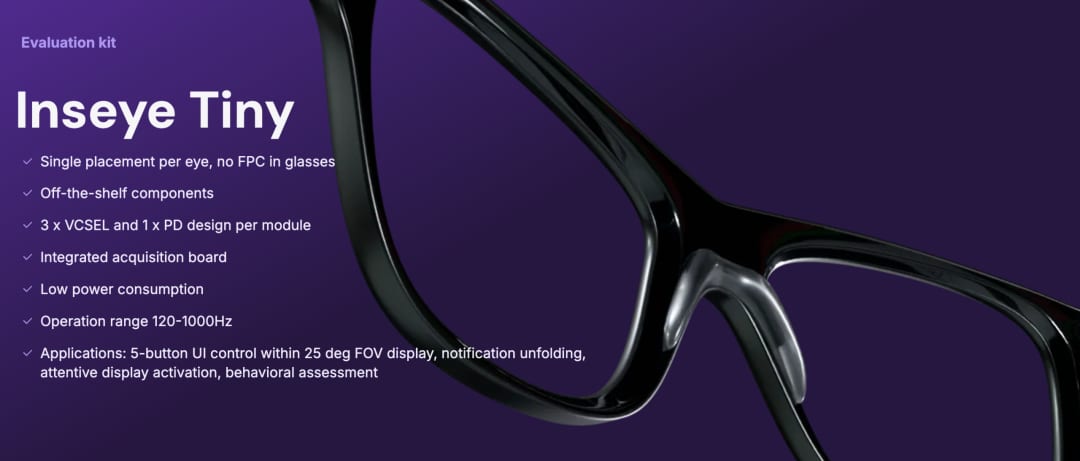
Some approaches are beginning to change the traditional PCCR data collection method itself. Inseye Tiny removes the in-eye camera and instead uses photosensitive components to detect changes in reflections from the eyeball and sclera. The company claims it can run at 100Hz while keeping power consumption below 10mW. Because it no longer continuously captures full eye images, module size, data volume and power consumption can all be reduced further.
Beyond hardware, another approach is to reduce the data the eye-tracking system must process continuously. Conventional cameras output full frames at a fixed rate, generating large amounts of redundant information even when the eye barely moves. Event cameras, by contrast, output events only when pixel brightness changes, capturing rapid eye movements such as saccades and microsaccades while cutting redundant data.
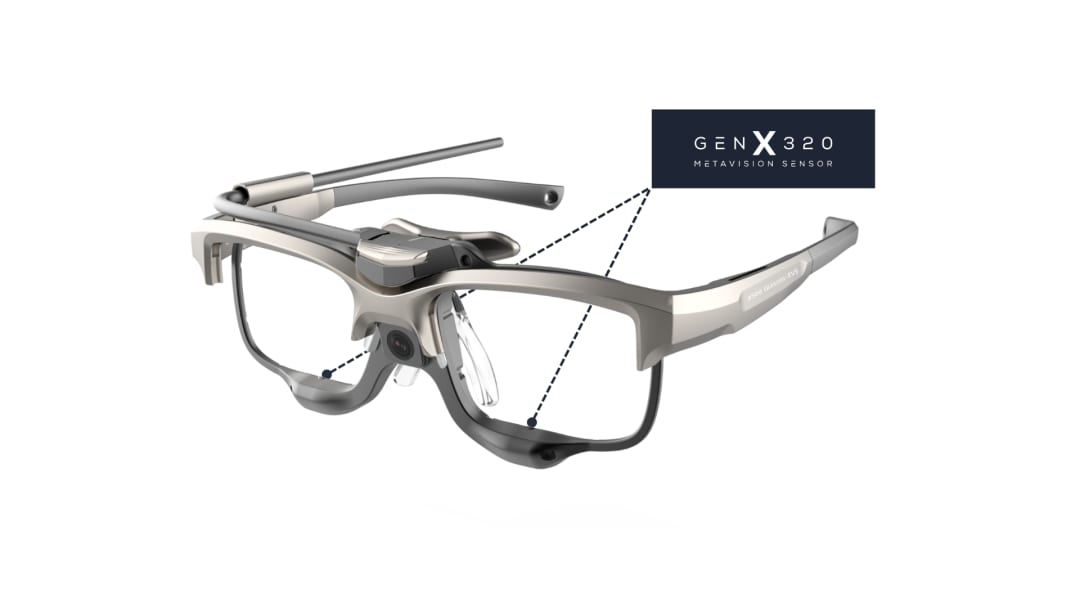
Prophesee's GenX320 has been integrated into 7invensun's aSee Glasses-EVS research eye-tracking device, with eye-tracking sampling rates of up to 1000 Hz. Tobii also partnered with Prophesee in 2025 to explore low-power event-based eye-tracking solutions for AR/VR and smart glasses.
Once power consumption and data volume on the capture side come down, the compute side also needs further low-power optimization. If eye-tracking algorithms constantly call on the main SoC or a high-performance NPU, Always-on operation will still consume system-wide compute and battery life, so vendors are starting to hand continuous sensing tasks to low-power processing units.
During CES 2026, Ganzin showcased its AURORA IIE eye-tracking solution, which uses its in-house EPU2 dedicated ASIC to process eye-tracking data at up to 120Hz and, according to the company, consumes about one-quarter of the power of a general-purpose NPU approach. At the AI glasses chip level, the BES6100 from Bestechnic, for example, splits into a low-power domain and a high-performance domain, with the low-power domain handling always-on tasks such as environmental sensing and pose tracking, and the NPU and GPU called in only when more compute is needed.
For AI glasses, eye tracking must balance not only accuracy and sampling rate, but also power consumption, size and on-device compute efficiency. Only as these costs fall further can eye-based sensing truly become Always-on.
03
After eye data is captured, how is it used and managed?
Once eye sensing goes Always-on, the continuous stream of gaze and iris data raises questions about long-term applications, data processing and privacy protection.
Continuous gaze data can reveal what users repeatedly look at, their reading order and behavioral habits, providing AI with additional context for understanding long-term preferences and personal context. The iris, by contrast, is a more stable biometric that can be used for identity verification, account binding, payments and other security scenarios.
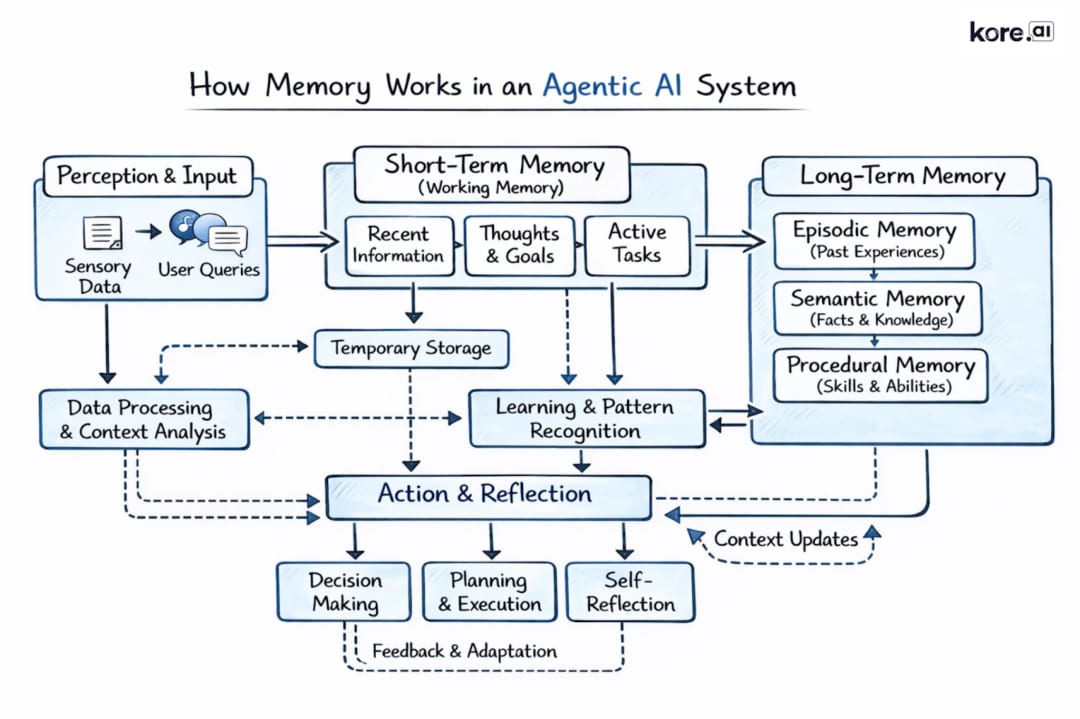
A growing number of AI hardware products are now strengthening long-term memory and personal context capabilities, and continuous eye-tracking data could serve as one input. Inseye positions the Tiny as a "Behavioral Co-Processor" that not only outputs gaze position but also attempts to recognize behavioral patterns such as reading, saccades, focus and task switching, and analyzes how a user's attention shifts across different times and scenarios. For AI glasses, this kind of continuous data could eventually contribute further to modeling user behavior and preferences.
According to publicly available information, the Qianwen N1 series already combines continuous environmental perception with eye tracking. The N1 series uses a low-power vision perception chip to continuously monitor the surrounding scene and offers features such as AI Inspiration Gallery, proactive smart recording and proactive reminders; the N1 Pro adds eye tracking, which can identify the object a user is currently looking at based on gaze position and perform identity verification via the iris. Qianwen has also proposed that eye tracking, environmental perception and long-term personalized memory can be further combined, making the objects a user focuses on part of the personal context understood by a Personal Agent.
But the more continuous the eye data becomes, the more pronounced the privacy concerns. Gaze trajectories can reveal not only what a user has looked at; over time they may also expose interests, reading habits and behavioral patterns. The iris is a stable biometric that, unlike a password, cannot be reset, so if it is leaked there is far less room for replacement or remediation. In September 2026, an XR study of 206 users found that even when raw gaze data was converted into more abstract eye-tracking features, models could still re-identify users to some degree, indicating that eye-tracking data itself carries potential identity information.
For AI glasses worn all day, this problem is amplified further. Eye-tracking data rarely exists in isolation; it may be recorded alongside first-person video, voice, location, time and other information. When such data is linked over the long term, the system can reconstruct a more complete picture of user behavior. Bringing eye data into AI systems therefore does not mean that raw information must all be retained long-term or exposed directly to models and third-party apps.
Apple Vision Pro offers a relatively clear approach: gaze-based judgments are handled mainly at the system level, ordinary apps cannot directly access a user's complete gaze trajectory, and Optic ID converts iris information into a mathematical representation stored in the Secure Enclave, with third-party apps receiving only the result of whether authentication succeeded.
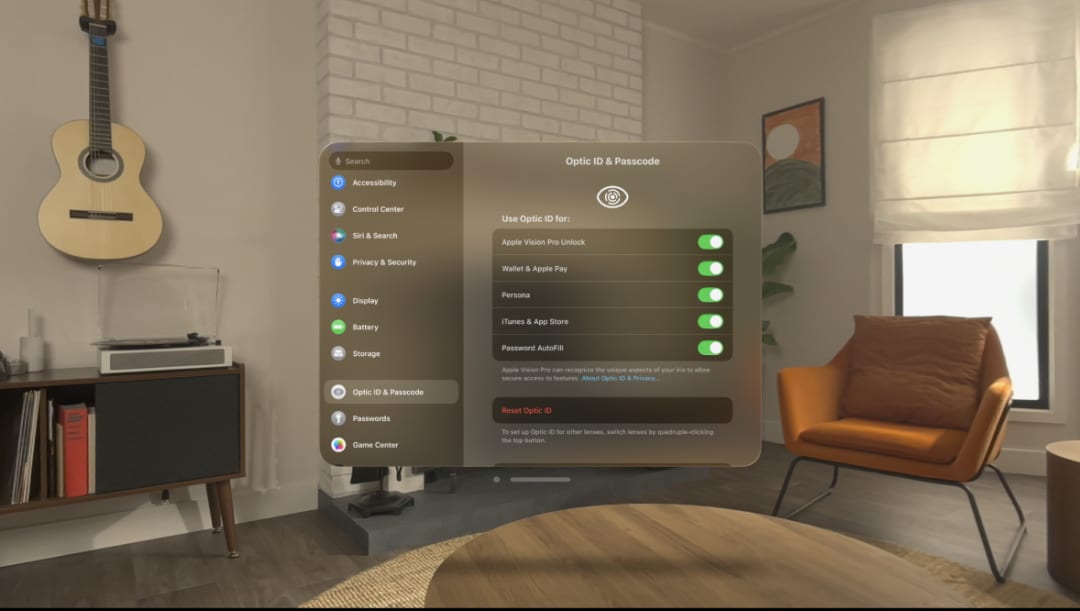
This approach may also apply to AI glasses: process eye data on the device as much as possible, pass only essential information such as the object being looked at and authentication results to the upper-level AI, and further restrict how long raw data is retained and who can access it. As eye sensing moves toward always-on operation, data minimization, local processing and permission isolation could become as fundamental to AI glasses as power consumption and accuracy.
04
Final Thoughts
Gaze reveals what the user is looking at, while the iris confirms who is in front of the device. Combined with cameras, microphones and environmental sensors, this information gives AI a more complete picture of the user's personal context.
But accuracy is only part of the challenge in bringing these capabilities to all-day wearable devices. Power consumption, size, sustained computing capacity, and how eye data is processed and protected all determine whether the system can run reliably over the long term. In particular, as gaze and iris recognition begin to participate continuously in AI systems, the importance of data boundaries and permission management will rise in step.
If these issues are gradually resolved, eye sensing could become a key foundational capability for the next stage of AI glasses. Devices will not only know what the user sees, but also what the user is paying attention to, who is currently using the device, and which information is worth retaining. The eye will become a critical data gateway through which AI understands the user.
Original title: Qwen N1 Pro and Wigain Flow Double Down on Eye Sensing, as AI Glasses Complete the Personal Context Entry Point
Source: OFweek Optics Network · News · optics.ofweek.com