iPhone Duo Sparks Interest in Under-Display Cameras; Red Magic to Launch Ninth-Generation Solution
iPhone Duo引爆!屏下摄像头要翻身了?红魔已坚守六年
Topics and contents
Following the debut of Apple's first foldable phone, the iPhone Duo, under-display cameras are back in the spotlight. Red Magic has also announced plans to introduce its ninth-generation under-display camera technology, sticking with a true full-screen design. The article looks back at how, six years after under-display cameras entered mass production, most manufacturers returned to punch-hole designs.
Under-display cameras, once seen as the ultimate solution for a full-screen design, are back in the spotlight.
After Apple's first foldable phone, the iPhone Duo, officially debuted, under-display cameras — dormant for years — were thrust back into the public eye. Around the same time, Redmagic announced that its ninth-generation under-display camera technology is coming soon, as it sticks with a true full-screen design on its next-generation flagship.

(Image source: Apple official)
Under-display cameras went into mass production as long as six years ago, and many manufacturers at the time saw them as the final form of the full-screen phone. Yet after all these years, most of the phone makers once keen on exploring true full-screen designs have returned to conventional punch-hole designs, while gaming phone brands like Redmagic have held on to this day.
Now that Apple is also experimenting with under-display cameras, this technology, once shunned by the mainstream market, seems to have a new lease on life. But what I'm more curious about is what makes under-display cameras so hard to solve, causing so many manufacturers to give up one after another? And could they become mainstream again?
Why have under-display cameras never gone mainstream?
In 2020, ZTE launched the Axon 20 5G, the world's first mass-produced phone with an under-display camera, and Xiaomi, OPPO and others subsequently showcased related technologies. Many believed at the time that as display processes matured, notches, teardrops and punch-holes on the front of phones would soon become history. But six years on, things have turned out very differently: under-display cameras have failed to break out of their niche, and only a handful of brands such as Redmagic are still holding on.
The reason is that under-display cameras still fail to meet users' everyday needs.
A conventional punch-hole display leaves an opening at the camera's position so that light can reach the sensor directly, whereas an under-display camera requires light to pass through the pixels, electrodes and other structures of the OLED panel. Thin as the display may be, only a limited amount of light actually makes it through these structures into the camera: with insufficient light intake, the camera has to raise sensitivity or lengthen exposure, and the resulting photos tend to be noisy and poor in quality. Indoors, at night and in other low-light conditions, the gap between an under-display camera and a conventional front camera is often even more pronounced.
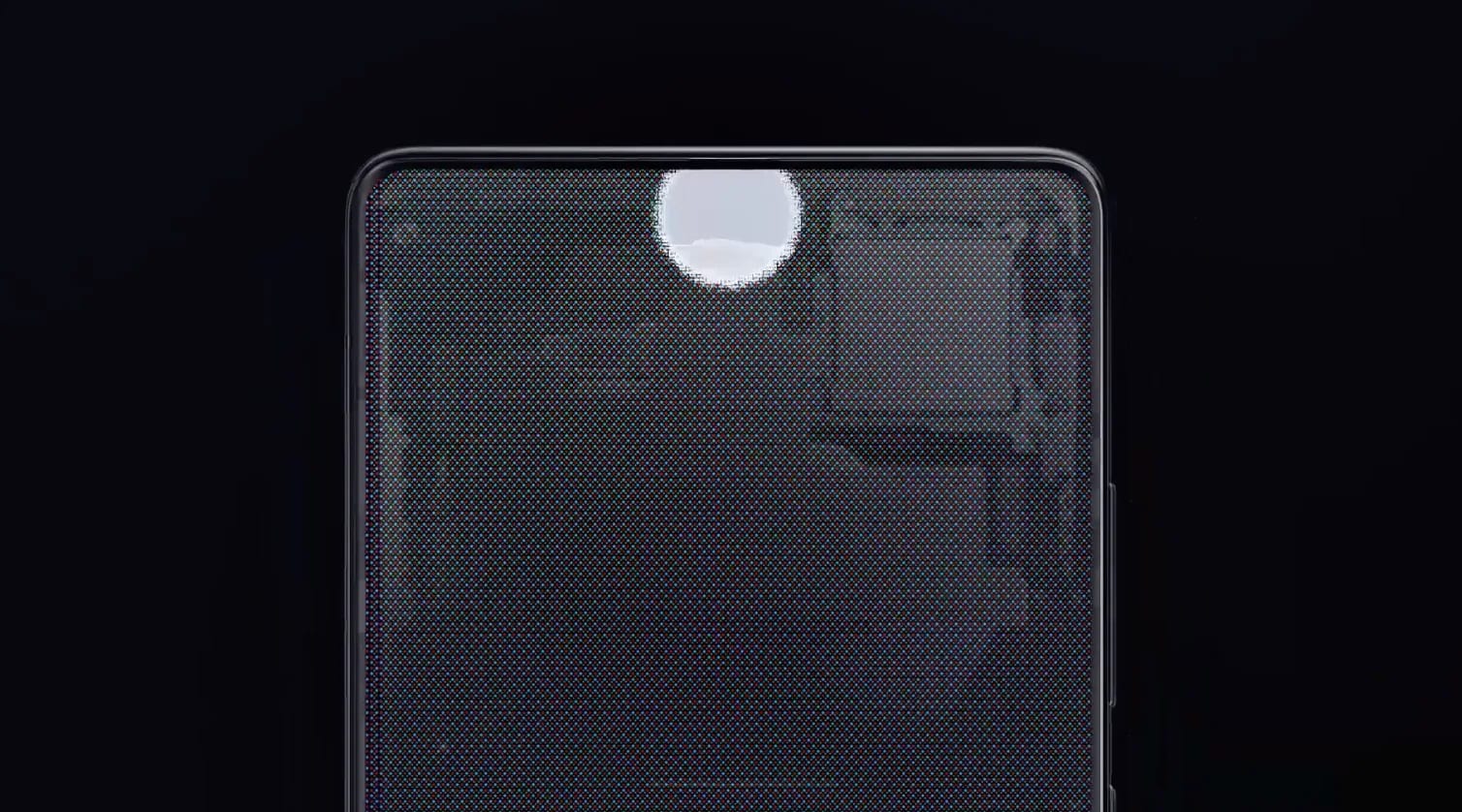
(Image source: Xiaomi official)
What's more, the regularly arranged pixels and circuits inside the display interfere with light. Shoot a streetlight at night with the front camera, for example, and a regular phone might show only slight glare, while a phone with an under-display camera could produce obvious halos that even compromise the clarity of the entire image.
To address these issues, manufacturers can only adjust the display structure above the camera — reducing some of the obstruction, changing the pixel arrangement — to let more light reach the sensor. But that raises a new problem: once the pixel structure above the camera changes, the display in the camera area can differ from its surroundings. Some early under-display camera phones showed obvious graininess, color shifts, and even a visible circular area.
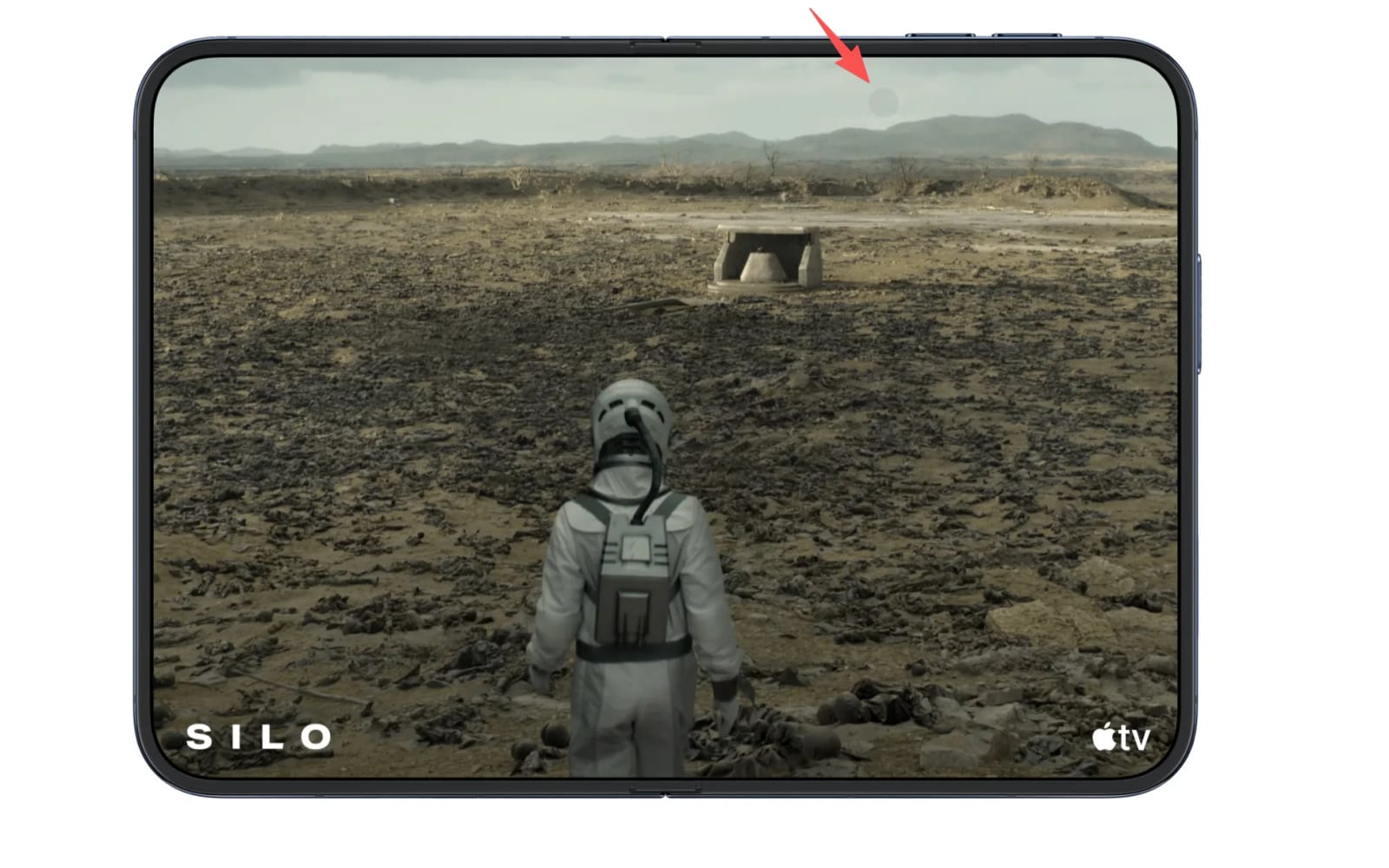
(Image source: Apple official)
That rather defeats the purpose. Users want an under-display camera simply so the front of the phone looks more complete; hiding the camera only makes the whole screen look stranger. Even today, this problem has not been fully solved — even on the just-released iPhone Duo, the camera area remains clearly visible at certain viewing angles and against certain display backgrounds.
Ultimately, manufacturers must always trade off light transmittance against display quality: to make the camera shoot more clearly, transmittance must be raised; to make the display look finer and more uniform, sufficient pixel density and an intact display structure must be ensured. Doing both well is easier said than done.
Of course, under-display cameras have not stood still. Over the past few years, Redmagic has been optimizing pixel arrangement, display uniformity and front-camera imaging algorithms, and today the under-display camera area is hard to detect in normal use, with the overall screen looking considerably better than early products. To quote Lei Technology's review verbatim: "In daylight, indoors and outdoors, no matter what angle I tried, I couldn't tell where the front camera was; only in pitch darkness could I just barely make it out."

(Image source: Lei Technology)
Better display quality, however, does not mean the photo problems are solved. The image quality an under-display camera can capture remains easily affected by the display structure, and manufacturers can only use algorithms for noise reduction, sharpening, color restoration and diffraction correction to bring photos up to a usable level.
Algorithms have their limits, especially in complex scenes such as backlit shots and night photography, where details lost from the original image are hard to restore fully. On top of that, users' expectations for phone selfies keep rising: beyond basic photos, the front camera must also handle video calls, portrait shots, HDR and high-definition video recording. Under-display cameras will clearly need more time to match conventional solutions in these scenarios.
There is also one problem under-display cameras cannot dodge: cost. To balance light transmittance and display quality, the display structure, camera module and imaging algorithms usually all need to be redesigned, naturally driving up R&D and manufacturing costs. By comparison, today's punch-hole displays are highly mature, the holes keep getting smaller, front-camera performance is good enough, and users are no longer as "obsessed" with full-screen designs as they were a few years ago — few will pass on a phone just because of one small hole in the screen.
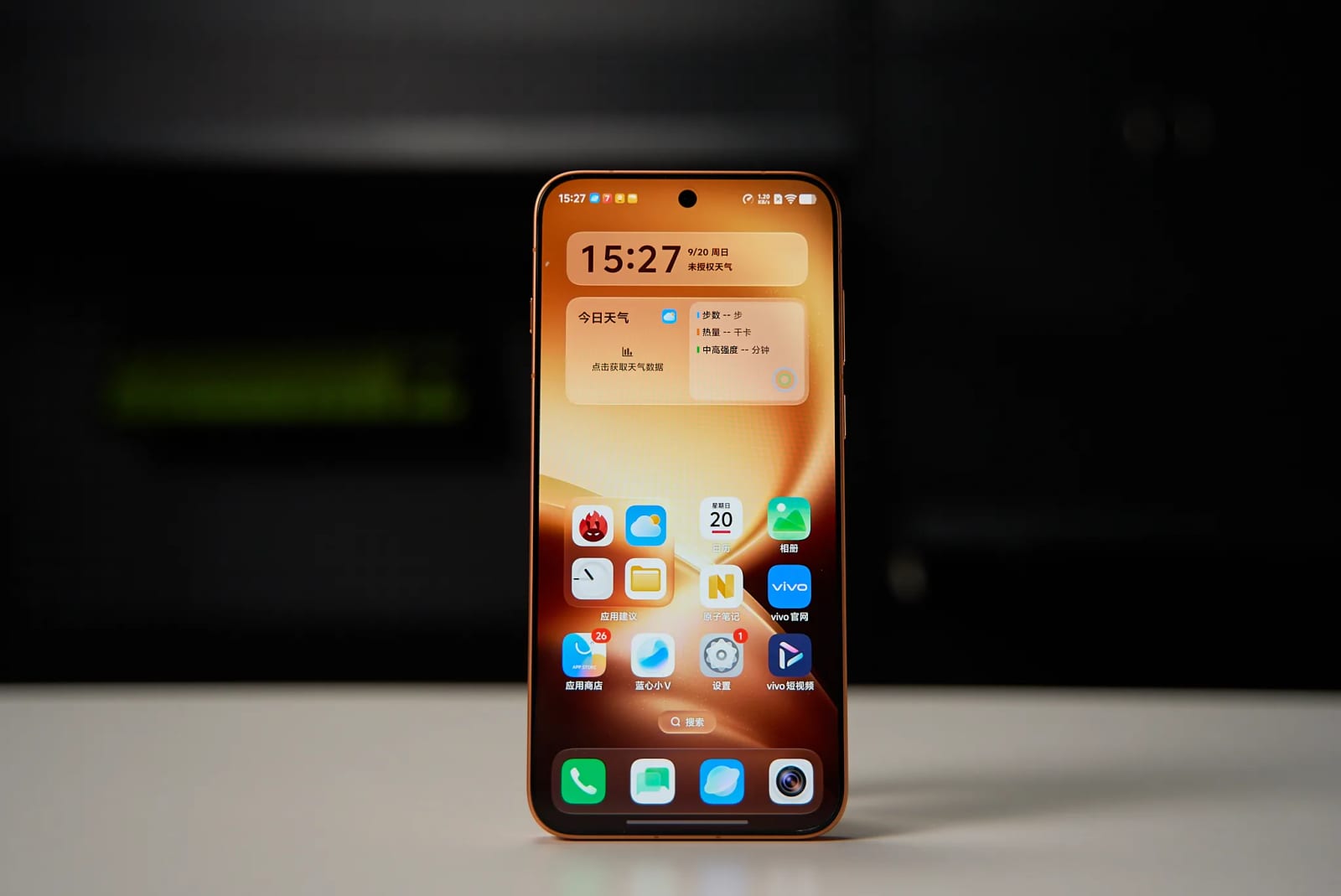
(Image source: Lei Technology)
At the end of the day, the biggest embarrassment for under-display cameras is that manufacturers spend a lot of money while users may not feel much improvement. Since conventional punch-hole displays are already good enough, manufacturers naturally have little incentive to keep tinkering with under-display cameras.
Redmagic for gaming, Apple to enhance the foldable viewing experience
Given all these problems, why are Apple and Redmagic still willing to invest?
Start with Redmagic. As one of the few brands on the market still committed to gaming phones, Redmagic has always placed great importance on display integrity. A small hole in the screen may not affect everyday use for ordinary users, but for gamers who often play in landscape mode, a camera cutout does affect how the picture looks.

(Image source: Redmagic official)
Especially in games that require frequent glances at information along the screen edges, a completely unobstructed display really does deliver a more complete visual experience. Although today's games are generally adapted for punch-hole displays, given the choice, most players would still prefer a screen with no cutout.
Redmagic is also a distinctive brand that has always been willing to make bold moves for the gaming experience. Active cooling fans, touch shoulder buttons and a gaming-specific OS — designs rarely seen on ordinary flagship phones — are precisely what attract core gamers to Redmagic. Under-display cameras are no exception: gamers typically have lower requirements for the front camera, and many are happy to accept slightly worse selfies in exchange for a more complete gaming picture. Redmagic has been able to iterate its under-display camera technology to a ninth generation largely because its target audience genuinely values full-screen design.
Apple's choice of an under-display camera this time comes with an advantage Redmagic lacks: the foldable form factor.
Rather than rushing to put an under-display camera into a regular iPhone, Apple chose to place it on the inner display of the iPhone Duo. I think Apple's approach is right — after all, the biggest selling point of a foldable phone is the large screen when unfolded, offering a wider field of view than a regular phone whether you're watching videos, playing games or working on documents.

(Image source: Apple official)
Leaving an obvious camera cutout on such a large screen would somewhat spoil the look — and for a company like Apple, which cares deeply about product appearance and design consistency, an under-display camera is genuinely appealing.
Foldables also have an advantage that ordinary bar phones lack: they can use a combination of inner and outer displays and cameras to sidestep the under-display camera's most obvious weakness. The iPhone Duo keeps a conventional front camera on the outer display and uses a hidden camera on the inner display, so users can shoot selfies with the outer display camera and use the inner display camera when unfolding the phone for video calls.
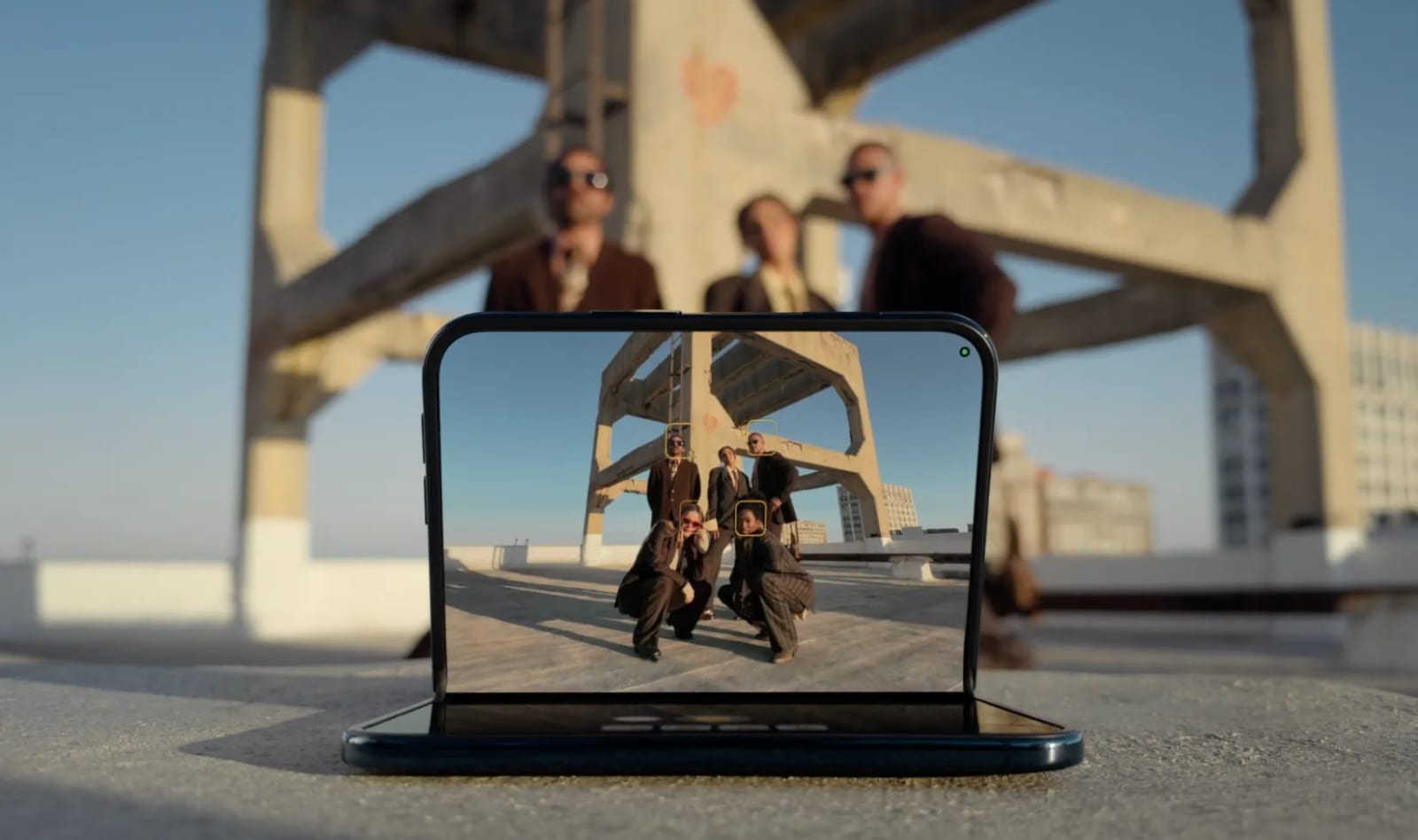
(Image source: Apple official)
Beyond that, a foldable can use the rear cameras together with the outer display for selfies, delivering image quality that can even surpass a regular front camera. Keeping the inner display looking more complete without noticeably compromising the selfie experience is clearly a much more sensible trade-off.
Interestingly, though, to achieve the under-display camera this time Apple "betrayed its ancestral teachings" by dropping Face ID in favor of side-mounted fingerprint unlocking. Face ID requires additional depth-sensing components, and hiding the entire module beneath the display is far harder than concealing a single front camera. Side-mounted Touch ID, by comparison, is far simpler and more straightforward — it works whether the phone is folded or unfolded, with no worries about the changing screen form factor affecting the unlock experience.
Losing Face ID is admittedly a shame, especially for iPhone users accustomed to face unlock, who will need some time to readjust to fingerprints. But if it buys a more complete foldable display, at least for this product, it is an understandable trade-off.
So while both Apple and Redmagic have chosen under-display cameras, the two companies value different things. Redmagic wants a complete screen to enhance the gaming experience while reinforcing its product identity; Apple wants to further exploit the foldable's large-screen advantage. For both, the benefits of under-display cameras are clear enough that today's shortcomings are easier to accept.
Do under-display cameras still have a chance to become mainstream?
Looking back at the phone industry's development over the past few years — from pop-up cameras and slider designs to today's under-display cameras — manufacturers have tried many ways to achieve a true full-screen phone. Yet most of these once eye-catching designs never became mainstream, while the seemingly unoriginal punch-hole display has endured to this day.
The phone market has also changed considerably in recent years. Manufacturers used to attract consumers with higher screen-to-body ratios and new body forms, but people are now clearly less sensitive to design innovation. Compared with whether there is a small hole in the screen, users may care more about how well the phone shoots, how long the battery lasts and whether the price is reasonable. Under-display cameras do make phones look sleeker, but that alone is unlikely to be the reason most people upgrade.
Still, I believe Apple's entry this time is meaningful. Under-display cameras used to appear mainly in niche products like gaming phones; now, as the foldable market gradually matures, the technology has a chance to find wider application. If the iPhone Duo performs well in the market, more manufacturers may reconsider the value of under-display cameras.
Of course, Apple's adoption of an under-display camera does not mean other manufacturers must follow suit. At least in my view, under-display cameras will likely coexist with punch-hole displays for a long time to come — the former serving specific users who want a complete screen, the latter continuing to meet the everyday needs of the vast majority of consumers. As for when true full-screen phones will become fully mainstream, we will probably have to wait a while longer.
Source: OFweek Optics Network · News · optics.ofweek.com