CIOE's Hidden Star: Optical Interconnect Testing Gets Repriced
【光互连观察07】CIOE的“隐藏主角”:光互连测试被重新定价
Topics and contents
C114 notes that at CIOE 2026, optical module makers competed on 1.6T, 3.2T and 6.4T speeds, while test and measurement is another crowded track. Lianxun Instruments, which listed on the STAR Market this April, saw its shares peak at RMB 2,777.77 within three months of its debut, making it the most expensive stock on the A-share market. Its business covers test equipment for optical modules and CPO optical engines.
C114, September 20 (reporter Huang Shuoya) — At the CIOE 2026 exhibition halls, optical module makers' booths were, as usual, the most crowded, with 1.6T, 3.2T and 6.4T spec races unfolding one after another. But shifting the focus from "how fast" to "how accurately measured" reveals another equally crowded racetrack.
Lianxun Instruments, which listed on the STAR Market this April, saw its shares peak at 2,777.77 yuan within three months of its debut, making it the A-share market's newest "stock king." It does not make optical modules; it builds test equipment for optical modules and CPO optical engines. This "yardstick" is so highly sought after because of its strong performance and predictable outlook. Lianxun Instruments posted first-half revenue of 1.531 billion yuan, up 208.71% year on year, and net profit of 567 million yuan, up ninefold, while its overall gross margin reached an astonishing 70.79%.
Lianxun Instruments is, in fact, just one example. At this year's CIOE, all the major optical interconnect test vendors were on hand. The organizer also deliberately placed them in the same exhibition hall, allowing us to observe the technology frontier and industry development up close.
Three Major Overseas Vendors: A Battle of Speed and Packaging Limits
One feature of the testing segment is often overlooked: it comes before large-scale product deployment. At CIOE 2026, while 1.6T optical modules were just entering ramp-up production and 3.2T was still in customer validation, test vendors had already rolled out complete solutions covering CPO, NPO, 1.6T/3.2T and even 6.4T. This forward-looking approach is precisely the best window onto the industry's pace.
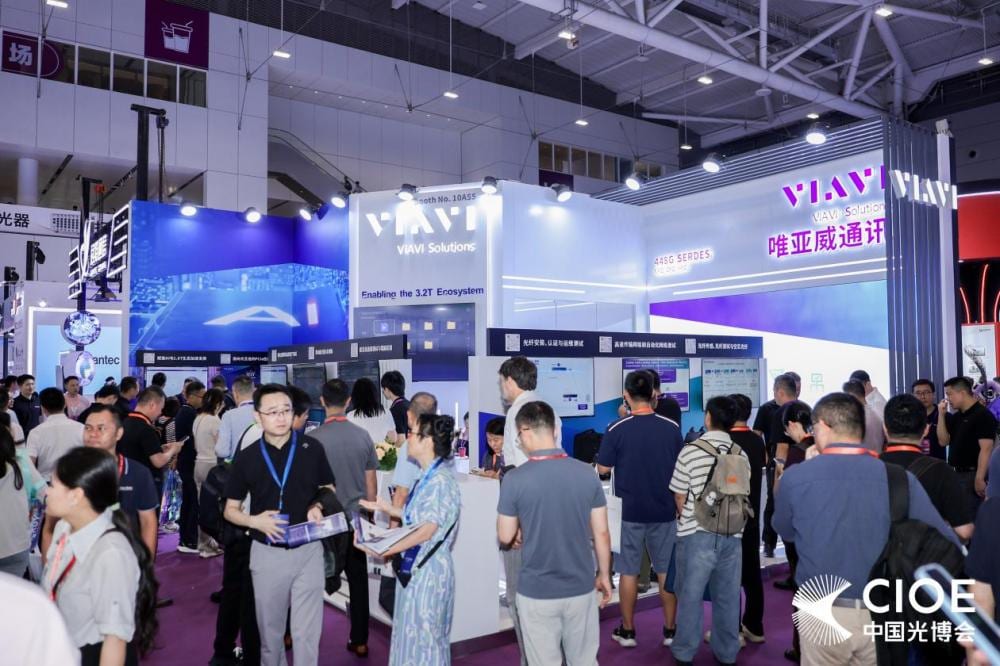
A long-established player in optical testing, VIAVI presented its full portfolio, including 1.6T/3.2T Ethernet, silicon photonics manufacturing, and the ONE LabPro/TestCenter platforms. The DCX-700 can test 24 fiber cores simultaneously.
On the industry hot topic of CPO, Ines Brunn, VIAVI Global Business Development Manager, noted that about 80% of testing for traditional pluggable optical modules is completed at the end of the production line. CPO, by contrast, makes wafer-level testing mandatory, so test efficiency has replaced manufacturing capacity as the new bottleneck. To address this, VIAVI has built a test system covering the entire CPO process and has been deeply involved in the complete validation of several major CPO projects from R&D to commercial deployment, accumulating solid testing experience.
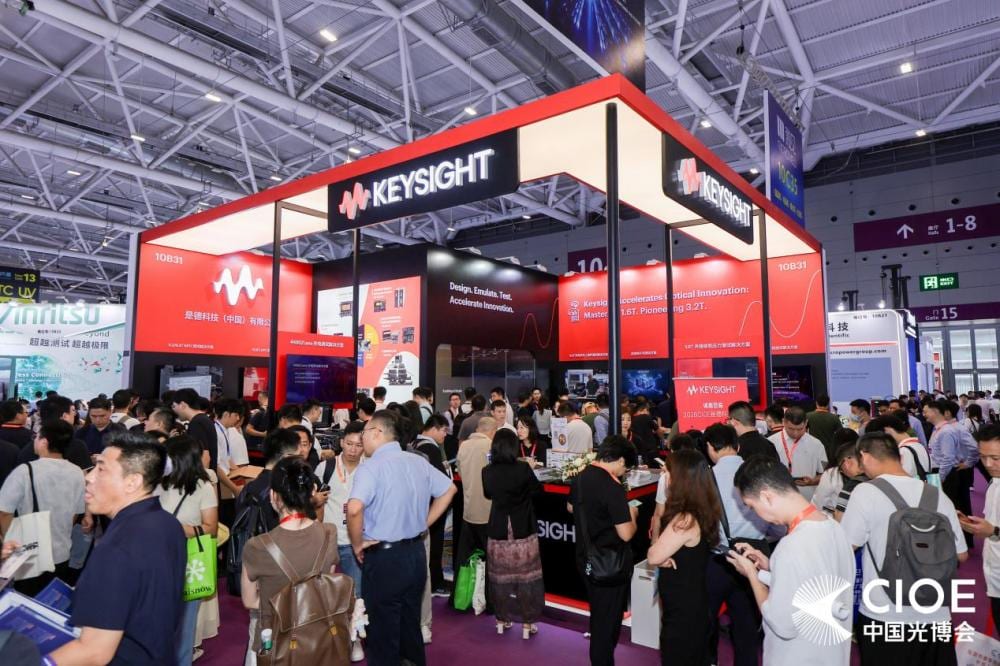
Keysight Technologies presented a full-chain high-speed optoelectronic test solution for AI data centers, showcasing core instruments such as the N1093B, N1096B and N4398A, covering end-to-end validation from silicon photonics chips and optical modules to complete systems. On-site highlights included a 448G/Lane pre-research test solution supporting PAM4/PAM6/PAM8 modulation formats, underpinning 3.2T optical interconnect R&D, as well as a live measurement of a 3.2T NPO optical engine with partners and the first showing of a 12.8T XPO test solution. The exhibits also covered LPO, OCS and high-speed coherent testing, enabling full-stack L1-L3 validation.
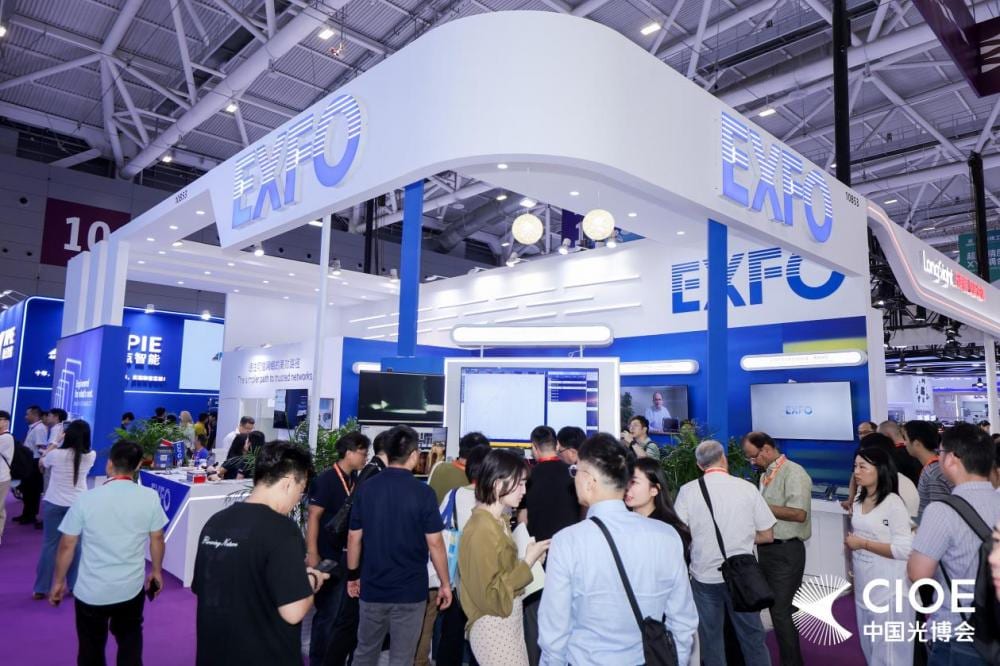
As a driver of full-link testing from chip to data center, EXFO highlighted its end-to-end optoelectronic test solutions for AI data centers, spanning chips and optical modules to complete systems, and introduced two new products: the LTS1600 series and the BA1602 bit error analyzer. The LTS1600 supports 1.6T Ethernet traffic validation under the IEEE P802.3dj standard, is compatible with OSFP packaging, and scales across multiple ports to deliver up to 6.4T of test capacity. The BA1602 provides 8/16-channel PAM4 bit error testing, covering 1.6T and LPO scenarios. The company also demonstrated the OPAL automated PIC silicon photonics test platform and the CTP10 passive component test system, addressing both R&D lab and high-volume production needs. Together, these tools support validation of next-generation high-speed optical interconnect technologies such as NPO and CPO, providing a complete test toolchain for the iteration of optical hardware in AI compute clusters.
In fact, VIAVI, Keysight Technologies and EXFO all share a common trait: standalone instruments are giving way to full-chain capabilities spanning R&D, production lines and live networks. Their shared bets on CPO, NPO and 1.6T/3.2T/6.4T reflect the forward-looking value of testing ahead of large-scale product deployment.
Domestic manufacturers rise collectively: from single-point breakthroughs to the full chain
At this exhibition, domestic test instrument makers such as Wanliyan, Haihui Technology, CETC Ceyear, Lianxun Instruments and Puson Electronics also delivered strong performances.
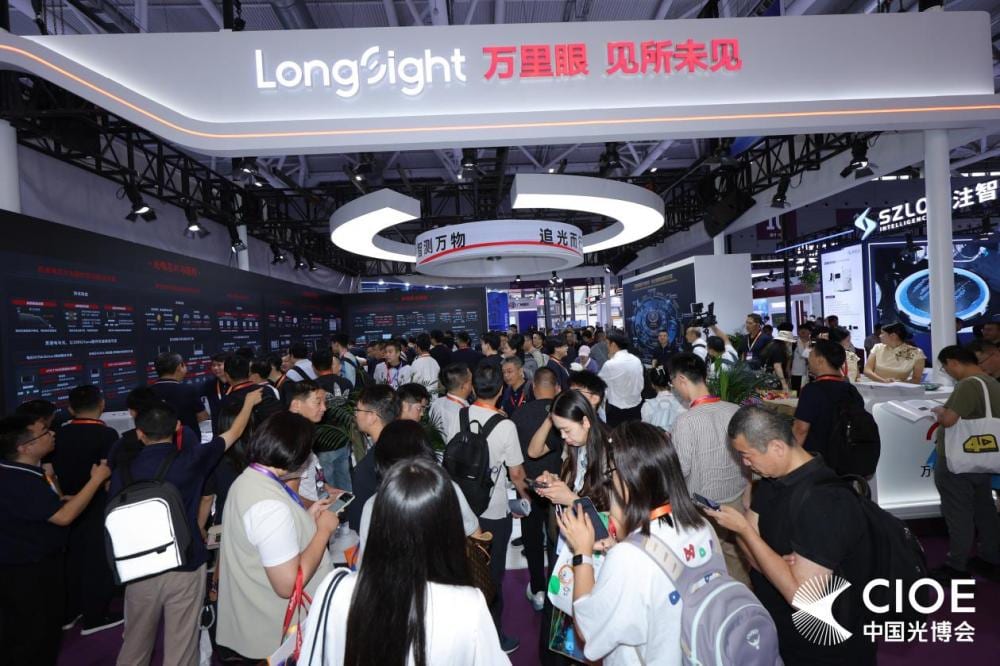
Among domestic players, SiCarrier's Wanliyan made the most comprehensive showing, unveiling three new products: a 110GHz vector network analyzer, a 1.6T L1–L3 network tester, and a 90GHz optical modulation analyzer, along with test solutions covering the chip, module, and network tiers. On specifications, the 1.6T network tester delivers 1.6T per port and 6.4T total capacity, supports the CMIS 5.4 standard, and includes about 2,500 built-in test cases; the 90GHz optical modulation analyzer supports 150G baud rates and covers the O and C+L bands. Its real-time oscilloscope cuts parameter optimization for 224G LPO from two weeks to 10 minutes.
Wanliyan CEO Liu Sang told C114: "The bottleneck in optical communications is not just components and processes; the industry also needs a sufficiently accurate yardstick." In his view, test instruments are an industrial foundation, not a supporting tool.
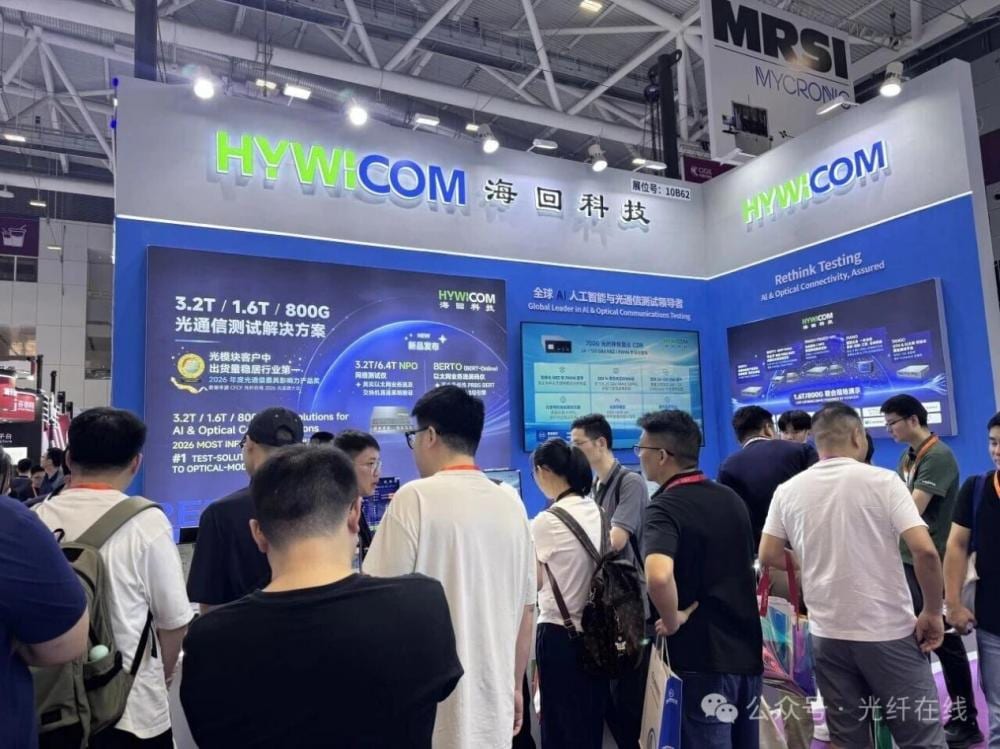
In optical interconnect testing, Haihui Technology is something of a quiet winner, having served more than 30 vendors in 1.6T optical module testing with a market share exceeding 75%. At this show, Haihui Technology targeted a more specific customer pain point: the testing gap. Conventional bit error rate testers perform only offline PRBS testing and cannot measure live traffic flows. Its FRAEO 16T2-NPO, making its CIOE debut, natively outputs 32 high-speed electrical signals from a single unit, with each channel supporting 106G/212G PAM4 and covering full-specification NPO testing needs at 3.2T and 6.4T. Also debuting on site were the BERTO real-traffic bit error rate tester, an optical sampling oscilloscope, and an optical clock recovery unit.
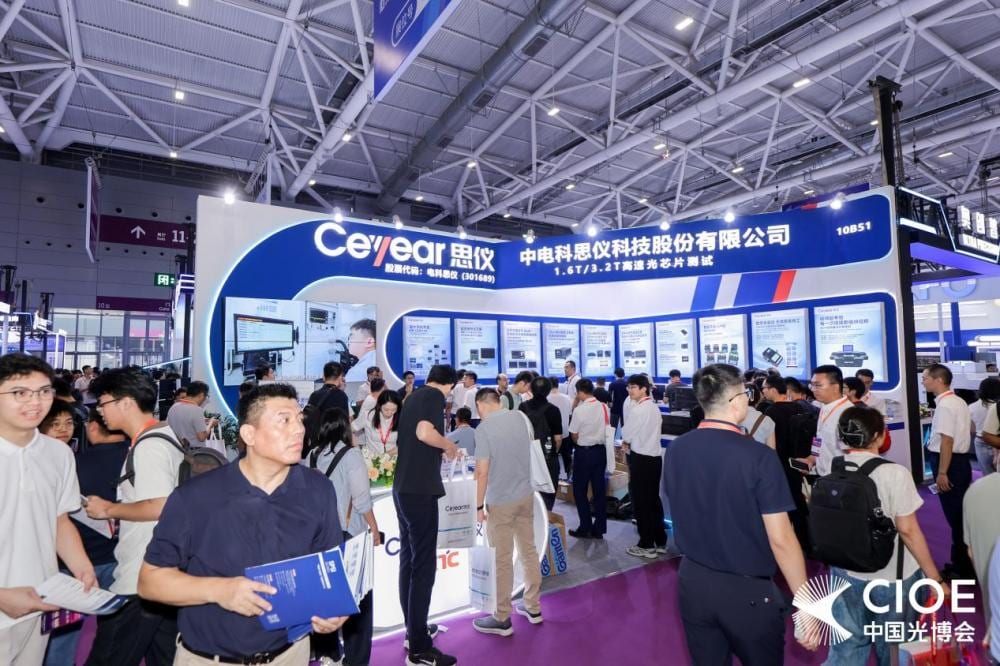
As a "national team" in test and measurement, Ceyear Technologies focuses on AI computing power, silicon photonics, and coherent optical communications, showcasing five in-house optoelectronic test solutions. Its flagship exhibit is a comprehensive test system for 1.6T/3.2T high-speed optical chips and optical modules. The solution is built around the 6433QA optical component analyzer, 6362-series optical spectrum analyzer, and 6317 tunable laser source as core hardware, supporting modulation testing up to 170GHz and covering the full process from R&D validation to production screening of optical chips and modules. Also on display were a wavelength-sweep test system, laser characterization testing, optical device diagnostics, and fiber splicing test solutions, capable of precisely pinpointing defects in photonic integrated circuit links. The complete solution closes the gap in domestic high-speed optical interconnect testing and, targeting next-generation optical interconnect technologies such as CPO and NPO, provides a domestic test foundation for hardware iteration in 100,000-card intelligent computing clusters.

Lianxun Instruments, a closely watched A-share market leader, presented five in-house optoelectronic test solution areas for AI intelligent computing high-speed optical interconnects, covering full-process validation of optical chips, silicon photonics, and optical modules. Its core exhibit was a complete 1.6T optical module test system comprising the DCA1065 sampling oscilloscope, CR3302 clock recovery unit, and PBT3058 bit error rate tester, supporting PAM4 signal testing. Also shown on site were the sCT9002 six-axis high-precision coupling system and the OPB8201 silicon photonics and CPO test platform, paired with laser CoC burn-in test equipment and a series of precision source measure units, serving both R&D debugging and automated production testing.
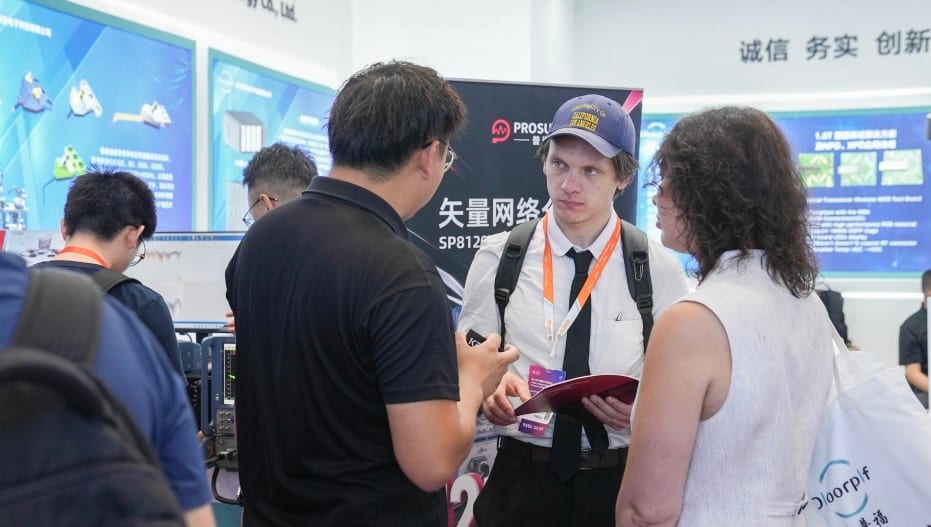
Another exhibitor, Puson Electronics, entered from RF and microwave technology and highlighted the SP8110LCA optical component analyzer, covering frequencies from 10MHz to 110GHz and supporting E/O, O/E, and O/O modes. Its joint demonstration solution brings frequency-domain measurement of four device types—electro-optical, opto-electronic, optical-optical, and electrical-electrical—onto a single platform. Also on display was the SP8120 wideband vector network analyzer, delivering ultra-wide continuous frequency coverage from 500Hz to 125GHz.
After walking through the test and measurement exhibition area, the most immediate impression is that this industry is shifting from "selling instruments" to "selling capabilities." Overseas vendors are building end-to-end integration, domestic players are moving from single-point breakthroughs to systematic output, and solution providers are filling the verification gap between components and systems. The common premise is that the speed iteration cycle for optical interconnects has shrunk from four years to two, and test capabilities must run faster than the products themselves.
There may be an element of market sentiment in Accelink Instruments' share price, but the industry logic is solid: the certain growth of optical interconnects is pushing testing from a supporting role to the center of the value chain. For every company, the real test is not building one good instrument, but remaining that sufficiently precise "yardstick" as optical interconnects move from 800G to 3.2T/6.4T and from pluggable to NPO/CPO. 
Source: C114 Communications Network · Optical Communications · c114.com.cn