Optics to Decide the XR Era
光学决胜 XR 时代: 晶圆迈入百万,巨头同步入局!
Topics and contents
The article argues that optical technology is the core breakthrough for the XR industry, with wafer-level optics reaching million-unit volumes and major players entering the field simultaneously.
1. Optical Technology Becomes the Core Breakthrough for the XR Industry
Augmented reality (AR) and virtual reality (VR) devices are undergoing a critical transition from "technology validation" to "consumer-level adoption." In this process, the optical system, as the "last mile" connecting digital content to the human eye, directly determines a device's size, weight, display quality and wearing comfort through its technological breakthroughs.
Between 2023 and 2026, the global AR/VR optics field saw a wave of milestone innovations: in VR, Pancake lenses have fully replaced Fresnel lenses as the mainstream; in AR, optical waveguide technology is maturing, and the convergence of silicon carbide (SiC) materials, MicroLED microdisplays and nanoimprint processes is reshaping the industry landscape.
Entering 2026, the industry reached an explosive inflection point: from January to May 2026, online sales of smart glasses in China rose 81.2% year on year, while first-half sales across all channels grew 85.5% by volume and nearly doubled by value; 43 AR glasses models were launched in rapid succession, and optical waveguide production lines went fully into operation. Backed by both policy subsidies and capital markets, the AR glasses supply chain has officially entered the mass-production competition stage.
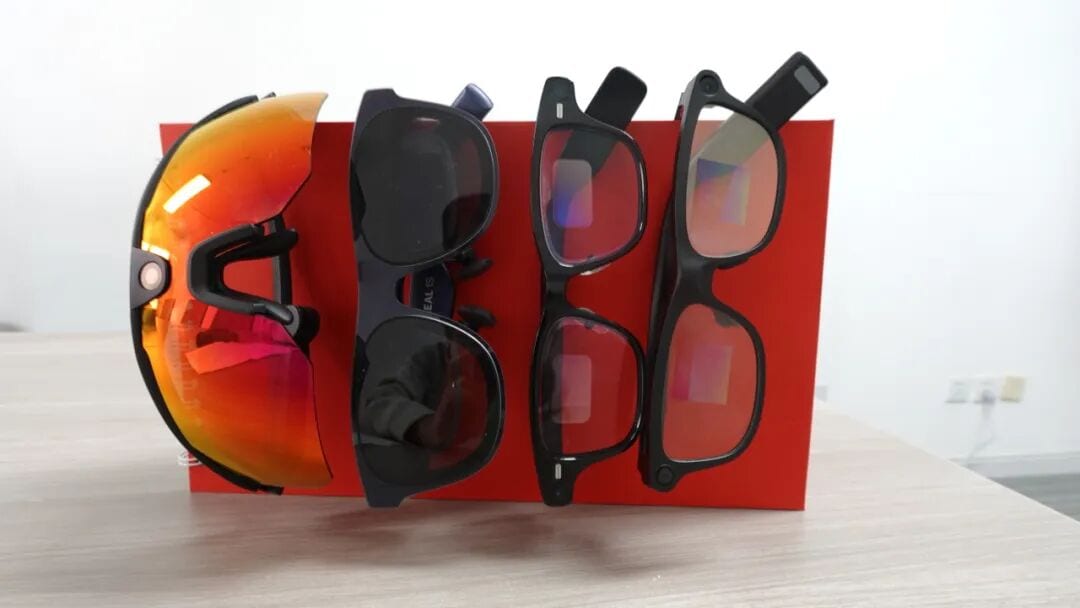
Image source: VRAR星球 (VRAR Planet)
2. VR Optics: Pancake Lenses Dominate, Evolving Toward Higher Resolution and Thinner, Lighter Designs
2.1 Pancake Lenses Go Mainstream, Slimming Down Optical Modules
Thanks to their ultra-thin profile, Pancake lenses fully replaced Fresnel lenses between 2023 and 2025, becoming standard equipment in VR headsets. Unlike conventional Fresnel lenses, Pancake lenses fold the optical path using multiple reflective surfaces, cutting optical module thickness by nearly 40% while effectively eliminating the "god ray" problem inherent to Fresnel designs.
Notable domestic achievements:
Goertek introduced a new Pancake lens module in 2023 with a 110° field of view, reducing headset optical thickness by 35% compared with earlier Fresnel designs.
Jiangxi Lianchuang Electronic introduced high-precision VR Fresnel lenses in 2024, supporting 4K per-eye display resolution with distortion below 1% (mainly aimed at upgrades of installed units and specific B2B scenarios).
Notable international achievements:
Apple Vision Pro (released in 2024) uses dual Micro-OLED 4K+ displays totaling 23 million pixels, paired with a custom Pancake optical system, delivering 4K resolution per eye at a 90Hz refresh rate and a pixel density of 32 PPD (pixels per degree), the highest among standalone headsets.
Meta Quest 3 (2023) likewise uses Pancake lenses, with a field of view of about 110°.
Industry statistics show that nearly 60% of VR headsets launched in 2024 adopted Pancake lens technology.
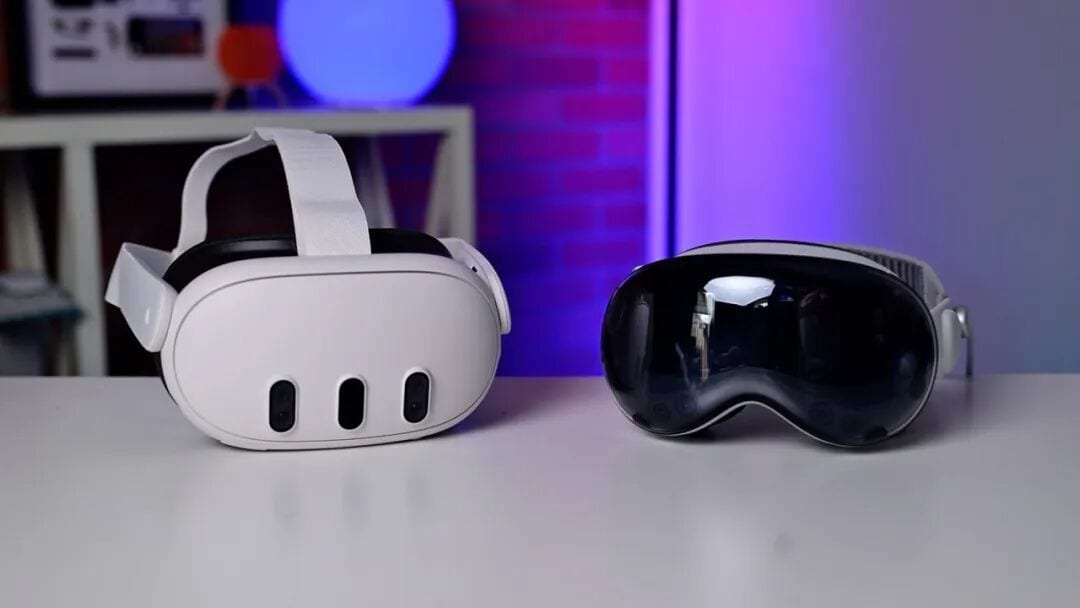
Image source: AppleInsider
2.2 New Materials and Adaptive Optics
Despite their clear advantages, Pancake lenses still face technical bottlenecks such as relatively low optical efficiency, ghosting and high cost. The industry is therefore pursuing breakthroughs along two fronts:
Hybrid glass-polymer lenses: Manufacturers are developing hybrid glass-polymer lenses to balance durability and light weight, potentially reducing headset weight by up to 45%.
Adaptive-focus lenses: In 2025, Deep Optics Ltd introduced adaptive-focus lenses that dynamically adjust focal length from 0.5 meters to infinity, effectively relieving visual fatigue in mixed-reality headsets and offering a solution to the vergence-accommodation conflict (VAC).
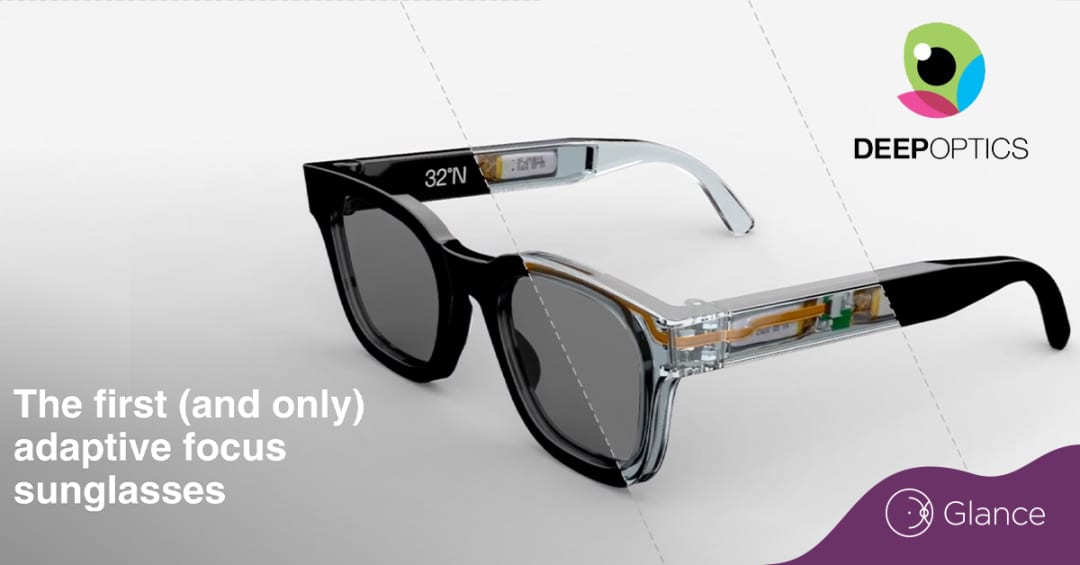
Image source: eyes on glance
III. AR Optical Technology: Waveguides Flourish, Silicon Carbide and MicroLED Drive Transformation
3.1 Waveguides Become the Mainstream AR Optical Path
With their ultra-thin 2–5 mm profile and high light transmittance, waveguide technologies have become the optical solution of choice for AR smart glasses. About 48% of AR prototypes introduced between 2023 and 2024 used waveguide optical systems; more than 28 AR glasses prototypes launched in 2024 employed waveguide optics.
Current optical waveguide technologies fall into three main categories:

The three approaches serve different positions: Diffractive optical waveguides (SRG, surface relief gratings), leveraging mature semiconductor processes and controllable costs, are the mainstream solution for consumer AR today, but rainbow artifacts and low light efficiency remain pain points; geometric/array waveguides deliver the best image quality with no rainbow artifacts, but are difficult to fabricate and have low yields, so they are mostly used in high-end enterprise scenarios; volume holographic gratings (VHG/PVG) offer high theoretical light efficiency and strong cost potential, but photosensitive material stability and large-area mass production processes are still ramping up, making them the biggest long-term variable.
3.2 Silicon Carbide (SiC) Waveguides: A Material Revolution Opens a New Track
As a third-generation semiconductor material, silicon carbide became a star material in AR optics in 2024, thanks to its high refractive index, high thermal conductivity and low optical loss.
International breakthroughs:
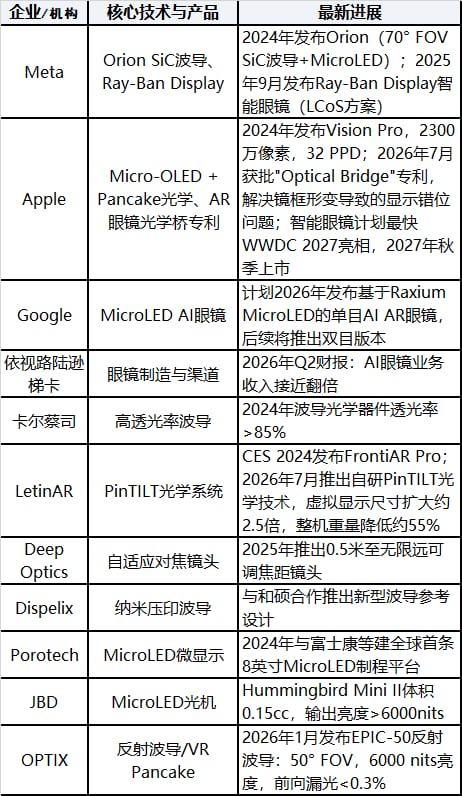
Meta Orion (concept product unveiled in 2024) uses silicon carbide diffractive waveguides to achieve a 70° field of view, the widest reached by any diffractive waveguide on the market at the time, systematically addressing the narrow field of view, rainbow artifacts and heat dissipation challenges of AR glasses.
Domestic breakthrough:
In 2025 and 2026, Goertek Optics introduced the industry's first silicon carbide etched full-color diffractive optical waveguide, achieving two major breakthroughs: a 50° field of view and a dramatic reduction in module thickness from 1.2mm to 0.65mm. Innovative grating design and dry etching processes effectively eliminate ghost images and rainbow interference common in AR waveguides. Paired with a compact full-color LCoS optical engine, on-eye brightness can exceed 1500 nits.
According to the "2025 AI+AR Smart Glasses Optical Display Research White Paper," SiC waveguide lens shipments are projected to approach 500,000 units in 2027 and reach 7 million units by 2030.
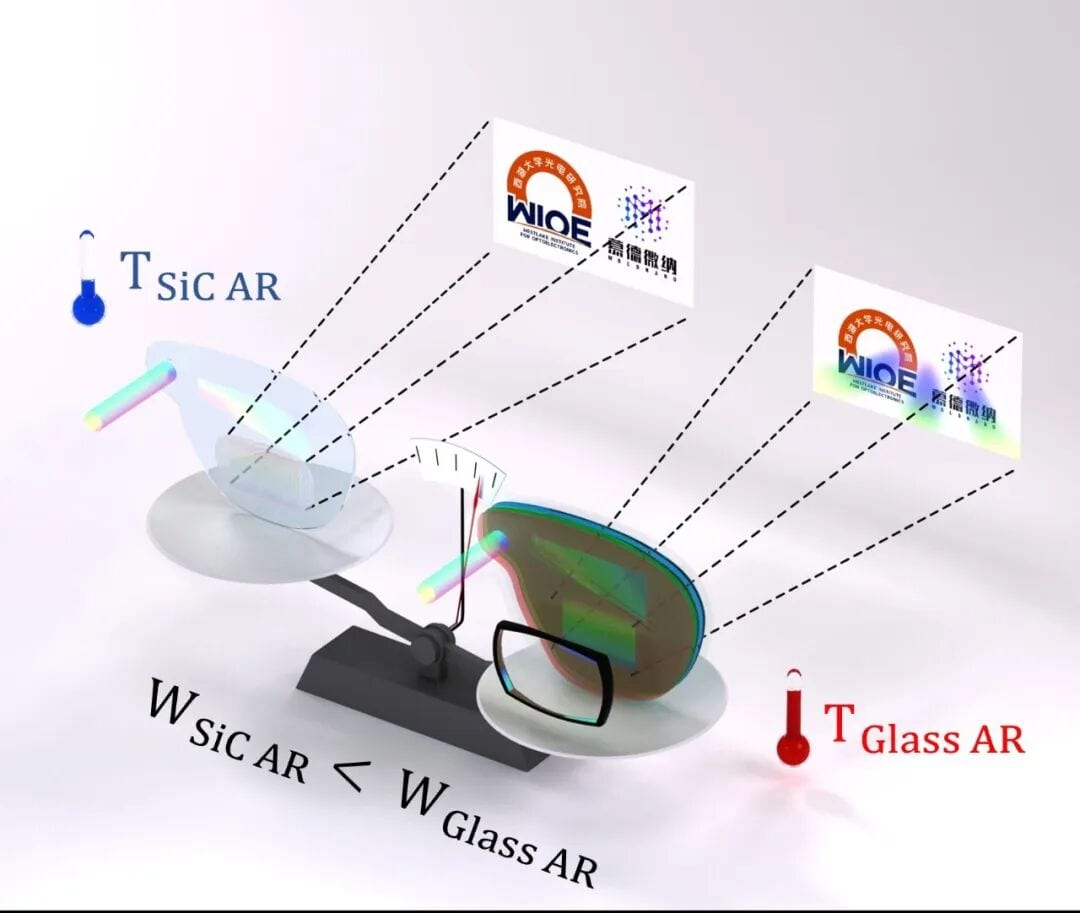
Image source: Westlake University
3.3 Display engines: MicroLED and LCoS on parallel tracks
Display engines for AR glasses are diverging into distinct segments based on field of view. MicroLED currently dominates in China; cutting-edge prototypes such as Meta Orion use MicroLED (LEDoS) solutions, while consumer products such as Meta Ray-Ban Display opt for LCoS technology. The two technologies are expected to coexist over the long term: LCoS suits wider fields of view, while MicroLED suits lightweight designs with narrower fields of view.
MicroLED Microdisplay Breakthroughs:
JBD (Jade Bird Display): By the end of 2024, more than 30 AR glasses using JBD solutions had launched. Its Hummingbird Mini II optical engine, introduced in 2024, measures just 0.15cc and fits seamlessly into the temple of eyeglasses. The new Hummingbird I full-color optical module delivers brightness above 6000 nits, far exceeding the limits of conventional solutions.
Porotech: In 2024, in partnership with Foxconn, Powerchip and GIS, it built the world's first 8-inch process platform dedicated to MicroLED, spanning the entire chain from GaN materials and wafer fabrication to optical module integration. By the end of 2024, the team had reduced pixel size to 1.25μm, with plans to use it in the development and commercialization of high-spec MicroLED products in 2025. Its Dynamic Pixel Tuning (DPT) technology won an SPIE Prism Award.
Yanshan Technology "Weimang" (July 2026): West Lake Yanshan Technology unveiled its self-developed MicroLED microdisplay optical engine, "Weimang," featuring its in-house VGA008 silicon driver chip. With a pixel size of only about 2.4 micrometers, it achieves 640×480 resolution within a 0.08-inch display area, for a pixel density in the tens of thousands of PPI. Under specified test conditions, the chip exceeds 3 million nits in brightness and achieves display uniformity above 95%, with productization advancing on an 8-inch MicroLED microdisplay production platform.
LCoS Optical Engine Breakthroughs:
Goertek Optics developed a 0.7cc ultra-compact LCoS optical engine in-house. Paired with a single-engine binocular diffractive optical waveguide, it is offered in monochrome (with Micro-LED) and full-color versions, effectively reducing cost while ensuring display consistency.
3.4 Optical Waveguide Manufacturing: Nanoimprint and Direct Etching Advance in Parallel
Optical waveguide manufacturing is moving from the lab to volume production, with multiple processes coexisting:
Entry-level/low-to-mid range: dominated by "permanent nanoimprint lithography (Permanent NIL)" used by Radiant, AUO and Vuzix;
Mid-range products: represented by "nanoimprint lithography combined with etching" used by Magic Leap;
High-end products: mainly the "direct etching process" advanced by AAC, Dispelix, Applied Materials and GlobalFoundries, complemented by the "geometric waveguide" solutions developed by Lumus and SCHOTT.
AUO presented its proprietary optical waveguide technology at SID 2025, using nanoimprinted SRG diffractive waveguides that project virtual images directly onto eyeglass lenses, delivering excellent brightness uniformity and high-definition display performance.
Zhige Technology's fully automated production line: Zhige Technology has built the industry's first fully automated mass-production line for diffractive optical waveguides, becoming the first to achieve full-stack automated production on both 8-inch and 12-inch wafers. Monthly capacity can reach 100,000 pieces, and the company already has the capability to ship 20,000 pieces per month in volume. It expects to deliver more than 1 million waveguides in 2026; after capacity expansion, monthly output will reach 250,000 pieces and annual capacity 3 million pieces.
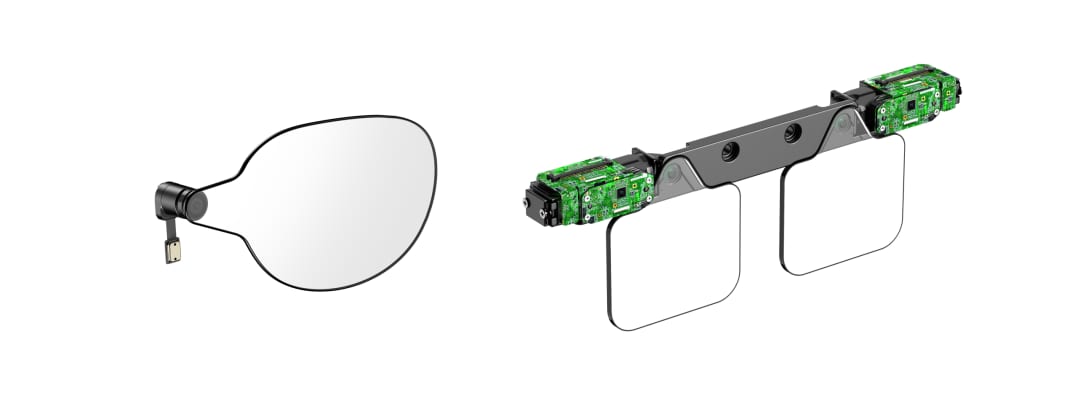
Image source: Zhige Technology
3.5 Optical Efficiency and Dimming Technology
High-transmittance waveguides:
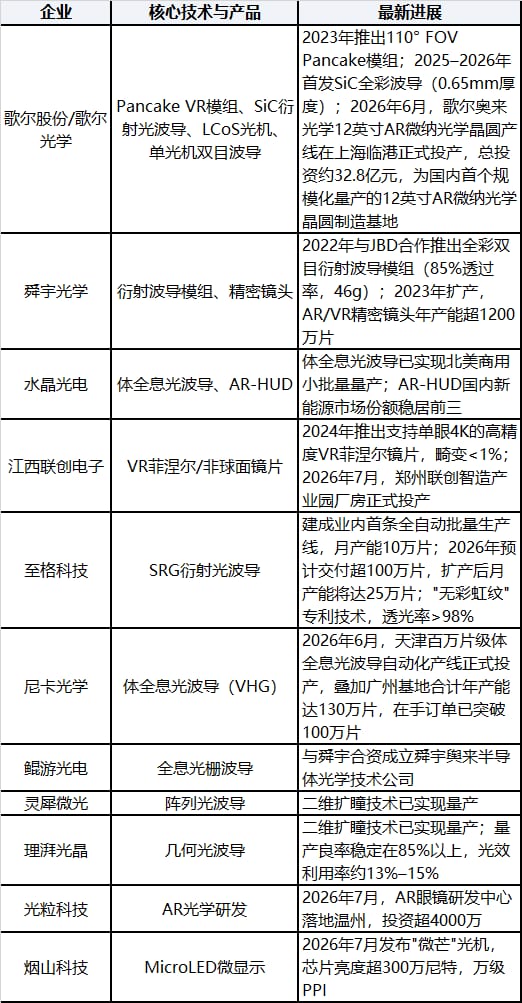
In 2024, Carl Zeiss developed advanced waveguide optical components with a transmittance of over 85%, significantly improving the visual clarity of AR smart glasses.
Sunny Optical and JBD have jointly launched a full-color binocular diffractive waveguide module with 85% transmittance, brightness above 200 nits, a 40° field of view, and a total weight of only about 46 g.
Zhige Technology's waveguide lenses achieve an overall light transmittance of over 98%, with non-grating areas exceeding 99%, approaching the level of high-end lenses. The company has also developed a patented "rainbow-free" technology that effectively eliminates rainbow artifacts in about 95% of scenarios.
Active Dimming Technology:
Dimming has become a "must-have" feature for see-through AR headsets. The technology is evolving from early global dimming (uniform dimming across the entire field of view) to pixel-level dimming, which can produce high-contrast, realistic virtual images and render dark and black tones even in bright environments. Products such as Snap Spectacles and Xreal Air 2 Pro already feature active dimming.

Image source: Techradar
IV. Key Domestic and International Players: Strategic Positioning and Industrialization Progress
4.1 Domestic Optical Companies
4.2 International Optics Companies
V. Latest Developments in July and August 2026:
Mass Production Competition Begins in Earnest
5.1 Market Surge: From "Proof of Concept" to "Mass Production Competition"
The AR glasses market saw historic growth in the first half of 2026. According to statistics, online sales of smart glasses in China rose 81.2% year on year from January to May 2026, with an average price of RMB 2,041. First-half sales volume across all channels grew 85.5% year on year, with revenue nearly doubling. A total of 43 display-equipped AR glasses were launched, opened for pre-order, or put on sale in the first half, spanning 23 brands. End products are trending toward lower prices and lighter weight: some early-bird prices have dropped to RMB 999, waveguide-based products have entered the RMB 2,000 price range, and lightweight AR glasses weighing 35 to 50 grams are increasingly becoming the mainstream choice for everyday wear.
5.2 Optical Waveguide Production Lines Fully Operational: Domestic Substitution Accelerates
In the first half of 2026, mass production of domestic waveguide optics went into full swing, marking AR optics' shift from "lab samples" to "million-unit shipments":
Goertek Aolai Optics: In June 2026, its 12-inch transparent substrate wafer AR glasses micro- and nano-optics project officially began production in Lingang, Shanghai, becoming China's first 12-inch AR micro- and nano-optical wafer manufacturing base to achieve scaled mass production. With a total investment of about 3.28 billion yuan, it focuses on high-end optical components such as AR waveguide plates, electrochromic lenses, and microlens arrays.
Nika Optics: In June 2026, the world's first automated production line for volume holographic optical waveguides at the million-unit level officially began production in Tianjin, with a designed annual capacity of 1 million units. Combined with its Guangzhou base, the total planned capacity reaches 1.3 million units, and orders on hand have exceeded 1 million units, breaking the overseas monopoly on scaled mass production of volume holographic optical waveguides.
Zhige Technology: It expects to deliver more than 1 million waveguides in 2026. After capacity expansion, monthly output will reach 250,000 units, equivalent to an annual capacity of 3 million units.
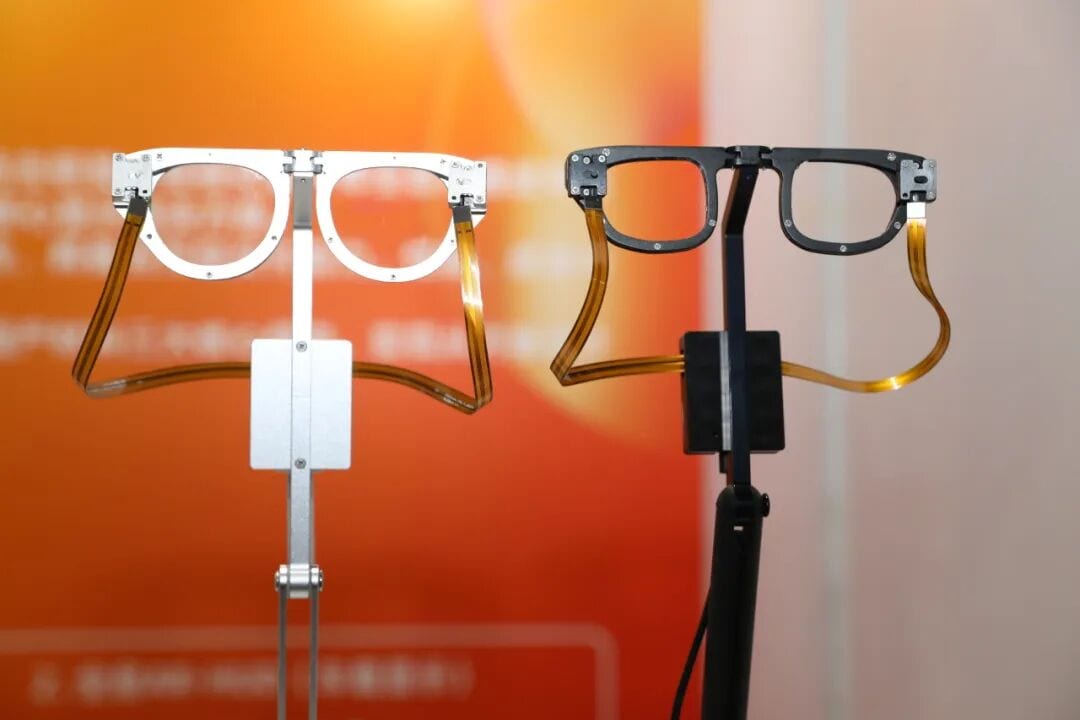
Image source: VRAR Planet
5.3 Countdown to Apple and Google Entering the Market
Apple: In July 2026, the company was granted a patent for an "Optical Bridge" AR glasses display calibration architecture that automatically maintains precise alignment of the left- and right-eye projected images when the frame bends, is dropped, or expands due to heat. By sealing the optical components in a rigid housing and placing the hinge at the front, it addresses visual misalignment and ghosting caused by everyday physical deformation. Meanwhile, Apple's smart glasses are planned to debut as early as WWDC 2027 and launch in fall 2027.
Google: Confirmed to release monocular AI AR glasses based on Raxium MicroLED in 2026, running Android XR and designed in partnership with eyewear brands such as Warby Parker and Gentle Monster, with a binocular version to follow.
XREAL Aura: The world's first flagship glasses based on Android XR, offering the largest usable field of view of 70° among consumer AR products.
5.4 Policy Dividends Unleashed
In 2026, smart glasses were included for the first time in the national trade-in subsidy list for home appliances and digital products, with a subsidy equal to 15% of the product's sale price, capped at 500 yuan per unit. At the local level, Shenzhen's Bao'an District issued eight measures to support the smart glasses industry at the end of June 2026, setting up a dedicated fund to subsidize upstream production lines for optical waveguides, Micro LED, and dedicated chips. Companies including XREAL, RayNeo, and Rokid have also begun preparations for IPOs.
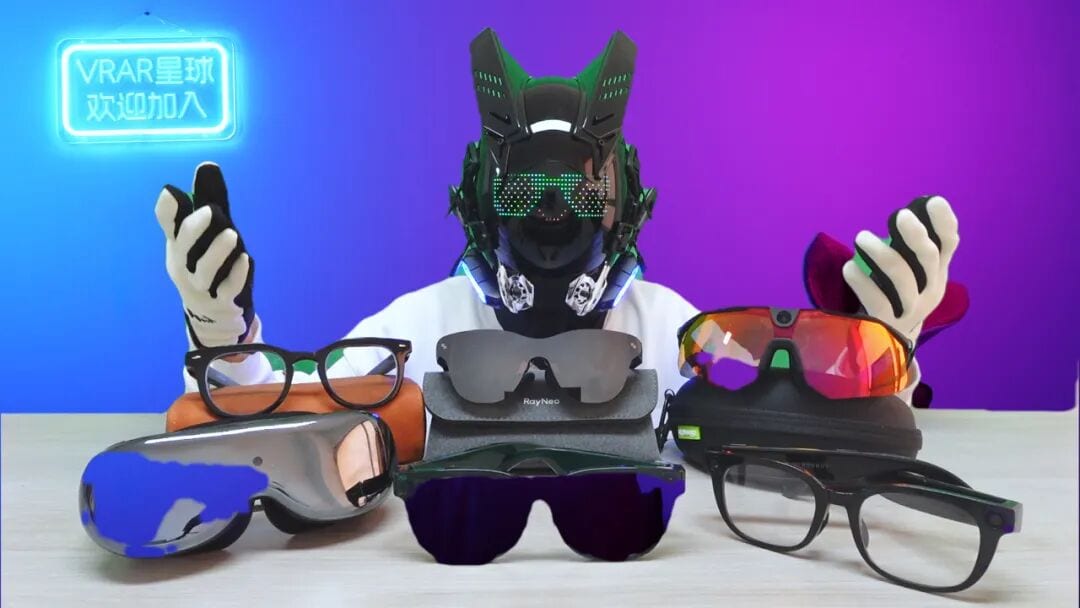
Image source: VRAR Planet
VI. Technical Challenges and Future Trends
6.1 Key Challenges Today
1. Waveguide mass-production bottleneck: Industry estimates suggest that meeting annual demand for 100 million AR devices would require waveguide capacity several times TSMC's wafer capacity. Although multiple production lines came online in 2026, a huge gap remains before shipments reach the 100 million level.
2. Pancake lens efficiency and cost: Although Pancake lenses are thin and light, they suffer from low optical efficiency, ghosting and high costs, and still require continued optimization of materials and coating processes.
3. Single-panel full-color MicroLED: The first high-volume RGB MicroLED solutions still use a three-panel architecture, and single-panel RGB MicroLED manufacturing processes are not expected to mature until 2028.
6.2 Future Trends
4. "Waveguide + MicroLED" becomes the standard AR architecture: The industry is rapidly converging on this standard architecture. As MicroLED mass-production costs fall and waveguide efficiency improves, lightweight AR glasses will see explosive growth between 2026–2028.
5. SiC waveguide penetration accelerates: Silicon carbide will move from small-batch validation to large-scale deployment. The launch of Goertek's 12-inch production line is a major milestone, with shipments expected to grow exponentially between 2027–2030.
6. Laser displays and free-space optics: Laser-based display solutions could enable volumetric AR and fully resolve the VAC problem. Optical systems may shift to free-space architectures (such as holographic mirrors), competing with diffractive waveguide approaches.
7. AI glasses drive optical demand: Global AI glasses sales exceeded 2 million units in 2024, and China's online sales revenue grew more than 80% year on year in the first half of 2026. AI applications need simple, lightweight optical components to display notifications, prompts and contextual information, pushing consumer AR glasses optics toward thinner, lighter and lower-power designs.
8. Prescription lens integration: Integrated solutions combining prescription correction with waveguide packaging (such as the Meta-Luxexcel partnership) will be key to the adoption of consumer AR glasses.
9. A wave of major products in 2027: The entry of Apple smart glasses (fall 2027) and Google binocular AR glasses (expected 2027) will redefine consumer AR optical standards and drive upgrades across the entire supply chain.

Image source: Samsung Mobiel Press
7. The Optics Revolution: XR Industry Enters an Era of Scale Competition
From 2023 to 2026, AR/VR optics technology made the critical leap from "usable" to "good to use" to "mass production." In VR, Pancake lenses completed a generational replacement of Fresnel lenses, while 4K per-eye resolution and adaptive optics are becoming the new benchmark. In AR, the waveguide technology roadmap is becoming clearer; the introduction of silicon carbide materials, the maturation of MicroLED microdisplays, and advances in nanoimprint/direct etching processes are collectively pushing AR glasses ever closer to the form factor of "ordinary glasses."
Since July and August 2026, the industry has reached an inflection point: waveguide production lines have gone fully operational (Goertek's 12-inch line, Nika's million-unit-scale capacity, and Zhige's million-unit deliveries), MicroLED chip brightness has broken through 3 million nits (Yanshan Technology), Apple and Google are counting down to entry, policy subsidies and capital markets are providing dual support, and first-half sales grew more than 80%. These signals indicate that the AR/VR optics industry has officially moved from a "technology reserve phase" into a "scale competition phase."
Chinese companies are playing an increasingly important role in the global AR/VR optics supply chain: Goertek holds dual leadership in Pancake and SiC waveguides and has built a 12-inch wafer production line, Crystal Optech was first to commercialize volume holographic waveguides, Zhige Technology leads the scaling of diffractive waveguides with fully automated production lines, Nika Optics has broken the monopoly on volume holographic mass production, and Sunny Optical's partnerships with JBD and KungChuang Photonics have built a complete diffractive waveguide ecosystem. Meanwhile, international giants such as Meta, Apple, Google, and Carl Zeiss continue to lead in system-level integration and high-end materials.
Looking ahead, as AI injects "killer app" potential into smart glasses, every breakthrough in optics will accelerate the historic journey of XR devices from "geek toys" to "mass-market consumer products." 2027 could be the "iPhone moment" for consumer smart glasses — and optics is precisely the core variable that will define that moment.
By Victor
Original title : Optics Decide the XR Era: Wafers Reach the Million Mark, Giants Enter the Race!
Source: OFweek Optics Network · News · optics.ofweek.com