DJI, Insta360 and Others Step Up AI Imaging: Can Photography Become the Consumer Gateway for Embodied Intelligence?
Topics and contents
DJI, Insta360, Miaodong and other makers are exploring photography robots through autonomous tracking shots, bringing autonomous imaging devices and consumer robots together in shooting scenarios. Insta360 unveiled its long-term Cameraman vision in July this year, and Miaodong's Beni has completed crowdfunding, supporting 4K video capture with an early-bird price from 549 US dollars and shipping planned to begin in November. Photography can reduce reliance on dexterous manipulation, but devices still need to understand shooting timing, scene changes and user preferences; whether this can generate new demand remains unclear.
"How exactly should robots enter our lives?"
This has been one of the most frequently asked questions in the embodied AI industry over the past few years. Some believe robots should first learn to do housework and care for the elderly, eventually becoming all-purpose home assistants. Others argue that rather than waiting for a humanoid robot that can do everything, it is better to have robots do one specific task well first.
For example, taking photos and shooting videos for people.
In July this year, Insta360 unveiled a long-term vision called Cameraman, a "photography robot" aimed at building a Camera Agent that can autonomously perceive its environment, find camera positions, compose shots and track subjects, without being limited to any particular product form factor.
Image source: Insta360
Put simply, what Insta360 wants to build is a camera that no longer needs constant human control and can complete shooting tasks on its own.
Around the same time, Miaodong Technology, founded by a former DJI technical veteran, introduced Beni, a small pet-like robot on two wheels that can follow users, avoid obstacles, jump, and shoot 4K video.
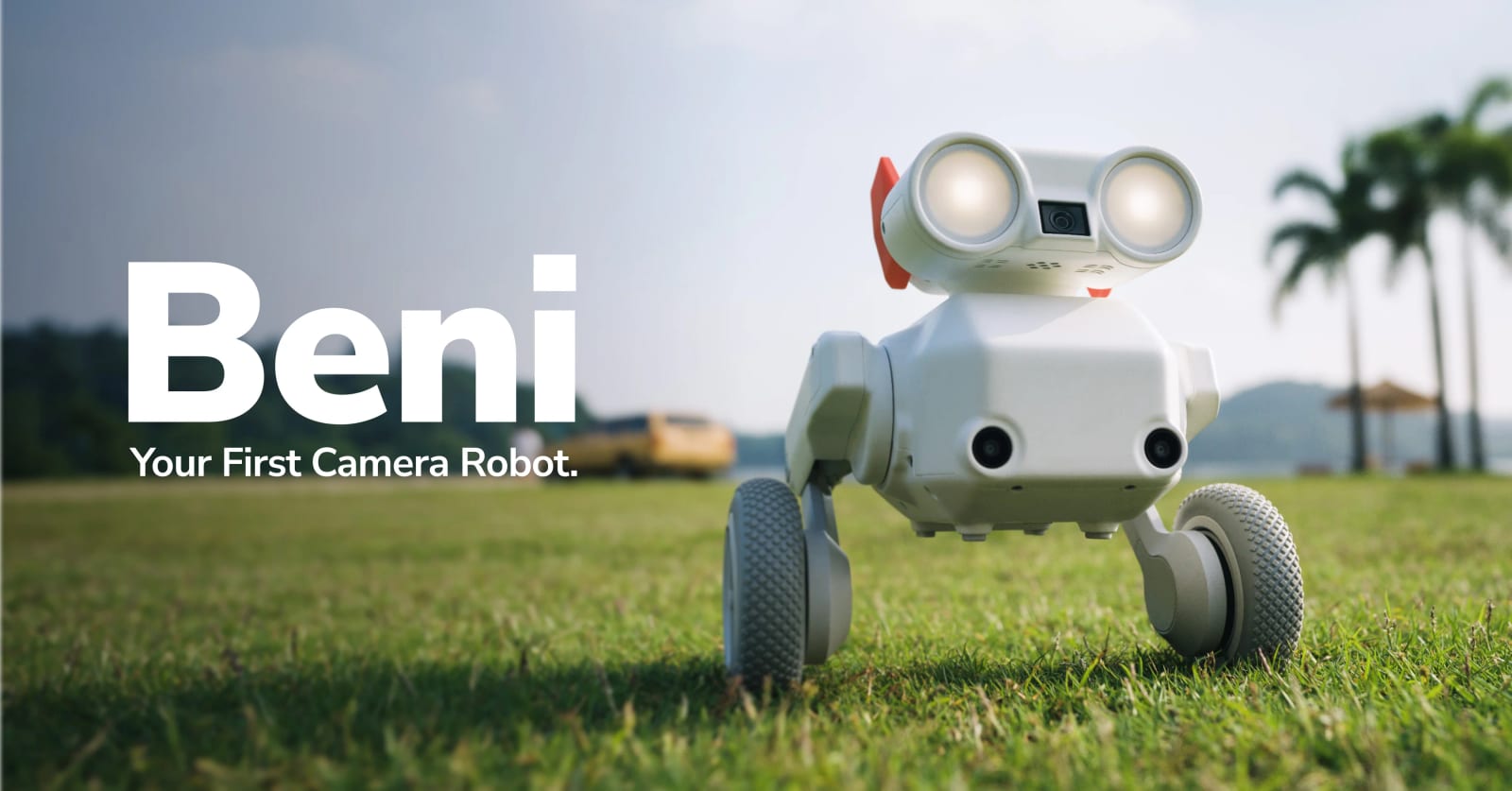
Image source: Miaodong Technology
Unlike Insta360's still-experimental Cameraman, Beni has completed crowdfunding, with early-bird pricing starting at $549 (about RMB 3,674), and is set to begin shipping in November. Its domestic launch will coincide with large-scale overseas deliveries, leaving just one step before it reaches consumers:
One step away.
But these two are far from the only ones targeting "photography robots." DJI and Hover have long explored autonomous tracking through drones, while Qiyuan T1 and Vita Dynamics' robot dogs have begun taking on mobile photography tasks. Even Honor has built a mechanical gimbal and an AI Agent into its Robot Phone. The difference is that some build robots specifically for photography, while others try to teach robots how to shoot.
As the saying goes, all roads lead to Rome. But as embodied intelligence makes its way to everyday users, will photography be a narrow side path or a broad highway?
Let the Camera Move on Its Own
If a photography robot is defined as a device that can move autonomously and follow the user to shoot, then it has long since entered the consumer market, though few people used to call it a "robot."
Drones are the most typical example. Take the DJI Neo 2: this compact drone, weighing just 151 g, already supports palm takeoff and landing, gesture control, intelligent following, and omnidirectional obstacle avoidance. Users do not need to hold the remote controller at all times; it can follow them while they run or cycle, or execute camera moves such as orbit and gradual pull-away.
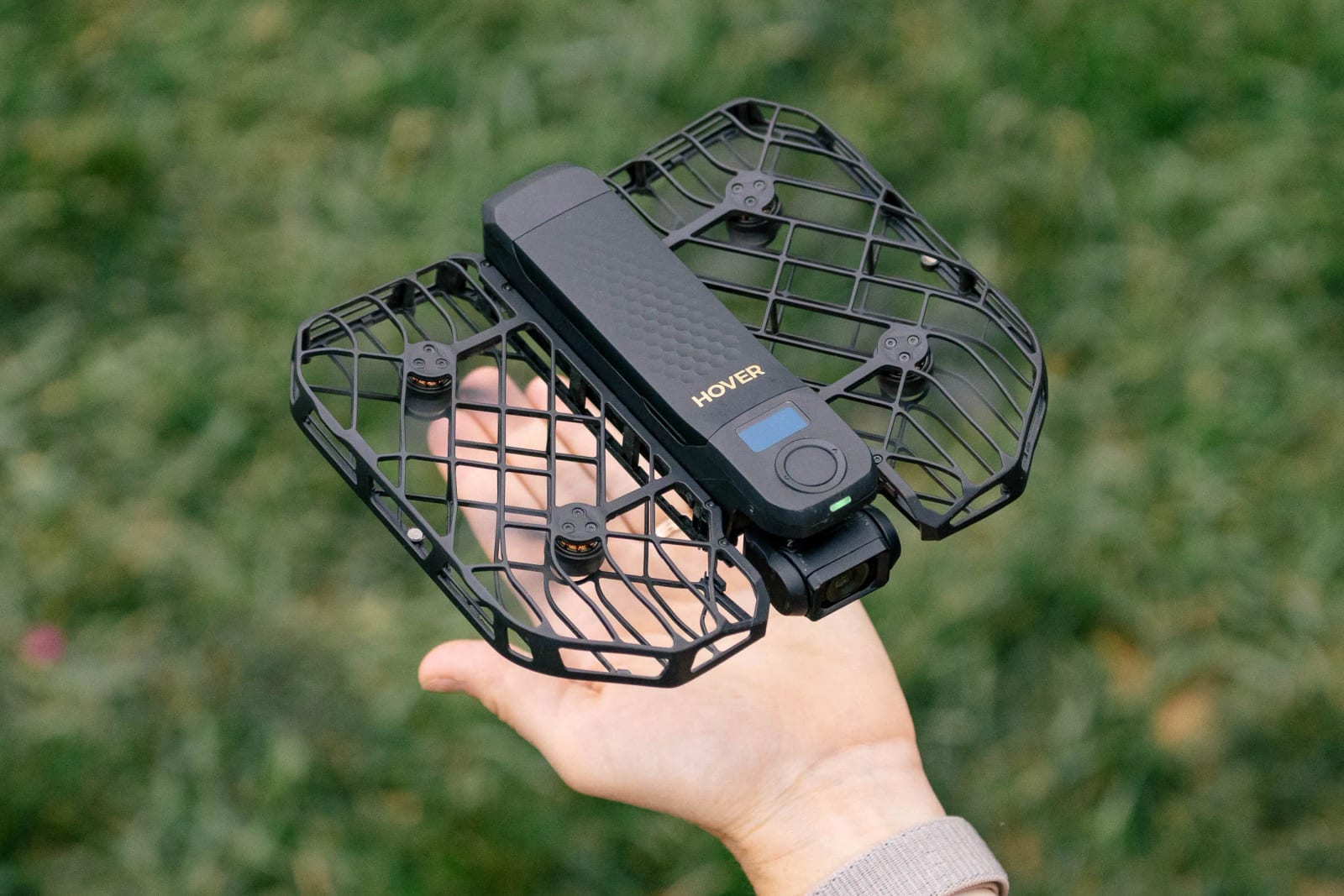
HOVERAir, a brand of Zero Zero Robotics, launched the X1 flying camera focused on automatic shooting as early as 2022, followed by products such as the X1 Pro and X1 ProMax. Compared with traditional drones, they emphasize the identity of a "flying camera" rather than a "drone," with palm takeoff, automatic following, and preset camera moves, removing flight operation from the shooting process as much as possible.
X1 ProMax. Image source: HOVERAir
In a sense, these products already have the basic features of a photography robot: they can perceive the subject, control their own movement, and complete the shoot autonomously to a certain extent.
Of course, flying has its own limitations. Battery life, noise, operating locations and safety restrictions all mean that drones cannot cover every shooting scenario. Indoors or on crowded streets in particular, robots that can move close to the ground may actually have the advantage.
This is also a key reason why Beni opted for a two-wheeled-legged design.
Unlike drones that shoot from the air, Beni can follow the user along the ground, using its two wheels and articulated joints to turn, jump and adjust its posture. It can shoot 4K video, capturing low-angle action shots such as pets running, children playing or skateboarding, and can also use different movements to create a pet-like sense of interaction.
TechRadar was impressed by Beni's interactive design, saying its expressions, sounds and tumbling moves make it feel like a lively robot pet as well.
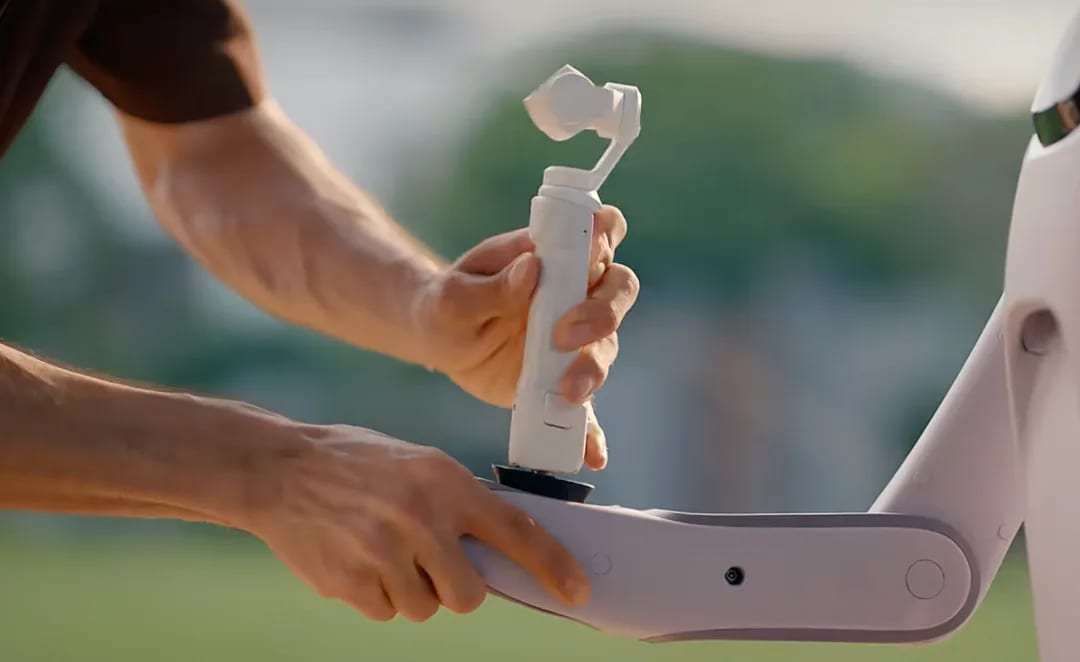
More manufacturers are already experimenting on this route. Qiyuan Robotics' T1, for example, uses a transformable design that switches freely between two wheels and four legs, and can connect to action cameras such as Insta360, supporting voice-triggered shooting, automatic follow filming and orbital camera moves. The Vbot super robot dog, beyond autonomous following, obstacle avoidance and cargo carrying, can also mount an action camera to serve as a mobile photographer during outdoor activities.
Qiyuan T1 connected to Insta360 Luna Ultra. Image source: Qiyuan Robotics
Unlike Beni, these two products are not designed specifically around photography. Photography is simply one of the important tasks they can perform; the robots themselves carry far more functionality. That difference is actually quite interesting.
This year's Robot Phone from Honor even builds a mechanical gimbal directly into the phone. Using AI subject recognition, automatic tracking and pre-composition, the camera can actively adjust its direction as a person moves, even executing some professional-style camera moves.
Similar is the Insta360 Tail 2, which uses an AI-powered active gimbal design for subject tracking and also supports a gesture interaction scheme worth referencing (see the Leitech review "Insta360 Tail 2 Live Camera Review: An AI Gimbal Camera That Is Also an Imaging Robot"):
The active gimbal of the Insta360 Tail 2 does not mean you can place the camera just anywhere out of sight. For easier one-person use, the Insta360 Tail 2 supports gesture control: forming an "L" shape with your thumb and index finger controls zoom, while an "OK" gesture starts and stops recording. However, if the Insta360 Tail 2 is not facing you, the camera may fail to recognize the "OK" gesture correctly.
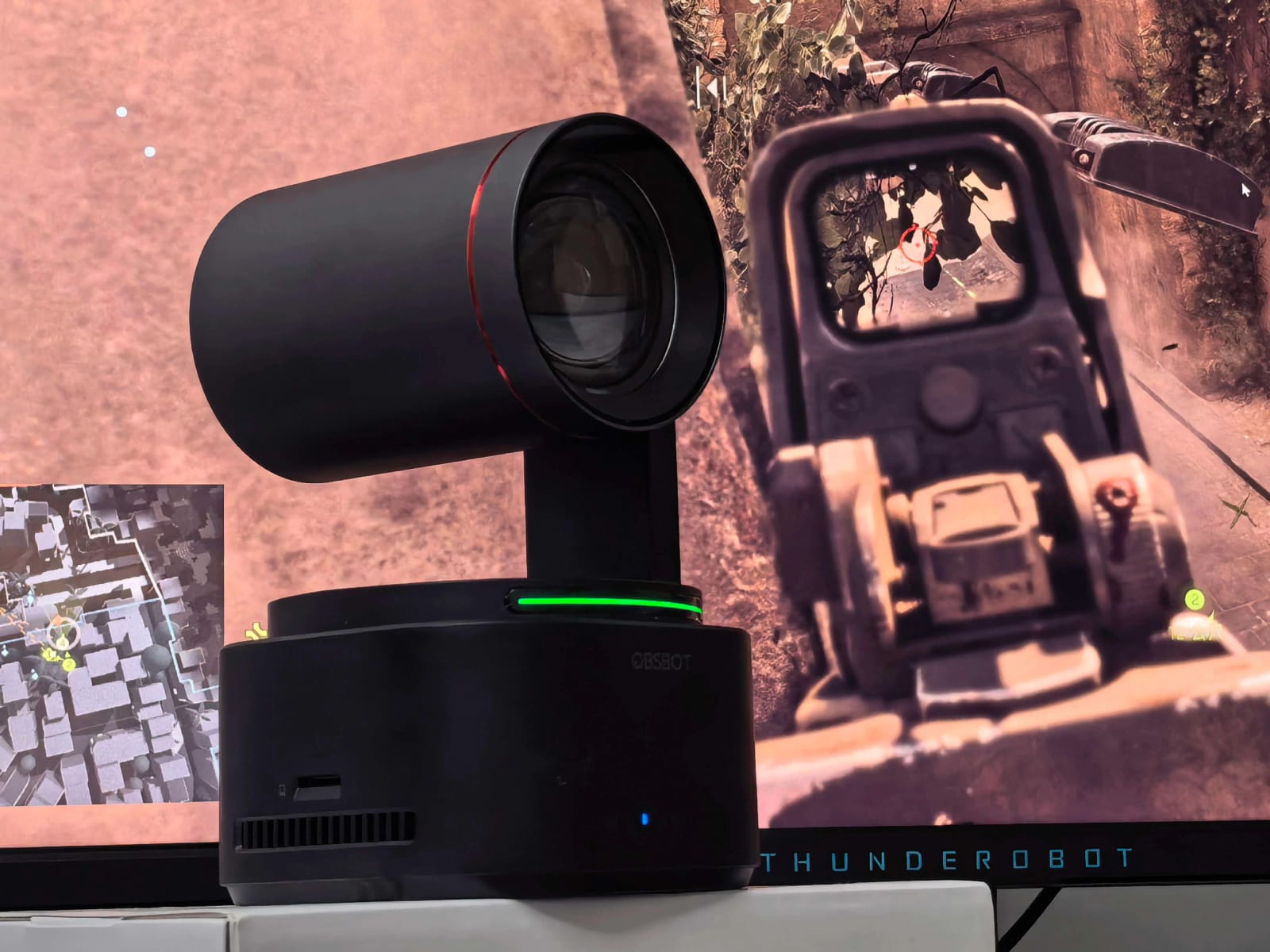
Image source: Leikeji
Tracking cameras existed before, but no matter how smart the algorithms were, they could only adjust image parameters, not the lens position or angle. Broadly speaking, both the Honor Robot Phone and the Xunying Tail 2 could be called a kind of "photography robot":
At the very least, the camera should stop waiting passively for user input and gain some physical autonomy to act on its own.
As for Insta360, although Cameraman does not yet have a defined standalone product form, the company has already accumulated considerable relevant technology through its panoramic cameras, the Flow smartphone gimbal, the Luna gimbal camera, and the Antigravity panoramic drone. Insta360's vision is not to build a robot of a particular form, but to enable cameras to understand user intent and autonomously handle shooting, editing, and even sharing.
Admittedly, today's "photography robots" are hard to define by any single product form. They can fly through the air, run on the ground, look like a robot dog, or even be nothing more than a mechanical gimbal mounted behind a smartphone.
In a public interview, Zero Zero Robotics founder Wang Mengqiusaidthat "a flying camera is only a means, not an end." Discussing Cameraman, Insta360's Liu Jingkangalso notedthat "what most people really want is not to operate the machine, but to get good photos and videos."
Photography robots did not appear out of nowhere. They are the result of two converging technology paths: the growing autonomy of imaging equipment and the gradual move of consumer robots into real-world use. In the end, from a narrow demand perspective, the robot in a "photography robot" can only be a means, not an end.
At the same time, however, photography robots could become one way for robots to enter people's everyday lives.
Learn to Follow First, Then Talk About Doing Everything?
To many people, the ultimate form of embodied AI seems to be the humanoid robot.
Yang Shuo, CEO of Miaodong Technology, does not believe all robots should evolve toward humanoid forms. Yang previously helped develop and led the development of DJI's flight control system, earned a PhD in robotics from Carnegie Mellon University, and later served as architect of Tesla's Optimus humanoid robot project.
In an earlier interview, he gave an example: if a user wants a robot to hold an Osmo and follow alongside them to shoot video, why must one first build a humanoid robot that walks on two legs and holds the camera with a hand? A small vehicle, or even a simpler mobile device, could accomplish the same task.
In fact, Shenzhen-based manufacturers including Insta360, Hover, DJI, and Miaodong take a more practical approach, placing greater emphasis on meeting user needs and on commercial deployment.
It is therefore easy to understand why Miaodong chose Beni's current product form. It does not need to imitate the human body or master complex dexterous manipulation; as long as it can reliably follow the user and adjust the shooting position, it has a chance to complete the photography task.
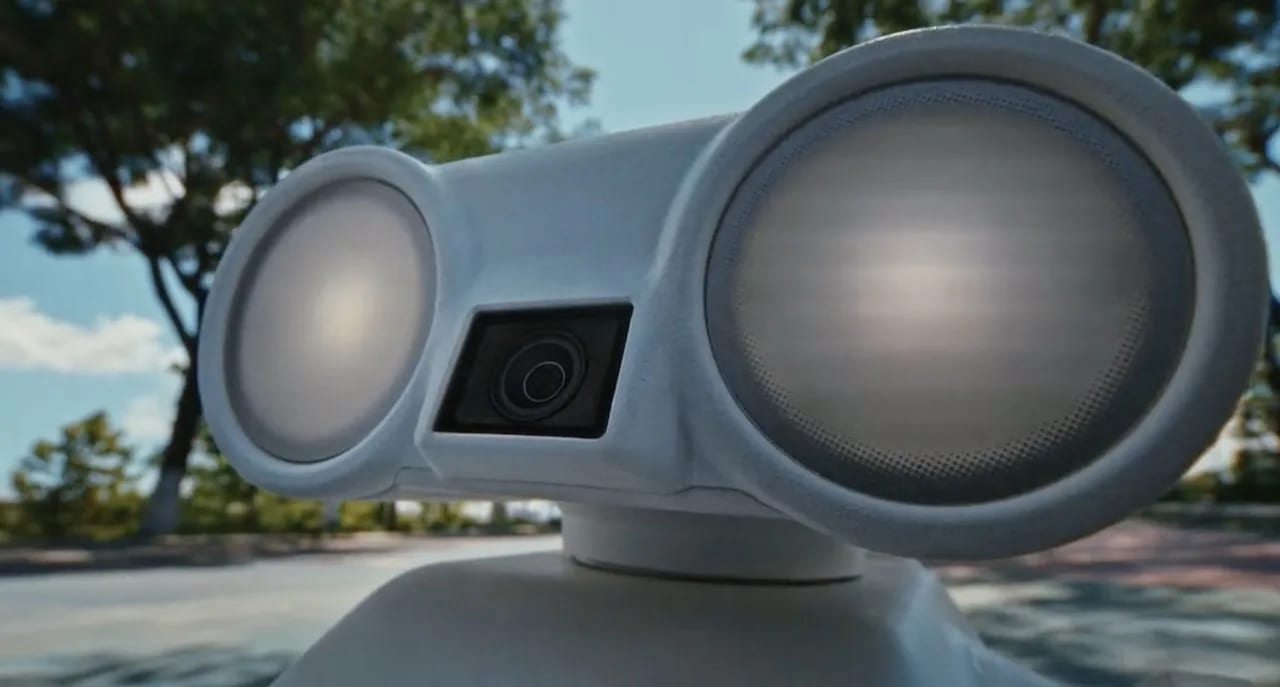
Image source: Miaodong Technology
One more point: photography requires the robot to perceive its surroundings, identify the subject, plan its own movement path, and continuously adjust its actions based on actual conditions, but it does not necessarily require the robot to directly manipulate or change external objects. This means that, compared with complex chores such as tidying a room, doing laundry, and cooking, photography can to some extent sidestep technical challenges that remain unsolved, such as dexterous hands and object manipulation, while still placing the robot in a complex and variable real-world environment.
But that does not mean Yang Shuo is pessimistic about humanoid robots. Quite the opposite: in his personal column, Yang Shuo noted that from its founding, Miaodong Technology decided to pursue two product lines: "one is a longer-term humanoid robot, and the other is a smaller, safer robot that can more easily enter real life first."
In fact, the advantage of humanoid robots lies in their generality. The environments, tools, and even the various kinds of infrastructure in human life are mostly designed around the human body. If a robot needs to operate these tools and complete a variety of tasks, a humanoid form naturally has its value.
But if only one specific task needs to be completed, the picture changes. For example, a robot that follows a person and films them does not need two legs or two hands, let alone first learning to tidy a room, do laundry, and cook.
The key is still "smaller, safer, and easier to enter real life first." From the perspectives of technological maturity, price, practicality, and product interaction, a product form like Beni clearly has a chance to enter everyday life earlier than humanoid robots.
For more than a decade, smartphone, camera and drone makers have been lowering the barrier to shooting. From autofocus and computational photography to intelligent framing and automatic subject tracking, and now AI editing, more and more tasks that once required users to do them manually have been handed over to the device.
Following this path, the next logical step is to let the device decide how to shoot, and even when to shoot, on its own.
In Liu Jingkang's vision, Cameraman is fundamentally a Camera Agent that understands user intent, independently selects lenses, camera positions and framing, and ultimately delivers satisfying images. In other words, the development of camera robots is not just about teaching devices to move; it is also about gradually enabling them to understand photography itself.
Another route starts from robotics.
Beyond cost and other factors, the bigger question for robots entering everyday life is what they can actually do. Martial arts and dance performances, making ice cream, coffee and pancakes, stocking shelves, retail - these robots are still aimed mainly at businesses. Photography, by contrast, is more personal, a point already borne out by consumer drones, handheld gimbal cameras and action cameras.
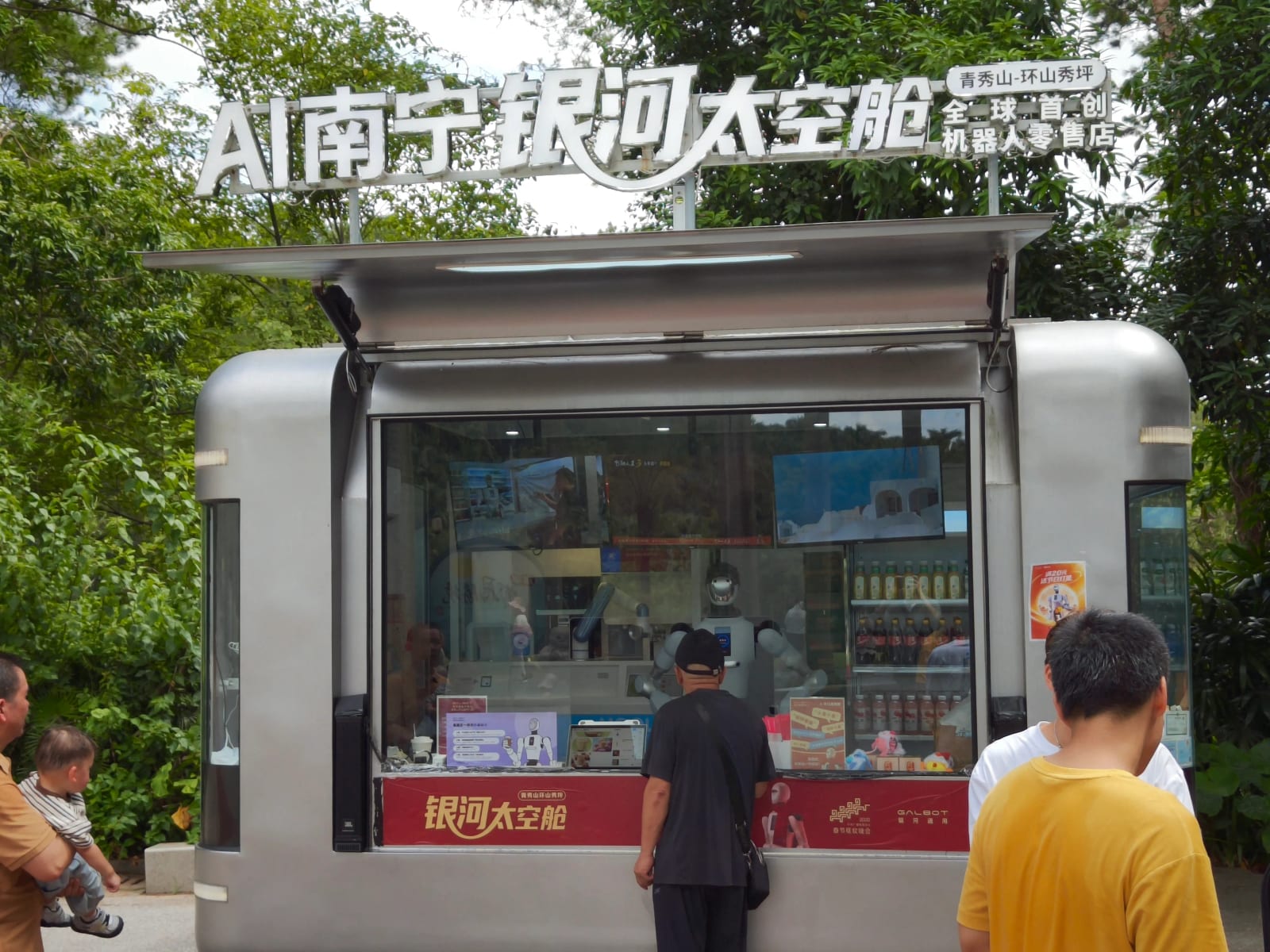
Image source: Leikeji
For robots, photography can be a core function or simply one of many capabilities. A robot can be designed specifically for shooting, or it can also handle tasks such as following, companionship, and carrying loads.
These two paths are not mutually exclusive. They start from different points, yet they are converging in the specific scenario of photography. This also reminds us that embodied intelligence may not need to wait for an all-purpose general-purpose robot to become a reality.
However, features such as automatic following and obstacle avoidance are not enough. For a photography robot to truly approach a human photographer, it also needs to understand shooting timing, scene changes, and even the user's preferences for the image.
Thus, from the Qiyuan T1 to the Vbot super robot dog, both choose to add cameras through external interfaces for follow-shot filming, leaving the actual "shooting" work to manufacturers such as Insta360 and DJI, while the products also offer following, companionship, cargo carrying and other lifestyle services, thereby attracting consumer buyers.
These explorations have at least brought the consumerization of embodied AI one step closer. Whether it ultimately takes the form of a drone, a wheeled-legged robot, or a further evolution of existing cameras and phones is not the most important question. What truly matters is whether a robot can, without adding too much burden to everyday use, handle tasks that previously required human involvement or could not be done alone.
This raises a more practical question. The demand for photography is real, but today's smartphones, 360-degree cameras, drones and smart gimbals already cover a considerable number of shooting scenarios. Do we really need a new robot?
I do not yet have a clear answer before photography robots truly reach the market as products.
Source: OFweek Optics Network · News · optics.ofweek.com