Zuckerberg's net worth rises to fourth in the world as Meta smart glasses and AI business draw attention
Topics and contents
Topic
On this page
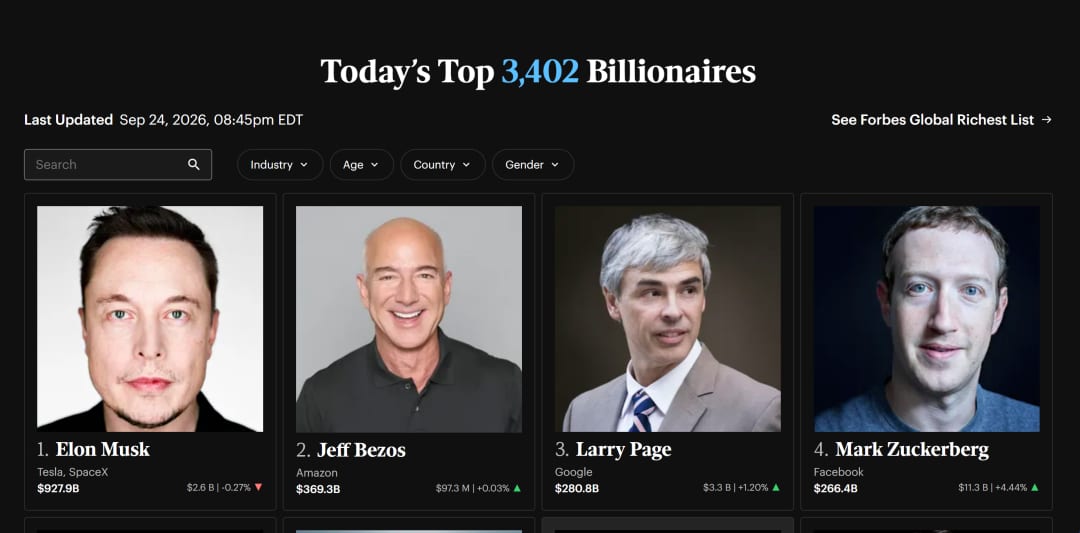
On September 24, Zuckerberg's net worth reached about $266.4 billion, surpassing Michael Dell to become the world's fourth-richest person. Meta shares closed at $777.59 that day, up about 36% in September. The article argues that the AI agent Muse, launched on September 8, boosted market sentiment, and discusses Meta's smart glasses business.
On September 24 Eastern Time, Mark Zuckerberg's net worth surged past Michael Dell's, making him the world's fourth-richest person with about $266.4 billion (roughly RMB 1.78 trillion); the same day, Meta shares rose to $777.59, setting a new closing high for the year. Meta gained about 36% in September alone, its strongest monthly performance since 2013, bringing its market capitalization back close to $2 trillion.
The market's reasoning is clear: the AI agent Muse, launched on September 8, saw daily active users grow roughly tenfold to 700,000 in under 20 days, while topping the download charts for two consecutive weeks.
But reading this merely as "an AI assistant went viral" would miss the more important structural shift. What should truly concern the XR industry is that Muse's explosive rise, the ramp-up of Meta's multiple AI glasses models, and the Meta VR Glasses scheduled for release in spring 2027 are all pieces of the same picture. Meta is no longer just a "VR company" or a "social company"; it is becoming one of the very few companies that controls both the gateway to personal superintelligence (AI) and the gateway to spatial computing (XR), and it is feeding each into the other.
01
Two-way drive: from "two lines" to
"one flywheel"
In recent years, outsiders have tended to frame Reality Labs and AI as two separate narratives: a metaverse bet losing $4 billion to $5 billion a year, and an AI arms race with staggering capital expenditure.
But the signals from Connect 2026 suggest the two threads are now converging at the product level: Ray-Ban Meta Display will upgrade on-glasses AI from one-off Q&A to an always-wakeable Muse that carries full context and executes tasks in the background; Muse Spark has also been rolling out to two generations of Ray-Ban Meta and Oakley Meta glasses.
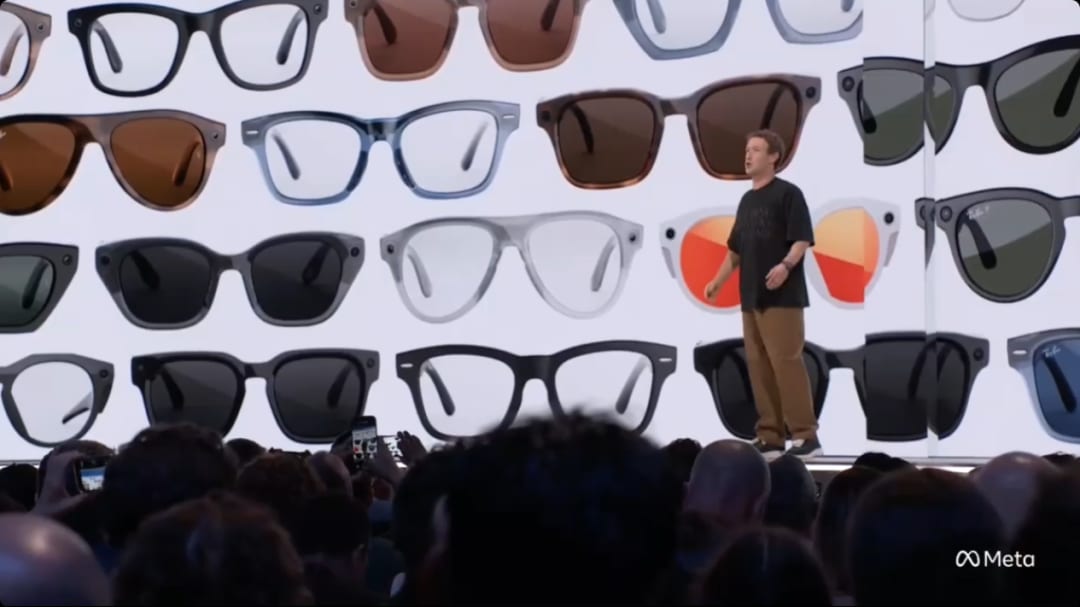
A pair of glasses with no screen has a weak repurchase case if all it can do is take photos, play music and check the weather; but if it can "see what you see, then handle things for you," wearing time becomes commercially meaningful. At this point, AI glasses are no longer the early stage of the metaverse, but the display terminal for personal superintelligence.
Zuckerberg has made it clear that Reality Labs is shifting toward "building the best devices for personal superintelligence," doing less metaverse work and making fewer VR devices, launching products only when there is a genuine breakthrough. By the same logic, the split, lightweight Meta VR Glasses are not made for VR either; instead, they integrate Muse into the VR operating system.
This is the essence of the two-way drive: AI gives XR a reason to be worn, while XR gives AI a place to be worn and something to see. On either track alone, Meta is not an absolute winner; combined, they form a closed loop that rivals can hardly replicate at any single point.

02
What Muse really means:
It turns AI from "answering" into "delivering"
The most notable thing about Muse is not its 700,000 daily active users, but three design choices:
First, a dedicated persistent virtual machine for every user (2 vCPU/8GB/100GB SSD plus a dedicated browser), still running in the background after the app is closed. This means Meta has chosen an extremely heavy, extremely expensive, but extremely hard-to-replace path - turning the agent into a "digital twin that manages affairs for you over the long term," rather than a session window.
The cost is equally clear: 100 million tokens per week free, 500 million tokens per week for the $20 subscription, and 3 billion tokens per week for the $100 subscription; every step up in user numbers drives CPU, memory and storage costs up linearly. This is the first time the agent era has exposed at scale the triangular tension between compute, experience and pricing.
According to estimates by Cantor Fitzgerald: Muse's current cost per task is about $0.25, equivalent to about $11 per average user per month, and AI processing costs are expected to fall by more than 80% over the next 18-24 months, so profitability is only possible through subscription tiers and a commission model.

Second, trust mechanisms come first. Sentinel monitoring, user confirmation for key actions, credential isolation, one-time card numbers, and keeping conversations out of ad systems... These designs may seem to slow things down, but they are in fact the precondition for Muse to handle transactions. For AI to spend money on people's behalf, it must first earn their trust that it will not spend recklessly. IDC Chief Research Officer Meredith Whalen said publicly: "The real issue is trust."
Third, it triggered a "platform war." Less than two days after Muse topped the App Store free chart, Amazon blocked Meta's Muse AI Agent shopping access, citing undisclosed access, storage of login credentials, and bypassing personalized recommendations. Behind this is a chain of $68.6 billion in advertising revenue being bypassed by "one-sentence ordering." So Amazon's reaction was entirely to be expected.
At the same time, roughly one-third of hundreds of mainstream U.S. e-commerce, airline, hotel, and OTA websites directly block Muse, one-third impose verification challenges or restrictions, and only about one-third allow smooth navigation. Meanwhile, Meta is working with Walmart, Stripe, Sierra, Genesys, and others to build the Personal Agent Protocol (an agent identity and authorization standard similar to SMTP) to counter the "blockade." This shows that the battleground for agents is not the model, but each company's "gatekeeping": interface openness, authorization rates, and task success rates will determine whether Muse becomes a gateway or an isolated island.
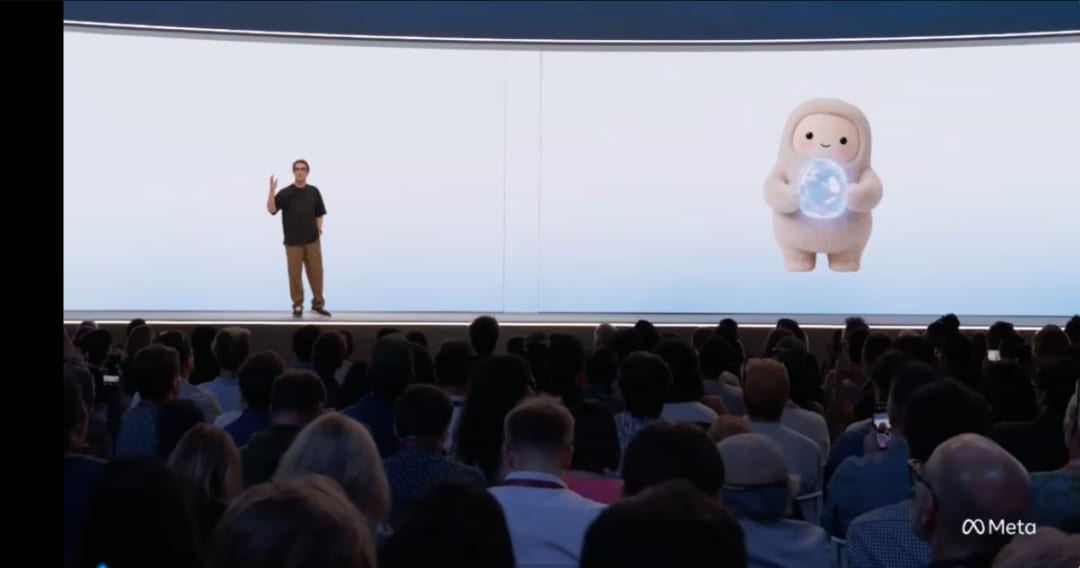
In short, for XR, the significance of Muse is that it gives smart glasses a value proposition beyond information overlay: "The glasses see it, Muse gets it done." You spot a product on the shelf, say one sentence, and price comparison, ordering, and delivery queuing are all completed. This is the scenario where AI overlay can finally be monetized, and the scenario brick-and-mortar retail fears most.
03
Everyone is building AI hardware,
Why Did Meta Come Out on Top?
Omdia data shows that global XR headset shipments reached 1.9 million units in the first half of 2026, down 38.7% year on year, marking the market's fourth consecutive year of contraction since its 2021 peak. Meta's share fell from 71.3% to 48.2%, as demand for Quest 3/3S weakened and the company failed to replicate the Quest 2 breakthrough.
Under Omdia's definition, global AI glasses shipments reached 4.2 million units in the first half of this year, up 127% year on year, with Meta accounting for 81%. That share is far healthier than its 48.2% in headsets. Why?
When Ray-Ban Meta was just emerging, we believed its success stemmed from the sunglasses culture in Europe and the United States, EssilorLuxottica's brand heritage, and its channel resources. Ray-Ban Meta simply added technology to an established eyewear brand rather than overhauling it entirely; it turned the device into an everyday wearable rather than a digital toy.
By comparison, early domestic smart glasses lacked the sunglasses culture of Europe and the United States, had limited compatibility with the local culture of prescription eyewear, and lacked the backing of an established brand like EssilorLuxottica, making it difficult to compete with Ray-Ban Meta.

Today, however, the competitiveness of Meta's smart glasses business extends well beyond that.
The viral success of Muse and Meta's surging share price show that people recognize Meta can secure exclusive multimodal data: first-person perspectives, voice commands in real-world settings, and genuine purchasing and errand-running behavior. This is a data layer that smartphone makers cannot obtain and cloud providers cannot obtain either. What Meta has accumulated through its glasses is data that aligns the triad of people, objects, and intent, and that is precisely the training material spatial intelligence lacks most.
At the same time, Meta's lead rests not on a single piece of hardware but also on channel scale, brand recognition, and AI capabilities spanning its product lines. These moats are harder to replicate than a single product launch. With hearing-assistance Audio, the third-generation Ray-Ban Meta, Ray-Ban Meta Display, the neural wristband, VR Glasses, and Muse Charm, it has built a matrix that covers both price points and feature tiers, leaving rivals hedged at any single price point.

04 "
Will the "fourth-richest man"
block the way out for domestic AI glasses?
Four consecutive years of VR contraction show that asking users to enter an environment cut off from reality is not a viable path in the mass market for now. The rapid rise of AI glasses, by contrast, shows that integrating AI and spatial computing into everyday wearable devices, shifting from occasional immersion to high-frequency, lightweight use, and converging product lines on devices that can be worn all day is the current route into the mass market.
Let us run a thought experiment: suppose this "fourth-richest man" brought his entire arsenal to China and every capability could be deployed. Could he shut down the path for domestic AI glasses?
First, use entry-point differences to neutralize hardware differentiation. The specification ceiling for audio glasses is low; the real moat is who can embed their own Agent into the glasses and secure authorization for third-party services. Domestic smart glasses have posted astonishing growth this year, but on-glasses Agents in China still lag Meta's ecosystem position in third-party service authorization, closed-loop transactions, and cross-platform execution. Once Muse-like capabilities spread to glasses, the gap will widen rapidly.

Second, accumulate action data to control bargaining power. Clicks, dwell time, and views have already been squeezed dry in the smartphone era; "who completed what transaction in which scenario" is a brand-new gold mine. If Meta connects the Agent, authorizations, and closed-loop transactions, hardware makers' bargaining room will shrink.
Third, raise the competitive barrier with an always-on VM and a subscription system. The downgrade of Muse's service is a warning: an always-on VM changes the marginal cost structure per user, and the path to profitability remains unproven. Meta may be able to sustain 100 million free tokens per week, but can Chinese companies building glasses plus Agents withstand such a brutal hit to computing costs?
Recently, however, media reports exposed a scandal: Meta's AI is not "intelligent" but "artificial." In mid-September, Meta officially launched a new public beta feature for the Muse AI agent. According to the official description, the feature can proactively call merchants to help users handle everyday tasks such as making reservations and booking appointments. The whistleblower account, however, said Meta added a human customer-service layer to the feature: all AI call tasks are routed to dedicated staff at a call center, with real people carrying out the calls.
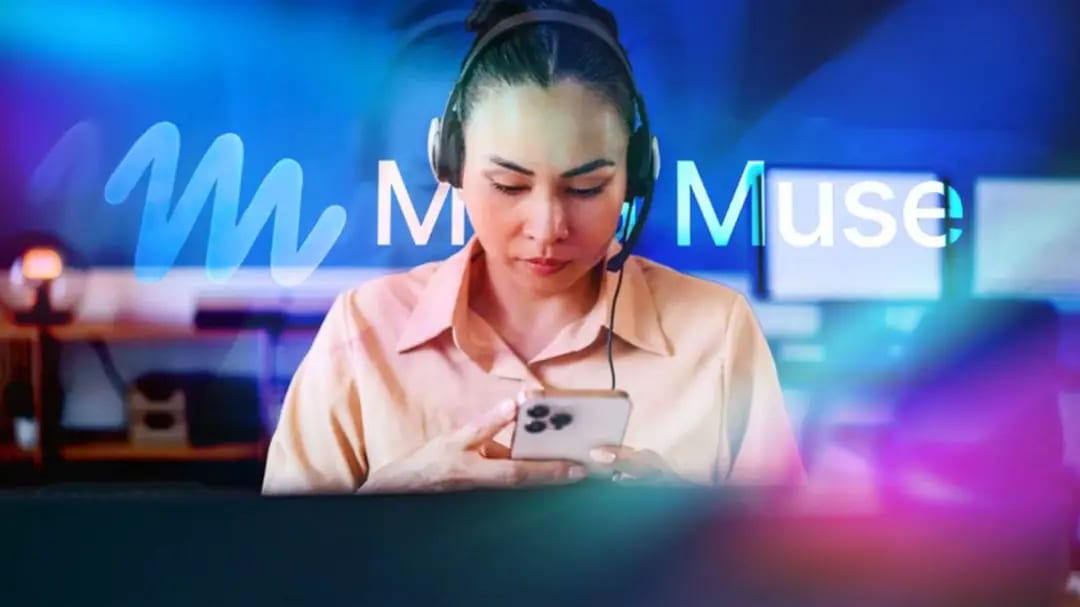
As the controversy continued to escalate, Meta urgently suspended Muse's outbound calling feature. According to the latest Reuters report, a vice president at Meta's Superintelligence Lab admitted that the launch of the feature was a major misstep, and that opening the public beta without honestly telling users that humans were performing the operations was unreasonable.
As a result, Meta's trust crisis is far from over, and it remains uncertain whether the Muse agent can truly dominate the market. Even now, Meta still cannot operate freely in China. That said, Meta is not alone: major tech giants have recently been stepping up efforts on autonomous AI agent capabilities. Just this week, Google launched a daily calling service for its Gemini agent.
Regardless of whether Muse ends up holding the reins, China's XR industry should ask itself one question: If smart glasses are pushed into the agent era, what irreplaceable value does your product still offer?
By Qingniao Yinqin
Original title: Zuckerberg Sells Glasses, Yet Ranks as the World's Fourth-Richest Person
Source: OFweek Optics Network · News · optics.ofweek.com