Maxphotonics faces growth challenges after becoming first to ship 10,000 10 kW lasers
Topics and contents
Topic
On this page
An article by OFweek Laser notes that in 2025 Maxphotonics became the first company worldwide to ship 10,000 10 kW-class fiber lasers. Drawing on observations from the Shanghai industry fair, the article discusses how 10 kW lasers can sustain growth as the fiber laser industry shifts from price wars to competition on new fronts.
Maxphotonics became the first in the world to ship more than 10,000 10 kW-plus lasers in 2025. How to extend that outstanding growth curve is a question that must be answered in the new dimension of competition in fiber lasers.
The annual CIIF in Shanghai has arrived on schedule. It is China's manufacturing industry's showcase of the year and a proving ground where laser and intelligent equipment players quietly size each other up. A walk through the halls quickly reveals who has the real goods and who is swimming naked.
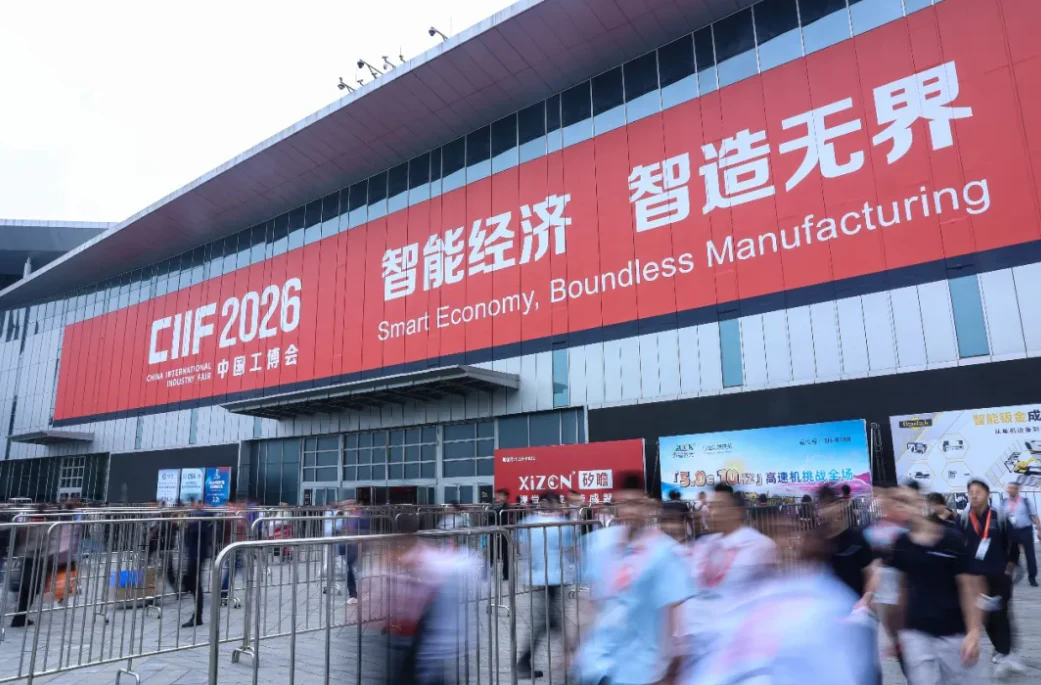
On the first day of the show, the most immediate impression for OFweek Laser was that just a few years ago the industry was still talking about resisting involution and price wars, focused on holding the break-even line through the downturn. Since last year, value creation and application-specific solutions have taken their place as the new buzzwords. Shifts in the wind often happen without a sound.
Since 2025, end-user demand for 10,000-watt laser equipment has kept rising, with mainstream power levels climbing from 12kW in earlier years to 30-40kW. Shipment data on the light source side bear this out: domestic shipments of continuous fiber lasers above 10kW grew nearly 30% year on year in 2025, while products above 20kW rose more than 40%. To some extent, this is itself a clear signal that the industry is shifting from homogeneous competition to value-based competition.
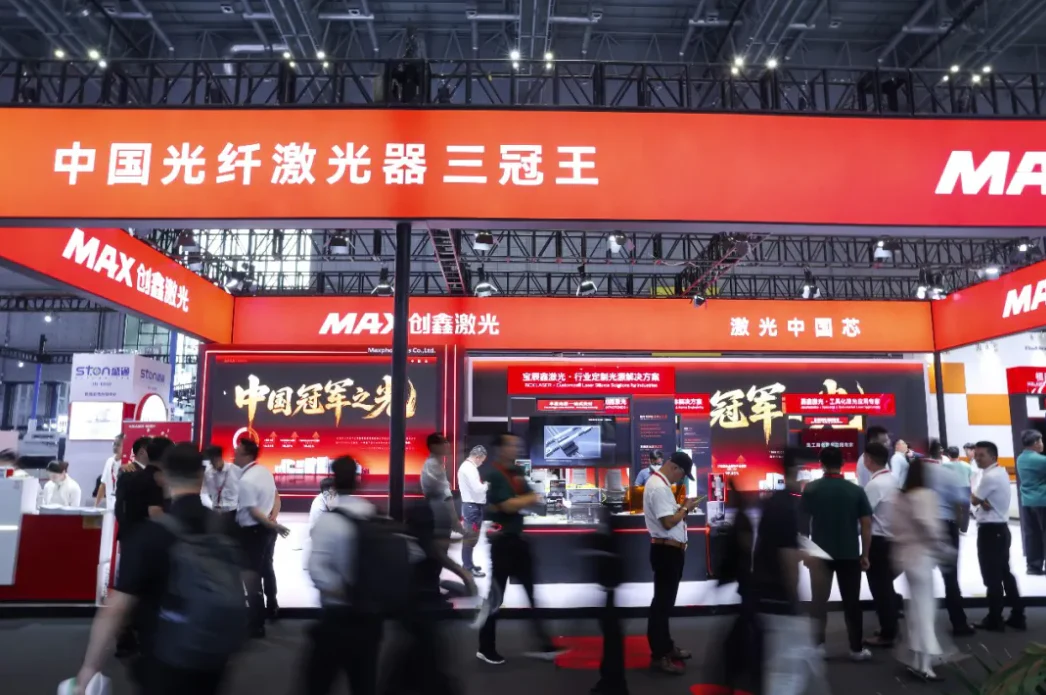
Seen through the window of CIIF, as the earliest standard-bearer of 10 kW-class lasers, Chuangxin Laser has drawn packed crowds to its booth at several consecutive editions, with a steady stream of users arriving to discuss solutions for specific processing needs. Beyond CIIF, Chuangxin Laser has recently pushed deep into the steel and metallurgy sector, appearing at the Shanghai International Metallurgical Industry Exhibition and working with supply chain channels, leading steel structure and metallurgy companies, and regional integration partners to go down to the front lines. It is delivering thick-plate cutting and laser-arc hybrid welding solutions for deep metallurgical processing and heavy steel structure industries, bringing 10 kW-class laser technology directly to metallurgical plants and steel structure manufacturers, a key step from supplying light source products to cultivating vertical industry channels.
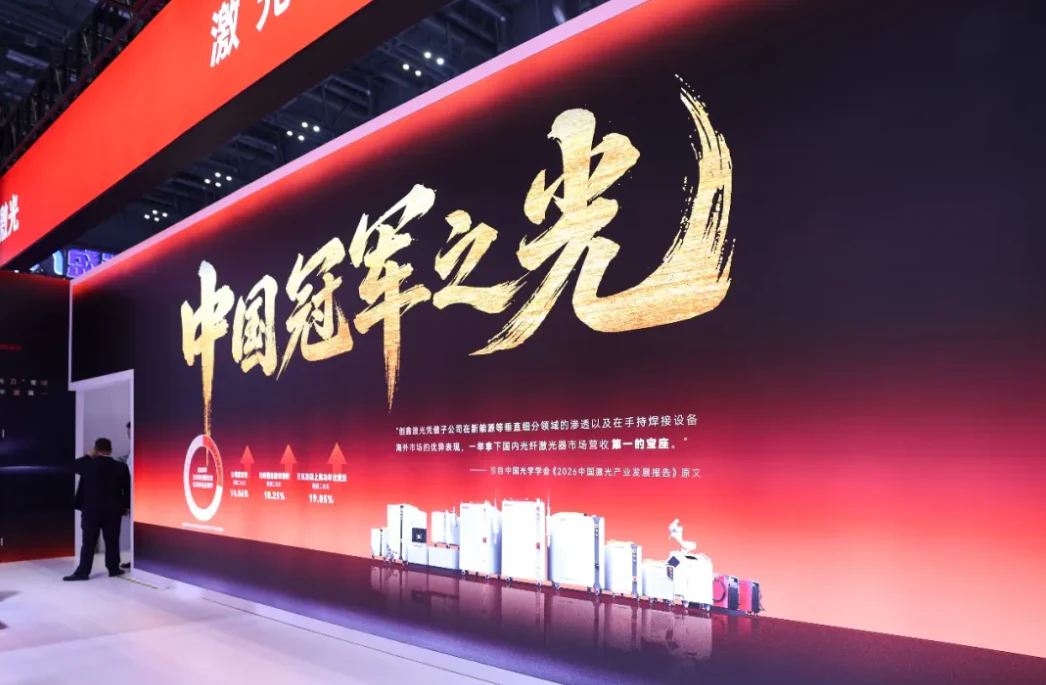
Today, Chuangxin is the first company in the world to deliver more than 10,000 lasers rated at 10 kW and above in a single year, and no one in the industry disputes its position as the leader in 10 kW-class lasers. Judging by the current momentum, the top spot in 2026 is unlikely to go to anyone else. As the sheet metal cutting market enters a battle for existing demand and most manufacturers sacrifice profit to gain share through lower prices, Chuangxin Laser has managed to climb to the peak step by step and post a volume growth curve in a track marked by rapid technology diffusion and highly homogeneous products. There must be a logic behind it.
On the sidelines of the CIIF industrial fair, VKEN.net interviewed Zeng Jianfeng, deputy general manager of marketing and brand at MAX Photonics Laser Market and the architect of the global 10,000 W laser marketing campaign, to break down the path to breaking through and advancing in the global 10,000 W laser market.
1. As volume and price decouple and the dividend fades, the value anchor of 10,000 W lasers must shift
Why are 10,000 W lasers selling well even as the industry cools? One clear change in the fiber laser industry over the past year or two is that the leading companies best known for 10,000 W systems have begun moving downmarket en masse.
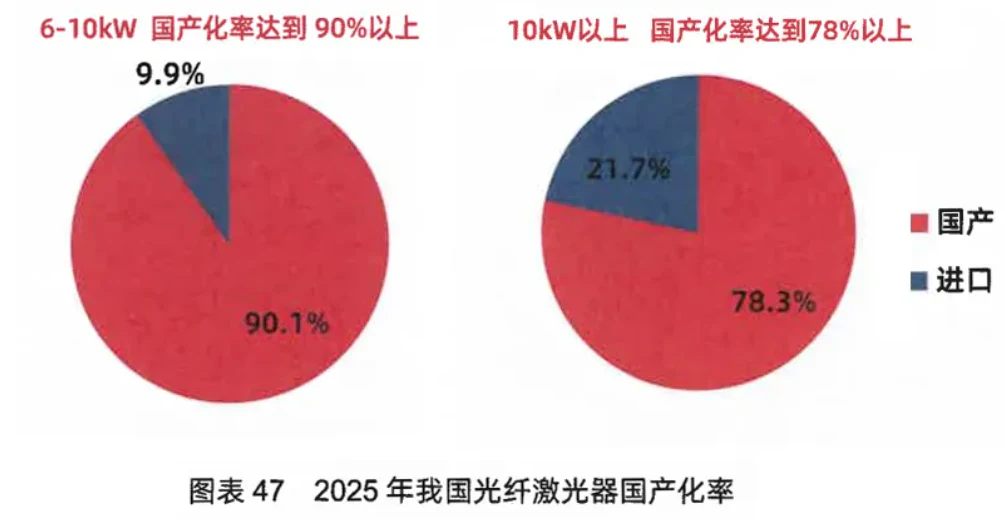
The main theme of domestic fiber lasers over the past decade or more has been import substitution. With domestic penetration already at 90% for the 6–10 kW class and 78% above 10 kW, that logic has largely run its course, and the dividend from substitution is fading as the industry enters a phase of decoupled volume and price.
As fiber lasers have matured, opportunities to quickly pull ahead through new sales models or by boosting a single specification are dwindling, especially for companies firmly in the top tier; simply stacking on power can no longer replicate past growth curves. After all, in terms of both cost economics and process fit, blindly raising power offers no clear cost-performance advantage in segments dominated by thick-plate processing. As a result, in today's market of strong supply and weak demand, many manufacturers clinging to the traditional path of "general-purpose equipment and volume through scale" can only fall into sluggish growth.
The 2025 Central Economic Work Conference put "continuously expanding domestic demand, optimizing supply, improving new additions and revitalizing existing stock" at the top of the agenda, stressing that new demand should lead new supply and drive an upgraded cycle of mutual reinforcement between supply and demand. In other words, the market ecosystem, customer structure and customer needs of domestic manufacturing are all changing—how can laser processing equipment remain trapped in the same old paradigm? In the new cycle, the value anchor of the fiber laser industry must shift from one-sided efforts on the supply side to clearing the bottlenecks, choke points and difficulties between supply and demand. Leading companies have therefore collectively moved into 10,000 W laser application scenarios, launching a new round of competition built around differentiated strengths.
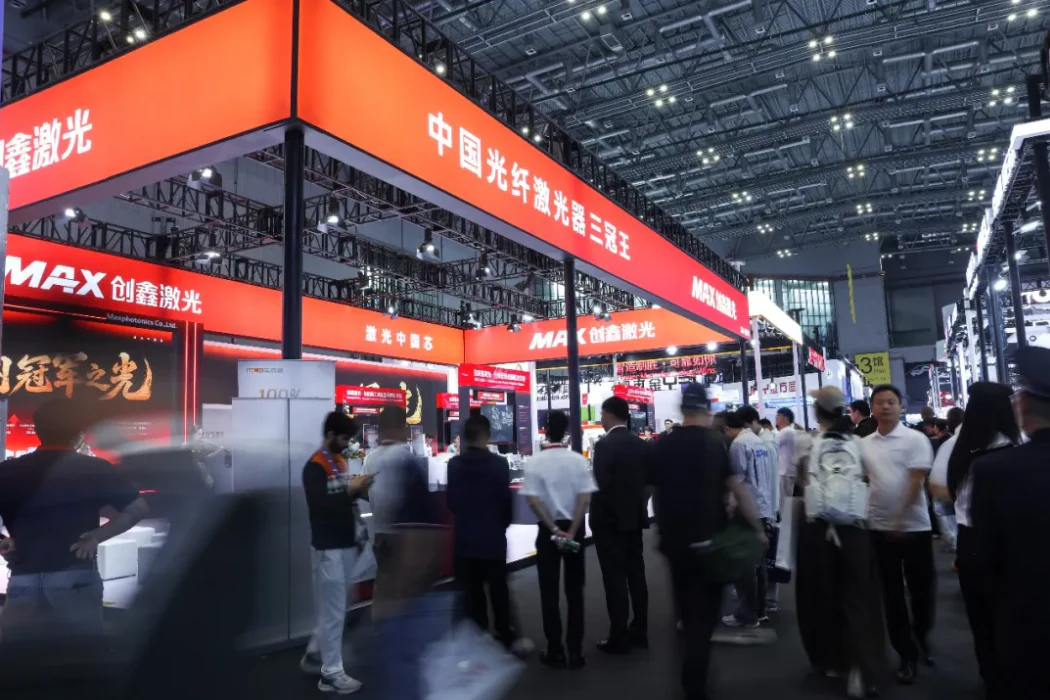
Among the many companies pursuing distinct transformation paths, Maxphotonics stands out as the most noteworthy example, with an approach that remains unmatched in the industry. Raycus, its peer in the top tier, focuses mainly on customized lasers, consolidating its core business in traditional processing while actively expanding into emerging segments and overseas markets, continuously broadening its product portfolio to cover diverse industrial scenarios. Its sales of lasers above 10,000 W reached 8,561 units in 2025, second only to Maxphotonics. Meanwhile, IPG, firmly among the top three in the domestic market, continues to consolidate market share by launching new platforms with higher power, smaller size and lower cost, while pushing deeper into high-value-added fields.
Unlike the two rivals' laser-centric strategies, Maxphotonics places greater emphasis on scenario-based downstream application needs and systematic solutions while advancing laser iteration and upgrades. In 2021, Maxphotonics introduced its "integrated 10,000 W cutting solution," known as the "10,000 W three-in-one" solution. The scheme integrates a 10,000 W fiber laser, a 10,000 W laser cutting head and a 10,000 W control system, creating the concept of "hardware of the same origin" and fundamentally resolving long-standing problems caused by the three core components coming from different suppliers: fragmented compatibility standards, frequent failures, lengthy commissioning cycles and buck-passing in after-sales responsibility.
In 2025, Maxphotonics extended the hardware-of-the-same-origin concept to a customized "dedicated laser for dedicated machine" technology route, launching the Rongguang and Xinguang three-in-one series. The Rongguang three-in-one, based on "hair growth cream" technology, pioneered an entirely new cutting process route in the industry: full-path raised-nozzle gliding cutting. It also features the proprietary patented "laser filament" optical path technology, upgrading the conventional "Gaussian beam" to a "super flat-top beam." This compresses and fixes the concentricity and coaxiality tolerances of the laser and cutting head, turning two focal points within the normal range into as many as nine, making the light knife more vertical, multi-focal and consistent, thereby enabling "one-click cutting."
Building on the Rongguang, Maxphotonics combined high-end configurations such as digital spot, digital control, path control, spot control and path coordination, and added its proprietary Zidi digital spot technology to create the Xinguang three-in-one dedicated machine solution, capable of solving difficult problems across different application scenarios. On the one hand, it helps source customers accelerate entry into the high-end market and achieve a value loop; on the other, it opens up new growth drivers for the laser cutting industry. The solution first entered shipbuilding, where the Xinguang XG3200 dedicated shipbuilding machine performed energy simulations for thick carbon steel cutting. Its proprietary "multi-gun laser" energy model delivers cutting quality and results beyond conventional laser cutting, resolving cross-section quality and taper issues in thick-plate cutting with ultra-high-power fiber lasers and perfectly replacing traditional flame cutting in shipbuilding.
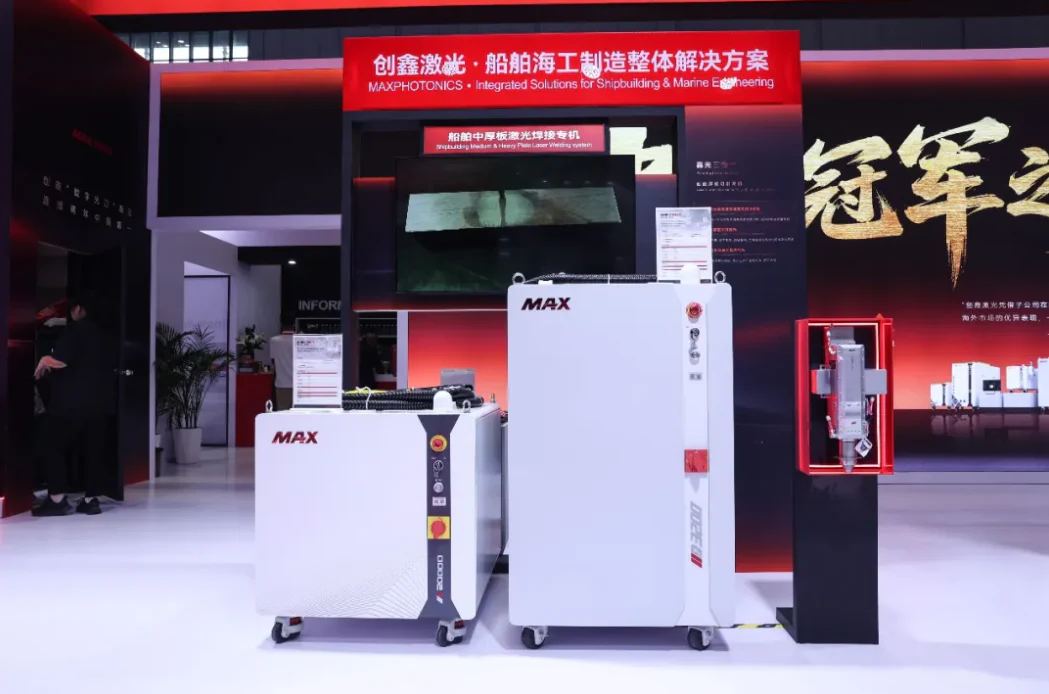
Maxphotonics Xinguang three-in-one dedicated shipbuilding machine
By comparison, the three leading companies each have distinctive approaches, but their underlying logic converges: all are driving 10,000 W lasers to penetrate faster and move closer to real-world scenarios. In my view, Maxphotonics' approach both reinvigorates the installed base and opens up new incremental markets. It is grounded in upgrading existing customers and production lines, while continuously lowering the entry barrier for new applications through process adaptation and scenario innovation, propelling 10,000 W lasers to evolve from a single sheet-metal blanking step into a general-purpose processing platform that spans multiple scenarios, integrates multiple processes and reaches multiple industries.
2. Anchoring the 10,000 W Roadmap: From "10,000 W Products" to "10,000 W Applications"
In recent years, the overall environment of the fiber laser industry has changed rapidly, causing many companies to deviate from the right path, particularly in their understanding of 10,000 W laser technology.
Before domestic 10,000 W products gained market acceptance, 6 kW was widely regarded as the power ceiling for industrial laser equipment, while high-power technology was long monopolized by overseas companies. The prevailing view at the time was that 6 kW was sufficient to cover the vast majority of processing scenarios and that higher power had no real demand. Given the constraints of the time, this conclusion was not entirely unreasonable. On the demand side, downstream processing was dominated by thin and medium plates; higher power lacked both clear application scenarios and economic justification. On the supply side, high-power components were not yet mature and costs were high. For most manufacturers, planning products around existing orders was arguably the least risky and most rational choice. But it also concealed a problem: measuring future manufacturing with the yardstick of today's demand.
Technology diffusion follows its own internal laws. Once power increases beyond a certain critical point, the economics of thick-plate processing in terms of speed, material savings and labor savings are rewritten, and a considerable share of demand is in fact "created" by more mature supply. The difference is that most component makers focus only on scheduling production around current orders, while a few are willing to look toward the process end and invest ahead of demand that has yet to materialize.
As noted earlier, MAX Photonics' shift deserves attention because the choices of leading companies often signal the industry's next direction. At a time when the industry outlook was murky and 10,000 W demand had yet to be proven, MAX Photonics was among the first companies in China to establish the "ultra-high power" route as a clear commercial proposition and to invest in it consistently.
In 2017, MAX Photonics launched its first 10,000 W fiber laser, achieving the technical breakthrough from 0 to 1; in 2019, its multimode 25 kW passed national certification; in 2020, MAX Photonics formally introduced the value proposition of the "ultra-high-power industrial fiber laser" to the industry and, using efficiency as the entry point, sparked a "10,000 W wave" that prompted domestic manufacturers to follow quickly. Domestic 10,000 W lasers thus moved beyond the stages of technical breakthrough and validation into the fast lane of industrial application. Over the following years, China's fiber laser industry entered a five-year golden period of growth.
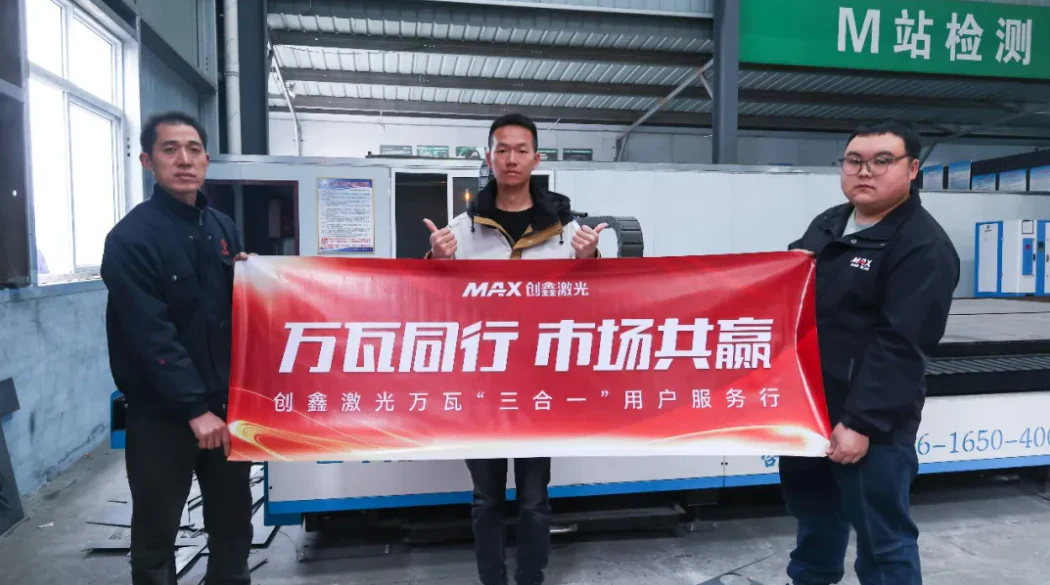
Data shows that by the end of 2020, MAX Photonics had sold nearly 450 10,000-watt-class units in total; today its annual shipments exceed 10,000 units. The contrast clearly demonstrates the foresight and decisiveness of MAX Photonics' judgment. On the one hand, its early forward-looking deployment accumulated massive process data and user feedback, building an experience barrier that latecomers cannot easily overcome in the short term. On the other hand, it is precisely this persistence that enabled China's high-power fiber laser technology to break through the blockade of foreign giants, prompting the world to reassess the technological standing of Chinese fiber lasers.
But in reality, fiber laser companies truly understand the laser itself, yet not necessarily the process, customer needs, or pain points of specific applications. Perception shapes mental models, mental models shape behavioral inertia, and behavioral inertia ultimately determines destiny — for organizations and individuals alike.
Most players' understanding of 10,000-watt lasers still stops at "a fiber laser with output power reaching 10kW," which they take as the entire definition of a "10,000-watt product." In recent years, quite a few domestic manufacturers have been able to develop 10,000-watt-class fiber lasers, yet few have managed to scale up volume on production lines. Some companies have resorted to price wars as a stopgap, sacrificing quality and reputation, and have struggled to sustain themselves in the second half of the 10,000-watt era — fueling the industry's mistaken belief that the 10,000-watt threshold is very low.
In fact, for 10,000-watt lasers to be truly embedded in production lines, a host of deep process challenges must be confronted. In thick-plate welding, for example, intense metal plume shields and disturbs the laser beam, causing the keyhole to destabilize and collapse, which in turn triggers humping, sagging, porosity and other defects. Thick-plate piercing is highly prone to blowouts, with slag adhesion at the bottom and thermal distortion imposing extremely stringent requirements on assist gas and heat input management. This is no longer a matter of breakthroughs in a single component, but a full-chain process coordination challenge spanning the light source, optics, materials and control.
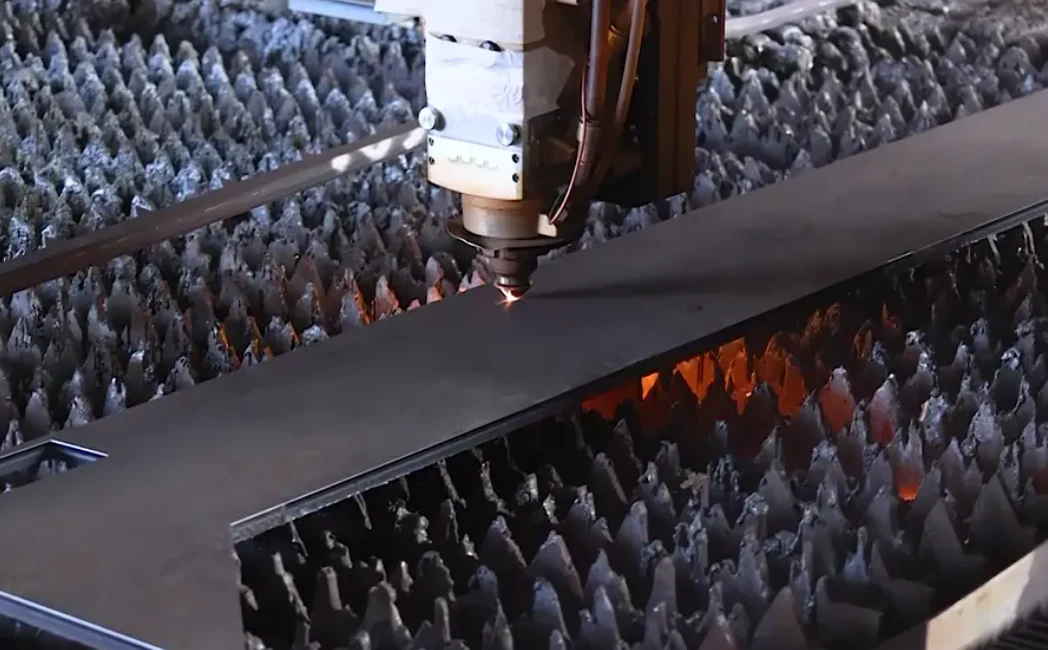
As early as the initial phase of 10 kW-class lasers, Maxphotonics took the initiative to build an industrial ecosystem with upstream and downstream partners, working with integrators and end users to improve 10 kW products and processes, and using its Beijing research center as a platform to collaborate with universities and research institutes on the mechanisms of laser, gas, and material interactions.
Moving from "a single 10 kW product" to "a broad field of 10 kW applications" is the shared evolution path for leading manufacturers. Maxphotonics got an earlier start in this process and brought greater organizational coordination across the supply chain, enabling 10 kW lasers to run reliably in a wider range of operating conditions.
III. Power inflation leaves laggards behind: vertical integration and technical depth define the 10,000 W divide
As 10,000 W lasers rapidly gain ground, major manufacturers competing for market share have fallen into the trap of "power-only" competition, racing to outdo each other on power and price.
As is well known, boosting power in a single fiber is constrained by nonlinear effects and transverse mode instability. The most direct way to push power higher is beam combining of multiple modules. Combining can quickly raise total power, but at the cost of beam quality.
Most manufacturers simply stack modules to raise total power quickly. The headline specs look impressive, but in reality each module lacks brightness, thermal bottlenecks are pronounced, and back-reflection tolerance is weak. The result in real-world use is unstable cut quality, high failure rates, and persistent problems with cut taper and dross. Clearly, as 10,000 W technology enters its second half and users begin paying for actual processing results, manufacturers lacking technical depth, unable to develop core components in-house and relying on gimmicks, are dropping out one after another.
All three companies in the top tier of fiber lasers launched vertical integration strategies at the industry's infancy, and all now have the ability to develop and manufacture core components in-house. Although their strategic directions converge, each takes a distinct approach to core component R&D, resulting in differentiated and distinctive fiber technology systems.
Take Maxphotonics as an example. From its founding in 2004, it established the strategic principle of "components first, vertical integration." After 2012, it successively mastered the full range of core components, including pump sources, combiners, acousto-optic modulators, fiber Bragg gratings, and laser output heads, ultimately achieving 100% in-house development of core components. In 2020, the company invested over 100 million yuan in Wuhan to build its own optical raw materials and fiber technology platform, extending vertical integration to the core materials level and achieving in-house fiber development and production. It also made a strategic investment in Lemon Photonics to jointly develop high-brightness, high-power EEL chips. In 2021, Maxphotonics introduced its exclusively patented triple-clad high-power specialty fiber into the 10,000 W series, with a maximum withstand temperature of 1000°C — currently the industry's only high-power, high-brightness technical solution. In 2024, technology results for 10,000 W core components — including a 160 kW ultra-high-power energy combiner, the LOE-M laser output head, and a bus-type cutting head — were successively realized, pushing domestic ultra-high-power laser technology to new heights.
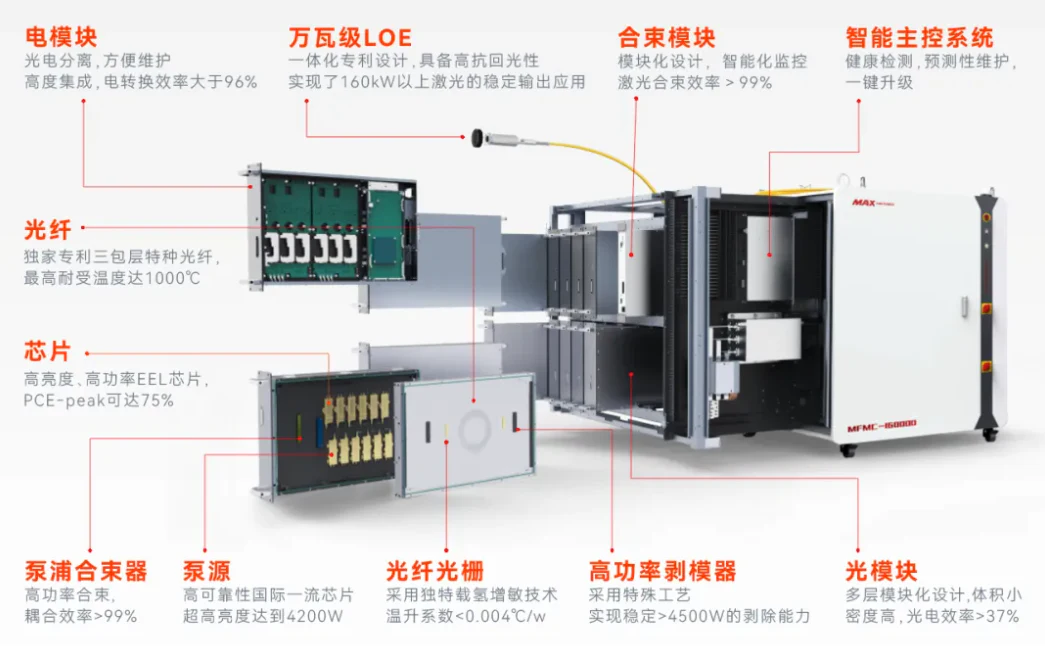
As the industry shifts from scale-driven growth to value-driven development, fiber laser companies that rely on purchased core components and only assemble complete systems will have their technology roadmaps dictated by others, making it impossible to truly unlock the potential value of 10 kW lasers.
Maxphotonics' technology iteration pace has borne this out. Backed by the deep implementation of its "components first" strategy, it has gained the confidence to restructure the entire optical path from core components upward. On the technology front, in 2022 Maxphotonics unveiled a new "high power + high brightness" technology route, using the underlying framework of "one high, two small, three claddings" to solve the industry's persistent problem of brightness dropping as power rises. On the component front, in 2023 it released a 4200W maximum-power single pump combining three innovative technologies — integrated all-in-one design, three-wavelength beam combining, and direct liquid cooling — further strengthening the performance of 10 kW lasers and providing the component foundation for faster penetration of 10 kW lasers into end-use scenarios.
Component-level innovation ultimately addresses only "whether the laser itself is powerful enough." In the era of 10 kW cutting, higher power, lower cost, and more stable components are, at bottom, efficiency-based competition. To make 10 kW lasers truly take root on users' production lines, the value anchor of fiber lasers must be pursued on both the hardware and process fronts. The Zidi digital beam spot technology launched by Maxphotonics in 2023 puts this new thinking into practice and is key to its catching up with peers in the second half of the 10 kW race and transforming 10 kW products into a 10 kW domain.
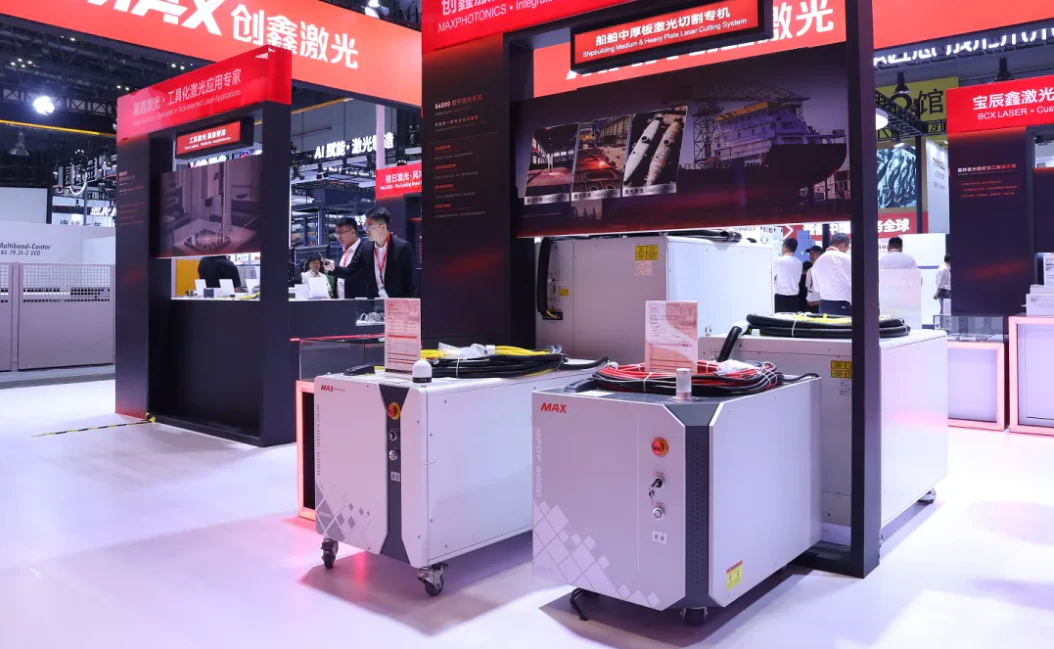
Maxphotonics digital laser system
Traditional lasers emit a single spot of fixed shape, requiring users to adjust their processes to fit the spot when working different materials and processes. Among existing adjustable-spot solutions, galvanometer-based schemes make poor use of high-quality laser light, while coherent laser schemes are complex and costly, with limited spot shapes. Maxphotonics' Zidi digital beam spot discretizes a single spot into an array of independently controllable light points, enabling truly synchronized, real-time, digital beam spots of arbitrary shape under standard QBH output conditions. The power, frequency, and duty cycle of each pixel point can be independently controlled, pioneering programmable control of a "single focused spot" in industry and comprehensively solving the processing challenges of highly reflective materials such as red copper.
In the past, process parameter tuning for different materials relied mainly on the experience of veteran technicians and was hard to replicate or transfer. Zidi can turn that experience into editable, storable, and reusable spot configurations, on which downstream customers can package their own differentiated processes — turning purchased equipment into a process platform that keeps growing. Conversely, the advent of Zidi has also pushed 10 kW lasers into broader territory, preventing the laser cutting sector from repeating the "last one standing wins" outcome of the laser marking field — a no-winner, pyrrhic ending that would hardly be good for the industry.
IV. In a Zero-Sum Market, How Should Chuangxin's 10,000 W Portfolio Face the Challenges?
As the value of 10,000 W lasers continues to be realized, high-power products are being adopted faster across end-user industries. At the same time, amid macroeconomic pressure, end users are becoming more cautious in their purchasing decisions. Certainty of effective capacity, unit cost of qualified parts, and the ability to deliver complete solutions are becoming key benchmarks in high-end manufacturing. The divergence driven by the "Matthew effect" in the fiber laser industry can be expected to deepen further.
Over the longer term, Chuangxin's current lead essentially stems from resolving in advance the common difficulties facing the entire industry, thereby establishing first-mover advantages in both high-power technology and development philosophy. But the laser cutting market is now nearing saturation: growth in China's laser cutting equipment market slowed to 3.6% in 2025, the replacement cycle for legacy equipment is limited, and the penetration of 10,000 W products in cutting applications cannot rise indefinitely. The pace at which incremental demand in cutting is unlocked depends on process maturity and users' willingness to invest, not on unilateral pushes by light-source suppliers. Whether Chuangxin Laser can maintain its lead will hinge on whether 10,000 W lasers can continue to build a genuinely stable user base.
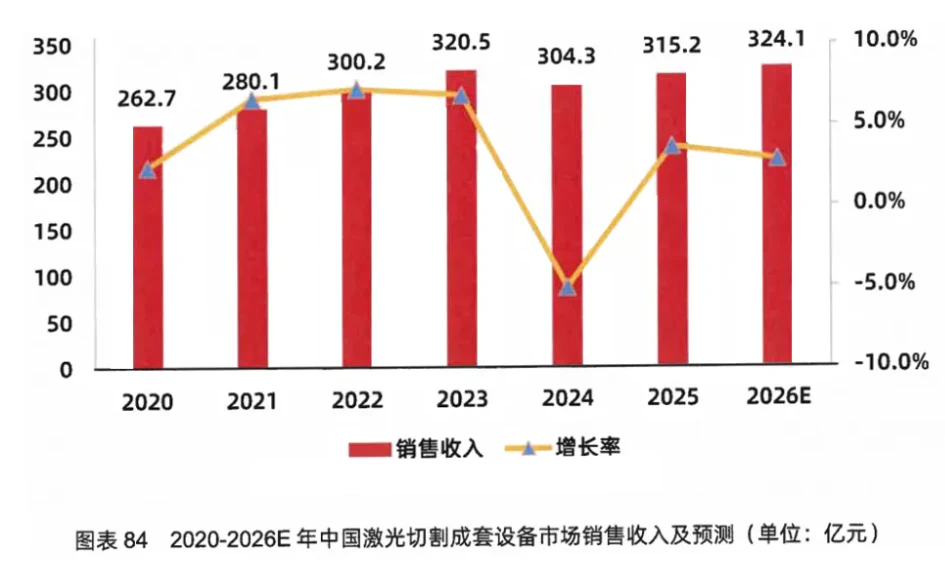
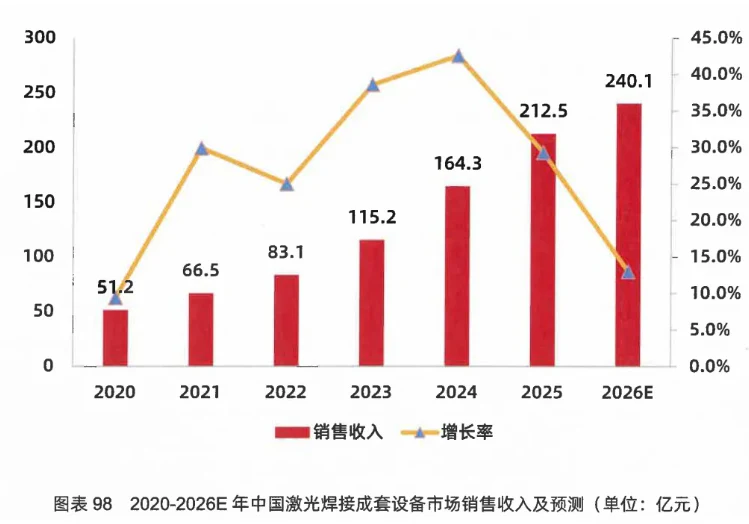
Data show that sales revenue of laser welding equipment in China reached 21.25 billion yuan in 2025, up 29.3% year on year, and is expected to exceed 24 billion yuan this year. Clearly, the installed base in cutting alone is no longer enough to sustain long-term growth in the fiber laser industry; the industry's incremental focus is shifting toward welding, cladding, cleaning and other diversified processing applications.
To meet the needs of high-precision, cutting-edge applications, in 2025 Baochenxin, a subsidiary of Chuangxin Laser, released the world's first MOPA 10000W pulsed fiber laser, breaking with the traditional 10,000 W paradigm dominated by continuous fiber lasers. This further rounds out the 10,000 W laser product portfolio, providing core light-source support for cleaning applications in high-end fields such as aerospace, automotive manufacturing, rail transit, and shipbuilding.
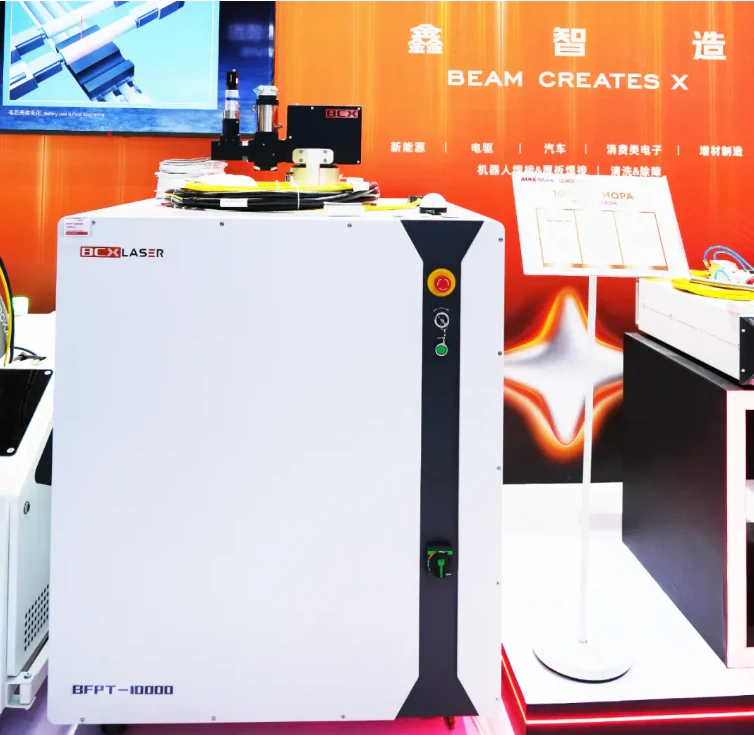
Baochenxin MOPA 10000W pulsed fiber laser
Meanwhile, tool lasers — including handheld cutting and welding, desktop engraving, and 3D printing — continue to see strong volume growth, with more players entering from outside the industry. Unlike high-end industrial scenarios, the tool laser market does not depend on 10,000-watt high-power products, which means companies must build product matrices spanning multiple power tiers to adapt to the new competitive landscape of a zero-sum market.
In addition, the AI computing boom is reshaping the underlying logic of the laser industry's upstream and downstream segments. The industry's long-term evolution demands that light source manufacturers upgrade from hardware suppliers to process capability platform service providers. But this is inevitably a track that requires sustained investment, with clear returns unlikely in the short term. In my view, for MAX Photonics, AI is not an optional extra, but a battleground it must win to fully unlock the massive process data accumulated through its 10,000-watt development, seize the opportunities of intelligent manufacturing, and avoid falling behind in the next wave of transformation.
Faced with diverse challenges, the 10,000-watt advantage cannot remain at the hardware level alone. The company must firmly pursue a path of "deep hardware-software coupling, deep vertical industry deployment, and deep AI empowerment," breaking free from the constraints of its established track to open up new growth drivers.
V. Final Thoughts
In just over a decade, China's fiber laser technology has caught up with overseas giants. From low and medium power to high power, its hard capabilities are no longer lagging behind — and in high-power application scale, it has even moved to the forefront. But new questions now arise. The share dividend from import substitution is converging, overall industry growth is slowing, mid- and low-end products are highly homogeneous, and profit pools remain under pressure. The entire industry stands at the threshold of a transformation in its profit model.
The industry's push to shift from a "price war" to a "value war" is, at its core, a restructuring of value distribution across the supply chain. Only when reasonable profits feed back into innovation and customers are willing to pay a reasonable premium for quality and efficiency can the industry escape the vicious cycle of "low prices, low profits, low investment" and enter a virtuous track of "high investment, high value, high returns."
This is precisely the direction that Max Photonics has pursued steadily over the years, and the fundamental reason it has topped China's fiber laser market by revenue for two consecutive years. It also validates the effectiveness of Max Photonics' approach of "building a foundation through vertical integration, delivering scenario-based applications, and continuously iterating technology" as the industry transitions toward high-quality development.
As Zeng Jianfeng put it: "The shift between old and new growth drivers and industrial iteration continue to accelerate, and the traditional concept of single-purpose laser manufacturing is steadily dissolving. The underlying logic of 10,000-watt-class laser processing is becoming deeply tied to scenario-specific needs, and the industry's focus is shifting from simply selling equipment to delivering processing capabilities. The value chain among light sources, processes and end applications is being differentiated and reorganized, and entirely new business models are emerging at an accelerated pace.Old maps cannot find new continents. Amid the waves of industry, no one can remain a bystander forever. As a leading fiber laser company, Max Photonics has chosen to move proactively — reinforcing the core foundation of its light sources, clearing the hurdles of scenario-based deployment, and leading the industry out of the narrow track of hardware competition toward the vast expanse of value creation, so that this "digital light knife" can truly take root across countless industries. This is both the development direction of 10,000-watt-class lasers and the answer Max Photonics has given to the times."
This, perhaps, is the next journey that China's fiber laser industry truly needs to embark on after completing its catch-up.
Source: OFweek Laser Network · News · laser.ofweek.com