Haipulin Showcases Complete Laser Solutions at CIIF After Hisense Takeover
家电巨头领携,海普林的三重升维!
Topics and contents
Topic
On this page
In June 2026, Hisense Group strategically took over a long-established fiber laser company and renamed it Haipulin. Four months later, Haipulin presented a full range of laser cutting, welding, cladding and 3D printing solutions at CIIF, focusing on new energy, aerospace, steel structures and offshore engineering.
Fiber laser industry: the old engine and new coordinates.
Another year, another CIIF. This time, laser cutting equipment again claimed the densest concentration of booths. Walking the aisles, one could clearly sense that the conversation has changed. In previous years, buyers focused on power, cutting thickness and price; now they care more about precision, speed and stability. In the fiber laser industry, the name Haplin is far from unfamiliar. In June 2026, Hisense Group took strategic control of the veteran fiber laser company, and Haplin was born. Four months later at CIIF, it showcased a full suite of application solutions spanning laser cutting, laser welding, cladding and 3D printing, targeting the needs of new energy, aerospace, steel structures and marine engineering, while also presenting a ring-shaped beam laser available in air-cooled and water-cooled models — one machine for multiple processes.
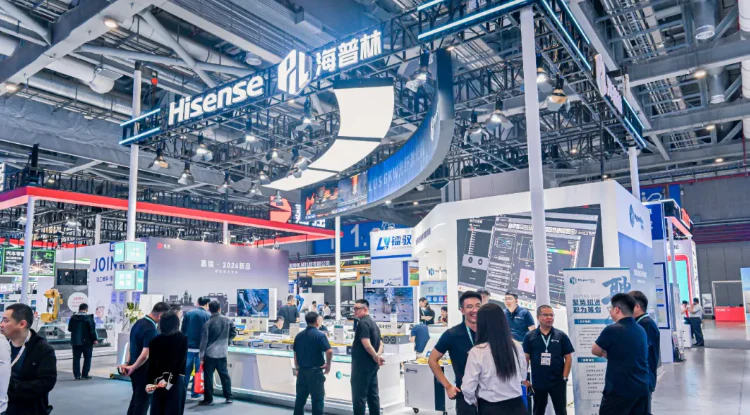
In my view, China's fiber laser industry spent more than a decade moving from import substitution to running neck and neck with international players, while pushing the power race and price competition to their limits. But none of this is the future direction of the fiber laser business. Whether products can keep moving upmarket, whether quality and service can back them up, and whether application boundaries can be opened up — these are the core questions manufacturers now face. What Haplin is doing is precisely such a 'threefold upgrade.'
Growth bottlenecks in the fiber laser industry
According to the 2026 China Laser Industry Development Report, sales revenue in China's laser equipment market reached 95.8 billion yuan in 2025, up 6.8% year on year. Of that, fiber laser sales totaled 14.16 billion yuan, up 8.8%, with total shipments for the year (including imports) exceeding 560,000 units. The overall volume is still growing, but the center of gravity of that growth has shifted. The largest downstream market for fiber lasers is rough metal blanking — also the earliest commercialized and most fully penetrated segment for domestic fiber lasers. Related reports show that domestic laser cutting equipment sales revenue reached 31.52 billion yuan in 2025, up just 3.6% year on year, and growth may slow further to 2.8% in 2026.
In 2025, the localization rate for domestic equipment in the 6kW to 10kW range exceeded 90%, the localization rate for 10kW-class lasers surpassed 78%, and the overall localization rate for fiber lasers reached 86.2%. Core light sources that were once monopolized by overseas giants and cost upward of a million yuan have become standard fittings in cutting machines. Yet fiber laser prices have fallen nearly 90% over the past five years, turning a 'luxury' into a commodity.
Today, product homogeneity is severe. The vast majority of companies crowd into general-purpose equipment, with highly convergent technology roadmaps. Leading players use scale effects to keep driving down marginal costs — the top ten already hold more than 50% of the market — while the survival space for small and mid-sized firms keeps narrowing. Squeezed from both sides, some companies cut costs where it cannot be seen: trimming specifications and relaxing quality control. Demand for thick plate in steel structures, construction machinery and shipbuilding remains, but the era of making money by 'selling more cheap machines with more cheap light sources' is over. The end of the rat race is not a lower price — it is a different way of thinking.
With Hisense behind it, Haplin's fiber laser business pursues a threefold upgrade
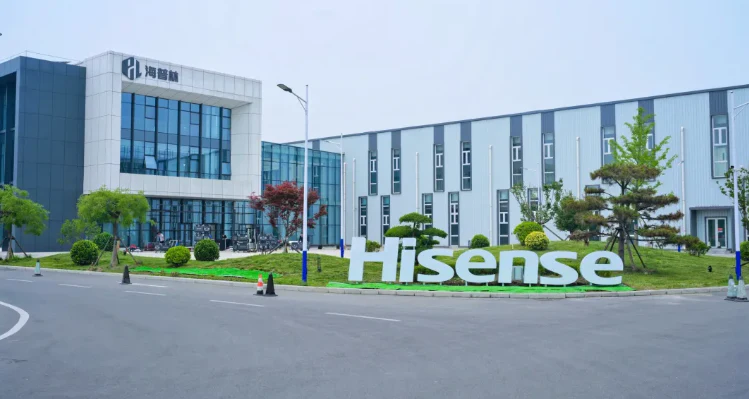
Haplin is a long-established player in China's semiconductor laser field and has also spent many years深耕 in fiber and ultrafast laser technology. On June 24, 2026, Hisense unveiled Haplin's plaque in Tianjin, and the high-power laser intelligent manufacturing base in the Tianjin Port Free Trade Zone went into operation simultaneously. Hisense thus became the only company in China covering laser display, laser processing and light source components at the same time. For Haplin, Hisense brings more than capital: it brings a manufacturing and service system validated over decades in the home appliance market.
(1) First upgrade: relentless product iteration and active expansion into high-speed laser cutting
Cutting applications are the foundation of Haplin's fiber laser business. On the high-power side, the Leiting series targets thick-plate cutting and is widely used in new energy equipment welding, ship thick-plate cutting, aerospace and other high-end manufacturing fields. On the mid- and low-power side, the Shandian Plus, built for ultra-fast thin-plate cutting, is the sharp spear Haplin has deployed in recent years.
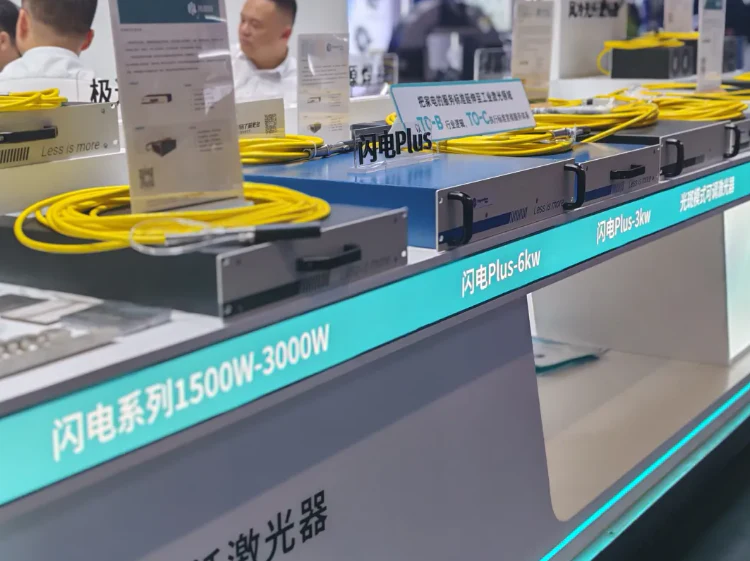
The Shandian series is the flagship of Haplin's miniaturization strategy. In 2022, the company launched the 'smaller, lighter, smarter' Shandian series fiber lasers, ushering fiber lasers into a 'compact era.' Covering 500W to 6000W, it quickly opened up the handheld laser welding market; full-line sales exceeded 50,000 units in 2023, establishing the product DNA of miniaturized, lightweight lasers. The Shandian Plus carries that DNA forward, backed by the company's TCT chip-integration technology refined over years of iteration, pushing ahead on miniaturization, lightweighting and ultra-high power.
The entire Shandian Plus range from 1500W to 6000W uses an industry-leading small-core-diameter optical design: the 3kW model delivers a 34μm core diameter output, beam quality M2 below 2.5, and power density twice that of conventional lasers. This leap in beam quality translates directly into processing efficiency. Cutting speed on 1mm stainless steel reaches 60m/min, overall thin-plate cutting speed improves by more than 40%; with second-level piercing, piercing wait times are drastically cut, whole-line capacity rises 30% to 50%, and delivery cycles are significantly shortened.
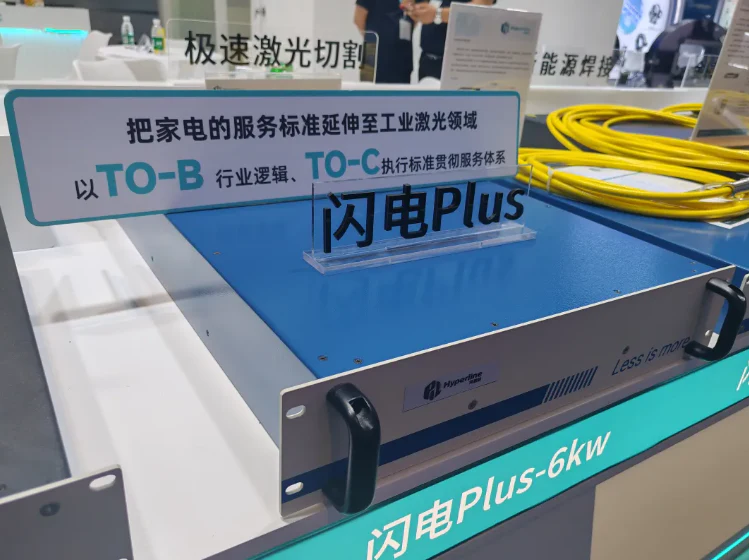
Beyond speed, the Shandian Plus also targets two long-standing problems in thin-plate processing. For highly reflective materials such as copper, aluminum and brass, the product features a multi-stage physical isolation and intelligent protection architecture. A four-fold protection mechanism — stripping, isolation, monitoring and shutdown — guards against back-reflected light, eliminating at the source the risk of reflected light damaging the resonator, pump sources and other core components, and solving the problems of machine damage and low yield in reflective-material processing.
At this year's CIIF, Haplin put that capability on full display. Its thin- and medium-plate solution delivers fast cutting and smooth cut surfaces, reducing secondary finishing and suiting high-volume sheet processing lines. Its thick-plate solution offers strong cutting stability and good kerf perpendicularity, addressing the traditional pain points of low efficiency and rough cut surfaces in thick-plate processing, and fitting scenarios such as construction machinery and heavy equipment thick-metal components.
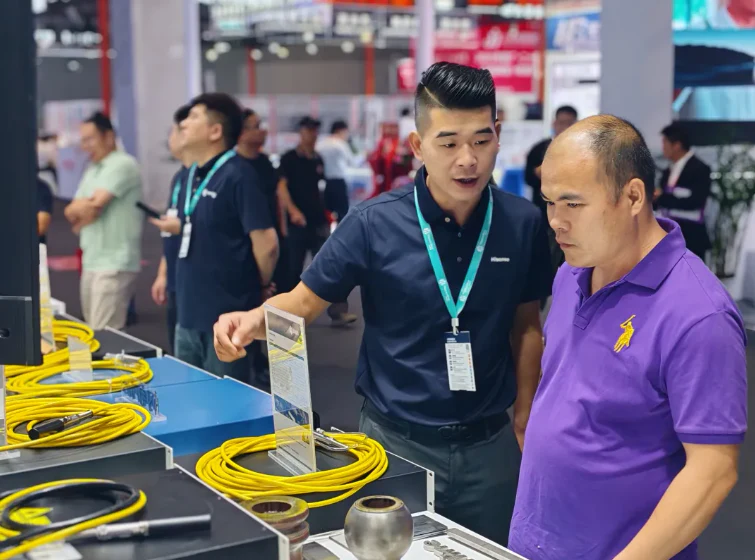
Haplin's fiber lasers now span three product series — Shandian (500W–6000W), Leiting (12kW–200kW) and Fengbao (300W–1500W) — offering system solutions for handheld laser welding, laser cutting, additive manufacturing and other fields.
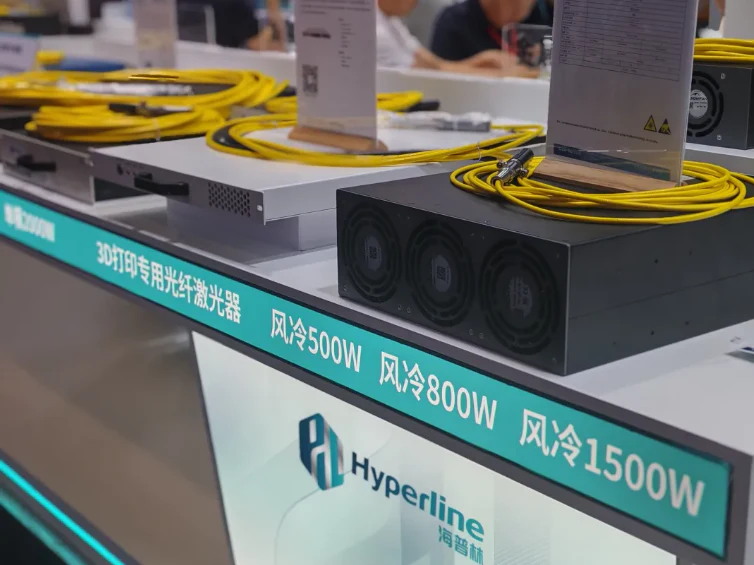
The essence of this first upgrade is to fight on efficiency and process rather than price. When end customers buy a light source, they are not buying a power figure — they are buying the number of parts cut per machine-hour. Thin plates 40% faster, thick plates cut steadily, and no degradation over long operating hours will decide the next purchase far more than another few points of price cut.
(2) Second upgrade: stronger quality control and after-sales service for sustainable development
In late September 2026, Haplin launched a nationwide quality improvement campaign across all its branches, putting the Hisense Quality Law into practice and明确提出 the goal of 'building industrial lasers to home-appliance-grade standards.' Quality was designated a 'top-leader project': all employees sat quality knowledge exams, took a quality pledge and signed quality commitments, cascading quality responsibility down to every individual.
The natural extension of quality building on the customer side is the '11216 Ultimate Service System' released on October 8 — in which Haplin became the first in the industry to apply TO-C execution standards to TO-B after-sales service. Under the system, Haplin can complete order intake, needs assessment and solution matching within one hour for requests anywhere in the country; engineers arrive on site within 24 hours in core domestic industrial regions; on-site repairs and precise delivery of parts and loaner units are completed within 48 hours; and the service process is 100% end-to-end visible, so equipment never goes 'out of touch' once shipped.
The most counterintuitive provision is a tiered extended warranty for fiber lasers of 3000W and below: one repair of non-wear parts during the warranty period extends the standard warranty by three months; two or more repairs extend it by six months — currently the longest extended warranty arrangement in the industry.
Behind the speed is physical infrastructure. Beyond the two bases in Tianjin and Suqian, regional service centers in Shenzhen and Nanjing have gradually entered trial operation this year, forming a '1 + 3 + overseas' service footprint. New parts warehouses were built in key East and South China regions, cutting logistics time for loaner units and parts from 48 hours to 24 hours and moving repair capability and spare parts as close to customers as possible.
The conventional logic is that the more equipment a maker repairs, the faster it wants to shed responsibility. Haplin does the opposite: the more it repairs, the longer it extends the warranty, re-tying quality risk to itself and using economic incentives to force problems to be solved before shipment. Hisense's nationwide service network and mature digital dispatch and scheduling capabilities are physical resources that can be reused directly — giving these promises a foothold beyond slogans.
Product iteration determines how fast a light source sells; quality and service determine how far a company goes. What the second upgrade makes up is precisely the 'last mile' the industry has owed for years and is most easily overlooked.
(3) Third upgrade: opening application boundaries, moving from single-track cutting to diversity and value
Haplin has not staked everything on the single track of metal blanking. Handheld welding is a traditional strength: the Shandian series scaled rapidly after its 2022 launch and at one point captured a large share of the handheld laser welding market; the Fengbao series (500W–1500W) for air-cooled handheld welding continues to iterate. Additive manufacturing is the second landing point. The company exhibited 500W and 1000W single-mode lasers for metal 3D printing, with 3D printing holding a dedicated place among its three product series, and is in discussions with a local Tianjin aerospace additive manufacturing company, with orders expected to materialize gradually.
Matching the new scenarios is the company's shift in role from 'selling light sources' to 'building systems.' The light source itself can be generic, but deployment in a specific scenario requires adding optical and electronic control systems to form a complete opto-mechatronic system, customized to the end application.
The cutting market competes on unit procurement cost; new scenarios compete on process积累 and customer stickiness. The threefold upgrades now form a closed loop: product strength defends the base, quality and service secure reputation, and new scenarios open up incremental space.
Opportunities and challenges of the new era: the must-answer question for fiber laser leaders
The first thing the threefold upgrade buys Haplin is a firmer hold on traditional market share. When specifications converge and prices bottom out, customer choice increasingly hinges on a comprehensive calculation: cutting efficiency, failure probability and repair cost. Get these solid and the installed base only grows more stable — the certainty of quality and service is converting into quantifiable repurchase rates and utilization rates. Going overseas is another opportunity: Haplin is piloting with its Vietnam overseas outlet, fully replicating the domestic 'on-site repair + regional warehousing' model, and plans to complete its global service network layout by 2027 to 2028. At a time when domestic laser equipment is going abroad rapidly while overseas service networks are generally absent, service capability itself is the door-opener for orders.
The bigger challenge lies in a shift in the competitive paradigm. The fiber laser industry is moving from low-price wars to value competition on integrated light source, process and AI solutions: scale competition answers 'can it be built and sold cheaply,' while scenario-based, value-based competition answers 'can it solve specific problems' — backed by two entirely different sets of organizational capability. New growth drivers are emerging one after another. On the AI compute side, liquid cooling is becoming standard in intelligent computing centers in 2026; orders at leading liquid-cooling equipment makers are up more than 300% year on year, and the full-year market could exceed 70 billion yuan, with liquid-cooling plates and copper heat sinks driving substantial demand for welding highly reflective metals. On the new energy side, lithium battery, photovoltaic and hydrogen production lines continue to generate demand for precision welding and cleaning. On the commercial spaceflight and low-altitude economy side, eVTOL composite cutting, 3D-printed structural components, and in-orbit manufacturing and repair are making successive breakthroughs.
Hedging the volatility of the general cutting track with high-value-added business is the must-answer question facing leading fiber laser companies. But the pace of ramp-up in new scenarios remains uncertain, and the high-end component supply chain and geopolitical trade frictions remain constraints. Haplin's upgrade is not a one-time fix but a continuing bet, continually兑现.
Conclusion
In the first half of China's fiber laser industry, technology breakthroughs and brutal price wars built the world's largest industrial footprint. The second half must answer questions of scenarios and value: is the equipment reliable, is the service certain, and can the light source solve real problems in more scenarios?
The threefold upgrade is not an escape from cutting, but an upward move together with the goal of high-quality development. The CIIF halls will close and the demonstrations will stop, but the industry's exam remains open indefinitely: only those willing to bet on the slow work of quality, service and process will earn a seat in the second half. Haplin has already submitted its answer sheet; the results will ultimately be judged by every laser that powers up and runs, and every work order closed on time.
Source: OFweek Laser Network · News · laser.ofweek.com