Lumentum Capacity Under Strain: What Businesses Beyond EML and CW Lasers Drive Its Strength
Topics and contents
An article by Haitun Jun continues the breakdown of Lumentum: EML secures the core profit base of pluggable optical transceivers, while high-power discrete lasers, UHP CW, bet on next-generation CPO/NPO architectures. With supply and demand severely mismatched for high-end laser chips, leading manufacturers with in-house capacity simultaneously benefit from price increases, long-term orders and rising gross margins.
In "From Optical Interconnect Veteran to 'All-Round Enabler,' What's Behind Lumentum's Rise?", Dolphin Research broke down Lumentum's two core optical component businesses: EMLs anchor the profit base of pluggable optical modules, while high-power discrete lasers, UHP CW, bet on incremental growth from next-generation CPO/NPO architectures.
The underlying logic of both lines converges: with supply and demand for high-end laser chips severely mismatched, leading manufacturers with in-house capacity are starting to benefit simultaneously from price increases, long-term orders, and rising gross margins.
But whether EML or CW, both must be "cut" from the same indium phosphide wafer. Indium phosphide crystal growth is slow, there are no foundries, and new capacity takes two to three years to ramp up. This means Lumentum's growth will sooner or later hit the ceiling of wafer capacity. So does Lumentum have any other cards to play?
In this article, we continue the discussion, focusing on two questions:
1. Why is Scale-across giving the traditional telecom component business a new lease on life?
2. Why is Lumentum getting into the low-margin module business?
Here is a detailed analysis.
I. Other telecom components & industrial business: new scenarios let an old business bloom again through scale-across
Lumentum's telecom business has been a classic installed-base operation in recent years: demand comes from global carriers, capital spending moves at a steady pace and fluctuates with the cycle, and growth depends on expanding existing networks. This AI wave has upended that narrative for a simple reason: there is not enough electricity.
Keep in mind that the power capacity available to a single data center campus has an upper limit. When a training cluster grows beyond the power a single campus can support, the training workload must be distributed across campuses - a data center tens to hundreds of kilometers away has to work with the local facility as if they were one machine. This link is Scale-across.
Once the distance increases, intra-data-center optical interconnect technology fails:
Inside data centers (Scale-up and Scale-out), intensity modulation direct detection (IM-DD) is widely used: data is carried by the intensity of the optical signal, and the receiver uses a photodiode to directly detect the light intensity and convert it into an electrical signal. This scheme is low-cost and low-power, but its drawback is that the receiver captures only the intensity of the light, so phase information (the position of the light wave at a given point in time, such as a peak or trough) is lost during the optical-to-electrical conversion.
The impact is limited in short-reach scenarios (it can be corrected in the electrical domain via DSP), but long-haul fiber transmission introduces dispersion: optical signals at different wavelengths travel at different speeds, the optical pulses gradually broaden, and the signals eventually interfere with one another.
Therefore, cross-campus, long-distance interconnects must use coherent optical communication, encoding information in the phase and polarization dimensions of light. At the receiver, local oscillator light is mixed with the signal light to demodulate and recover the full amplitude and phase information, after which coherent DSP compensates for dispersion and nonlinear impairments and performs signal error correction.
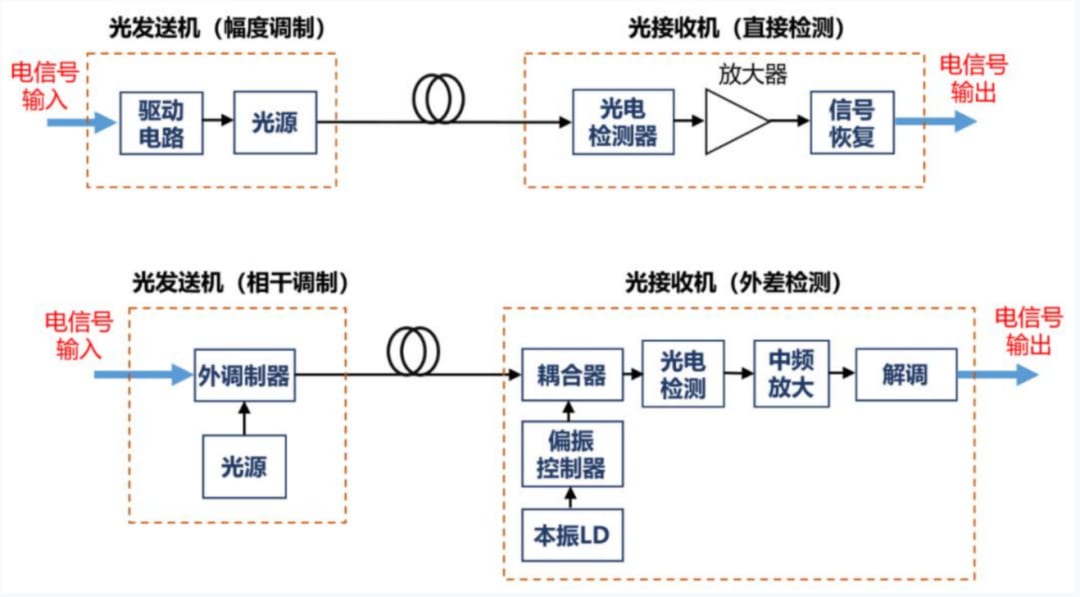
(Note: the upper figure shows IM-DD with direct modulation of the light source; the lower figure shows coherent optical communication, in which the receiver adds a local oscillator beam, mixes it with the received signal light, and then extracts amplitude + phase.)
However, the coherent scheme greatly increases link complexity: the system requires ultra-narrow-linewidth tunable lasers, high-precision coherent modulators, and dual-polarization receivers, and optical amplifiers (EDFA) must be deployed every few tens of kilometers to compensate for optical power loss during fiber transmission.
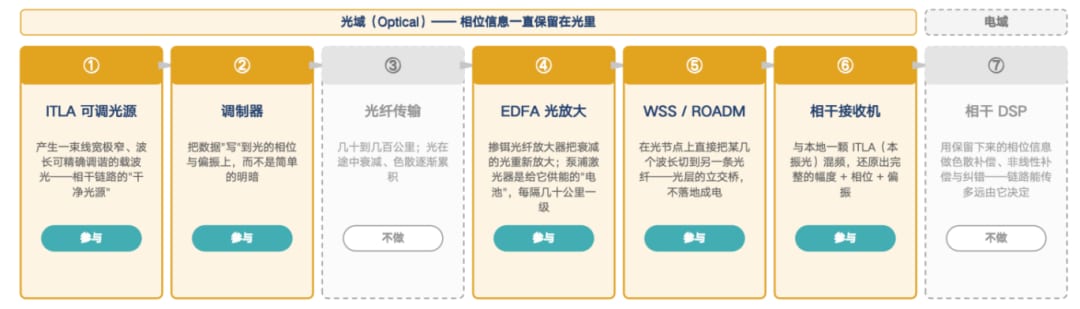
For Lumentum, its accumulated expertise in coherent photonics, including telecom long-haul and metro optical components and transmission engineering capabilities, can be reused in AI data center cross-campus interconnect (Scale-across/DCI) scenarios.
Below, we take a closer look at Lumentum's two most representative components for coherent optical connectivity:
1. Tunable Laser (ITLA) - the "clean light source" behind coherent links
ITLA (integrated tunable laser assembly) is the light source in a coherent module, and it has one job: continuously emit a "clean" continuous-wave beam. A ZR coherent module typically contains just one ITLA. Its output is split in two: one path is modulated and transmitted to carry data, while the other stays local as the reference light (local oscillator) used by the receiver for demodulation. So if the light source quality degrades, both transmission and reception are affected at the same time.
"Clean" here means meeting three conditions at once:
a. Extremely narrow linewidth: the color of light is determined by its wavelength. No matter how pure a beam is, its color still spreads slightly around the central wavelength, with some fluctuations slightly longer or shorter. That spread is the linewidth.
An extremely narrow linewidth means the phase carrying the information stays regular over long periods. Since phase is used to transmit data, if the phase of the light source itself wanders randomly, the receiver cannot tell which changes are data and which are noise.
b. The wavelength can be precisely tuned to any channel in the C band (1310/1550 nm telecom bands, where fiber attenuation is lowest).
c. Long-term stability of light source quality
Unlike EML lasers (each new EML generation requires a redesigned modulation region and overcoming chip fabrication challenges such as secondary epitaxial butt-jointing), the difficulty with ITLA does not lie in the chip itself. The chip architecture does not need to be redesigned to keep pace with transmission rate upgrades. After more than 20 years of iteration, ITLA chip and cavity designs have become relatively mature.
The core challenge in volume production lies in back-end micro-packaging and full-wavelength calibration, which also determine whether an ITLA can deliver the "clean" light source required for coherent communications.
a. Micro-packaging: The optical paths of the EML and CW lasers described above are essentially straight lines - light leaves the chip, passes through a lens and an isolator, and is coupled into the fiber. The wavelength is determined by the chip itself and is fixed at the factory, with the optical components connected one-to-one in series.
As shown in the figure below, ITLA adds a "self-correcting" closed loop: after light leaves the chip, a small portion is split off and sent to a wavelength locker, which compares the current wavelength with the standard grid in real time and feeds the deviation back to adjust the chip's drive current.
In this way, packaging an ITLA is not just about protecting the chip and routing out the optical signal. More importantly, without a high level of integration, every discrete optical component inside - lenses, isolators, prisms, etalons and so on - must be precisely positioned and firmly bonded during packaging, then sealed, temperature-controlled, electrically connected and optically coupled.
The feedback optical path added to the ITLA introduces a set of components that require micron-level optical alignment. Because the alignment must not shift under temperature fluctuations or long-term component aging, packaging becomes significantly more difficult.
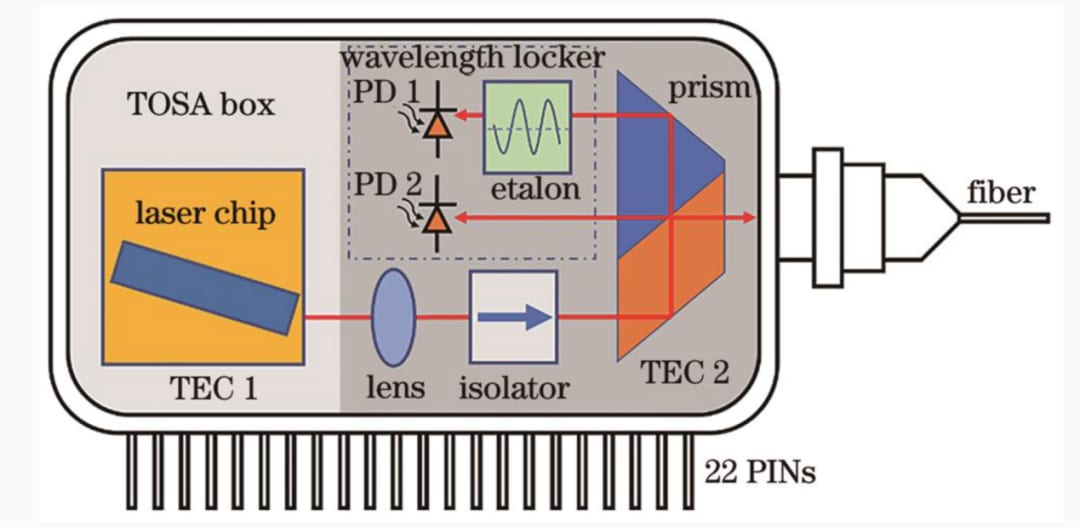
Source: Acta Optica Sinica (ITLA schematic)
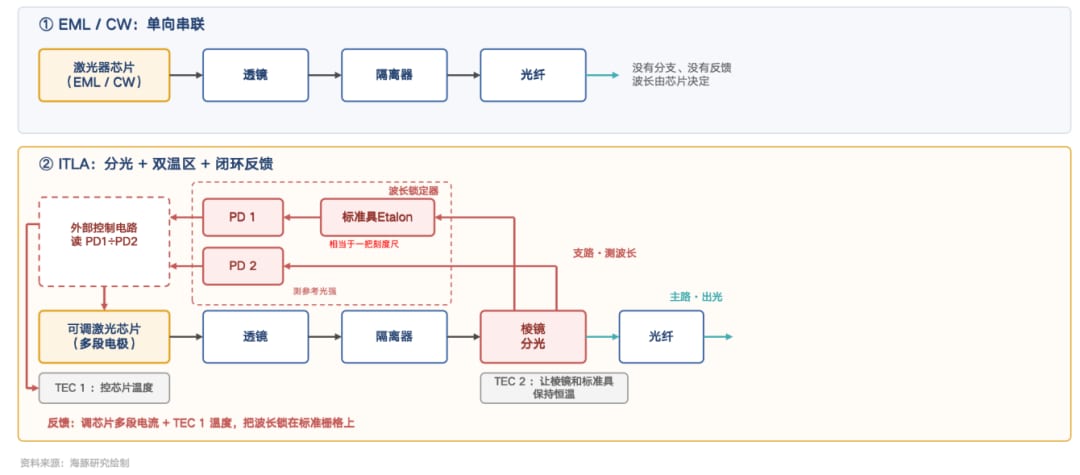
b. Full-wavelength calibration: As analyzed above, since EMLs and CW lasers operate only at a single fixed wavelength, the calibration logic is relatively simple. It is only necessary to calibrate single-point parameters such as drive current, output power, and extinction ratio at the target temperature to complete the calibration.
Coherent transmission, by contrast, uses dense wavelength division multiplexing (DWDM): a single fiber can carry dozens of signals simultaneously, each using a separate wavelength, with the wavelengths distinguished by extremely narrow spacing. The ITLA must therefore be able to switch on command among dozens, and in some cases nearly a hundred, channels across the entire C band.
To make the chip stably output the wavelength of a given channel, multiple control variables must be set simultaneously: the tuning amounts of the reflector section and phase section (injection current or heating power), the gain section current, and the chip temperature. These variables are interdependent, and their relationship with the output wavelength is not simply linear, so a single generic table cannot be applied to all chips.
Every ITLA must therefore undergo full-parameter calibration before shipment. This means sweeping through combinations of all control variables across the entire operating temperature range, recording the output wavelength and optical power for each parameter set, and generating a multidimensional control-parameter-to-wavelength mapping table that is written into the device memory. The calibration accuracy of this mapping table directly determines whether wavelength channel switching can lock on the first attempt. Insufficient calibration accuracy causes wavelength drift during channel switching and, in severe cases, channel crosstalk.
Taken together, the two process bottlenecks in ITLA - micro-packaging and full-wavelength calibration - are engineering challenges in manufacturing and testing, not problems at the chip design or materials level. The gap shows up mainly in yield, long-term stability, and calibration model accuracy, all of which can in theory be continuously improved as shipment volumes grow.
As a result, this segment has relatively many players: overseas, they include Lumentum, Coherent, Sumitomo Electric, and Fujitsu; in China, Huawei's system and Accelink Technologies have both developed their own ITLAs, with products supplied mainly to domestic carrier networks.
For Lumentum, from the standpoint of competitive barriers, its core advantage lies in long-standing, stable qualification in overseas equipment makers' supply chains (most Chinese vendors' reliability data is accumulated on domestic live networks, and overseas supply chains give it limited recognition). However, as coherent pluggable modules continue to gain penetration, and Chinese vendors progressively pursue overseas certification, Dolphin estimates that Lumentum's supply chain access advantage will gradually weaken.
2. Pump lasers - the "excitation light source" that energizes EDFA optical amplifiers
Coherent signals attenuate continuously during fiber transmission. If you compare this to a car on a long trip, the farther it goes, the less fuel it has, so it needs gas stations and fuel trucks.
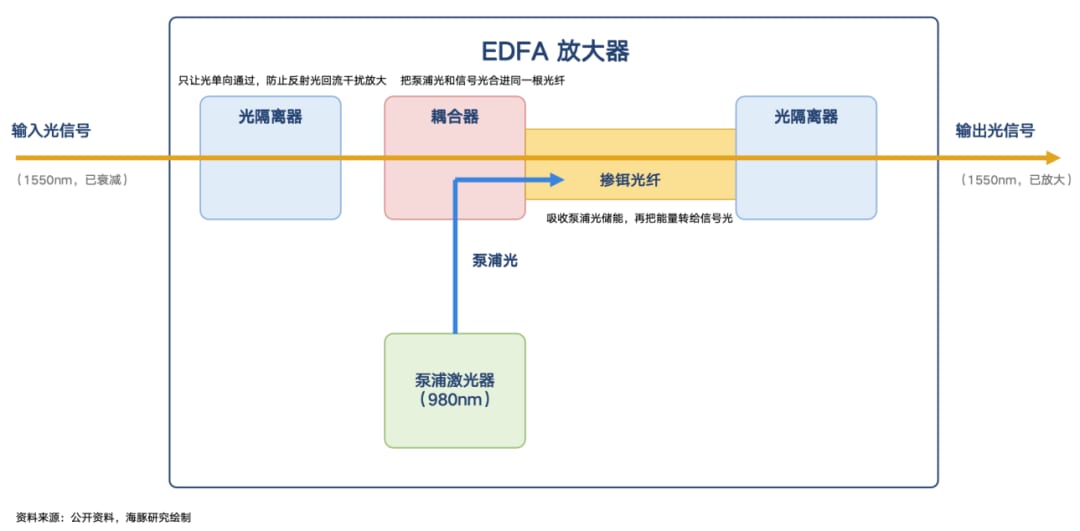
At this point, the EDFA (erbium-doped fiber amplifier, a special fiber doped with a small amount of erbium) is the gas station, while the pump laser is the fuel truck: pump light is injected into the fiber and absorbed by erbium atoms, which are effectively "refueled."
In this way, when the data-carrying C-band signal light passes through, the energy-filled erbium atoms are "triggered" by it and release light identical to the signal light, amplifying the signal.
As can be seen, the 980 nm pump laser is the energy light source. It carries no data and has little requirement for spectral purity, but the key is high power, because how strong a signal the amplifier can output depends on how much energy is fed into it.
For a laser to emit light, electrons must transition from a higher energy level back down to a lower energy level, releasing photons. The larger this energy-level gap, the greater the energy released.
This energy-level gap actually depends on the semiconductor material: the active light-emitting layer of a laser is grown layer by layer on a substrate through an epitaxial process. The choice of substrate largely determines the compatible light-emitting material system and the achievable wavelength range.
The EML, ITLA and CW lasers mentioned earlier all use C-band light and require an indium phosphide (InP) substrate. However, the 980 nm pump laser (the erbium ions in an EDFA can only absorb 980 nm and 1480 nm photons to store energy, and 980 nm is the mainstream choice for long-haul applications) can only be matched with a gallium arsenide (GaAs) material system.
With an understanding of this fundamental difference between substrate material systems, let us analyze the core technical barriers of pump lasers:
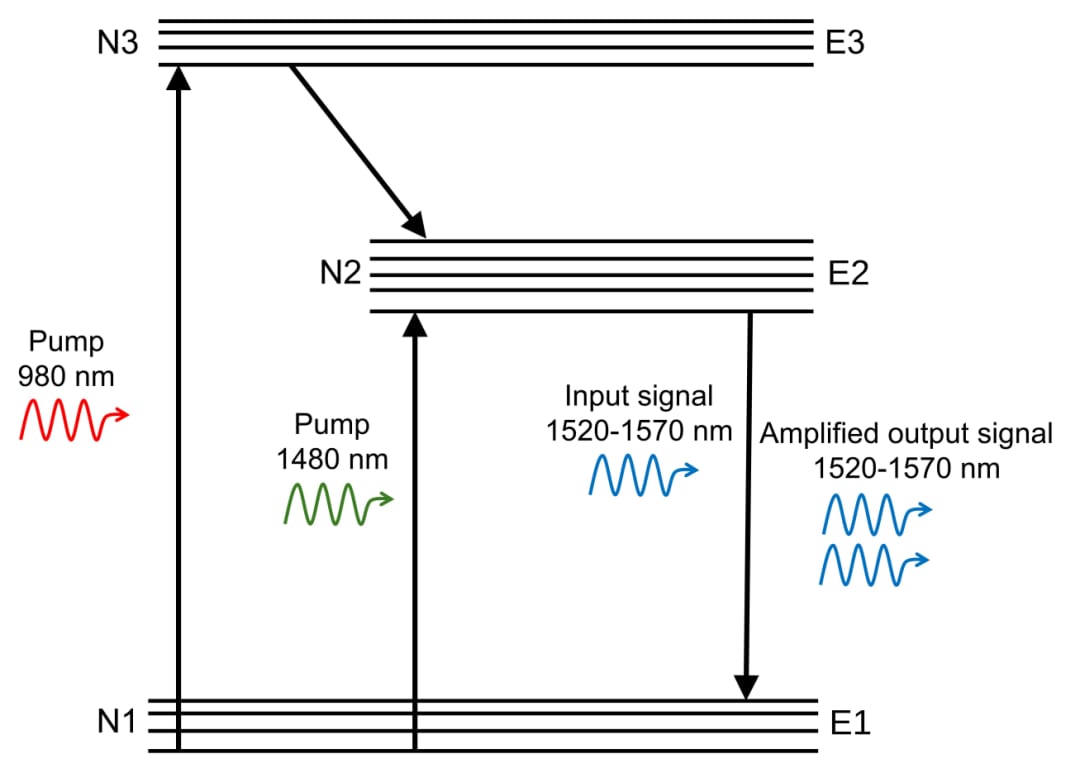
Source: Optica.ca, Energy level diagram of erbium ions in an erbium-doped fiber amplifier (EDFA)
Laser chips, after polishing, epitaxy and chip processing, are not cut like silicon photonics; instead, they are cleaved along the crystal lattice direction to achieve atomically flat edges. This is the optical chip cleaving step in production.
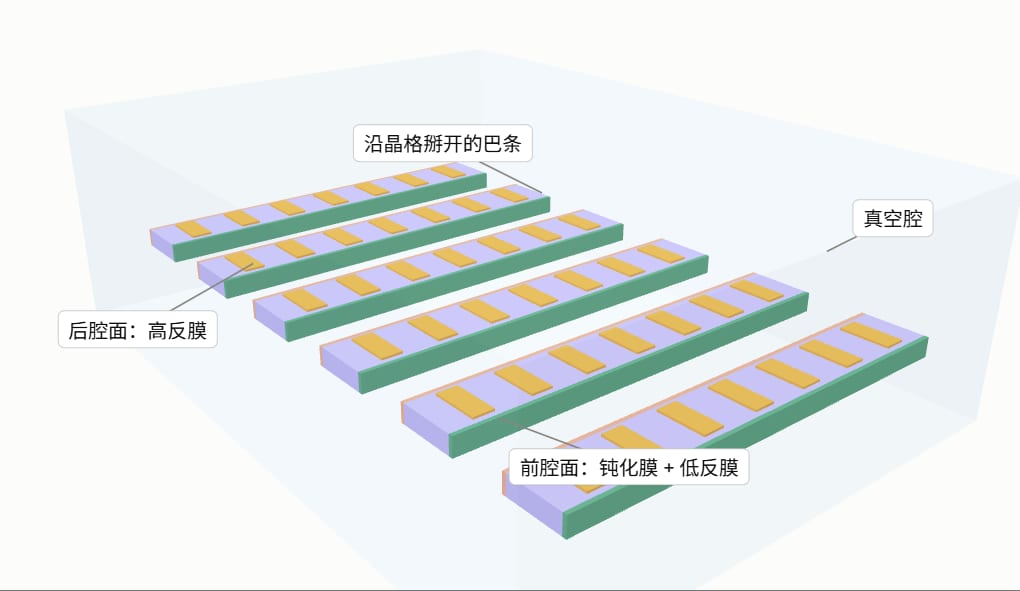
The "trick" is the exposed surface after cleaving: the laser cavity facet. Once cleaved, two major problems become urgent:
a. 980nm pump laser, which generates the energy light source. It delivers high intensity, but the output aperture is small, so the optical cavity facet bears high power stress and is easily damaged:
b. When gallium arsenide is used as the substrate material, gallium atoms are more reactive. In addition, the pump laser epitaxial material contains aluminum, which oxidizes rapidly after cleaving, causing defects on the exposed facets.
Oxidation absorbs light and generates more heat, locally melting the cavity facets and ruining the laser. This is known as catastrophic optical mirror damage (COMD).
The solution is to work in an ultra-high vacuum environment and deposit a protective film on the cavity facet to prevent oxidation, a process known as cavity facet passivation (the green layer in the figure below is the passivation film), isolating it from air.
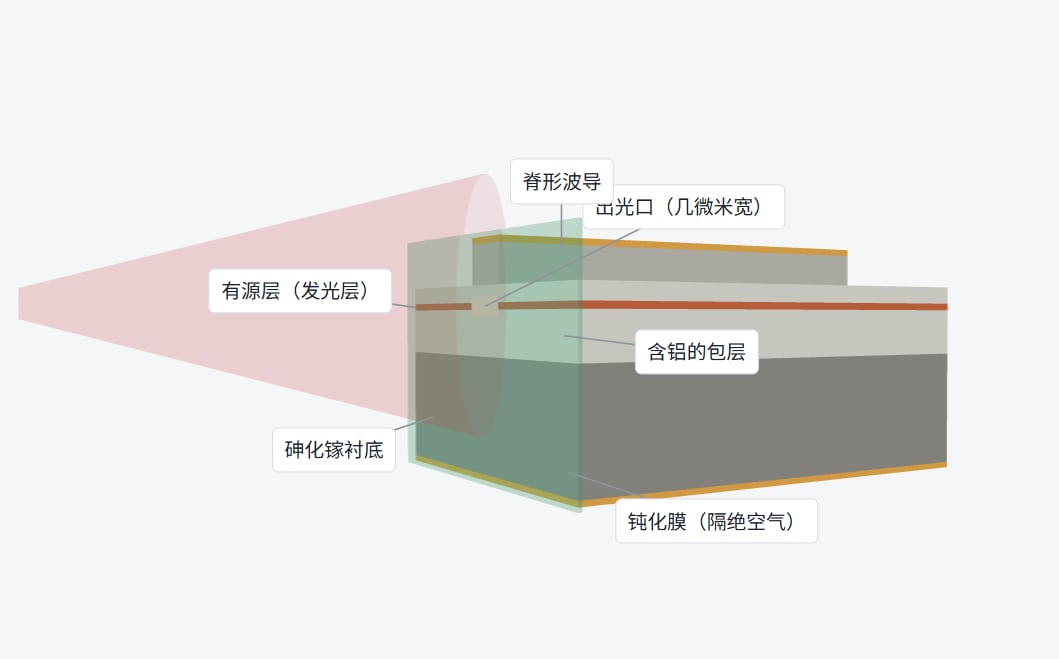
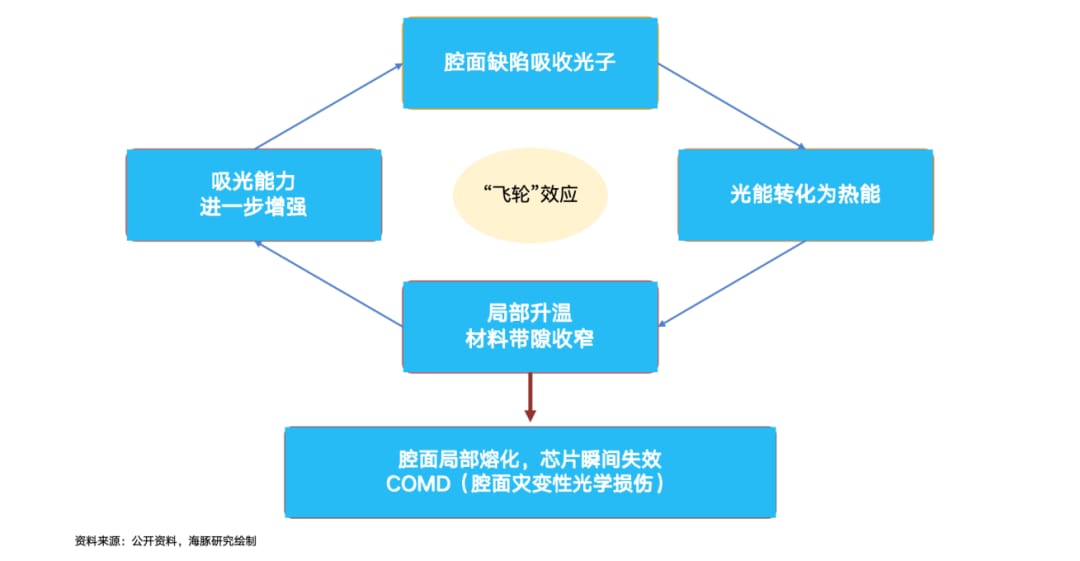
Unlike the micro-packaging of ITLAs, where both equipment and components can be purchased externally and the difference lies in packaging yield, cavity facet passivation is closer to materials and process know-how: the material and thickness of the passivation film, vacuum conditions, and the time interval from cleaving to coating. Each parameter determines the upper power limit the cavity facet can withstand, making the technical barrier higher.
Lumentum is at the industry's top level in cavity facet passivation technology. In addition to cavity facet passivation, it combines an absorption-free window structure inside the chip to eliminate absorption of laser light at the cavity facet, significantly raising the chip's power threshold against COMD catastrophic optical damage.
In terms of industry competition, telecom-grade 980nm pumps impose stringent requirements on beam wavelength stability and remain highly concentrated among a few overseas players: Lumentum (whose technology lineage traces back to former pump leader SDL), Coherent, and Furukawa Electric. According to Lumentum management on an earnings call, the company's share in this market is roughly 70%-80%, a near monopoly.
In addition to the two representative devices analyzed in detail above, Dolphin has compiled Lumentum's overall product line in coherent optics and its main competitors in the table below.
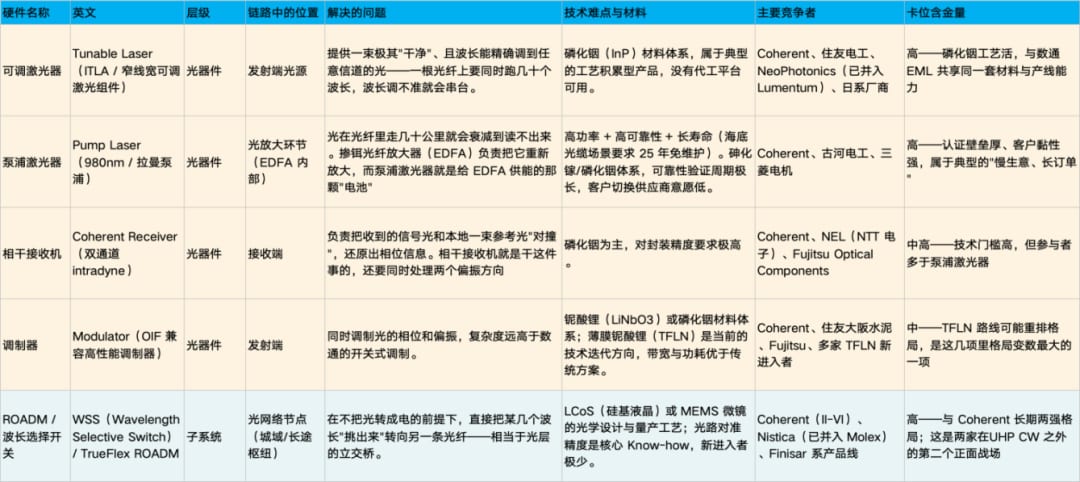
The table reveals a clear pattern: the closer to the underlying optical physics (light emission and amplification), the higher the market concentration (the core of these two stages is compound semiconductor material epitaxy and chip processes, where the technical barriers are clearly higher), while the further downstream toward modulation and systems, the more diverse and complex the competitive landscape becomes.
Overall, Lumentum's approach is to extend selectively downstream, integrating modules and components only in areas where it holds dominant control of core optical chips, such as 800ZR/1.6T ZR coherent optical modules and Nano-ITLA packaged assemblies. This delivers natural gross margin and supply assurance advantages while avoiding overcommitment in areas without optical chip barriers where it would have to compete head-on with DSP giants such as Broadcom and Marvell.
The telecom business currently generates $1.2 billion, accounting for nearly 40% of company revenue. According to research findings, the portion directly related to AI inter-campus interconnect is roughly $300 million (25%), while the remaining approximately $900 million comes from carriers' traditional demand and remains broadly stable.
In terms of timing, DCI coherent modules are transitioning from the currently widely deployed 400ZR (a coherent module with 400G per wavelength) to 800ZR.
According to Cignal AI, the broad trajectory is that 2026-2027 will be the period of volume ramp for 800ZR, with 1.6T ZR gradually entering commercial use from 2028 (the 1.6T ZR specification was released in September 2026, with sampling expected in 2027 and volume shipments in 2028). The value per light source is set for a second step-up.
At the current year-on-year shipment growth of 80%-130% (pump laser shipments up more than 80% year on year in the latest quarter, and narrow-linewidth tunable laser shipments up 130%), the explosive growth of AI inter-campus interconnect will drive the traditional telecom components segment into a second growth curve.
The analysis above makes it clear that whether it is the EML business serving as the profit foundation, the CW (including UHPCW) business adding incremental capacity-compute demand, or the DCI coherent business opening new growth space for the telecom segment through AI inter-campus interconnect, all ultimately compete for the same supply-constrained indium phosphide wafer capacity.
For Lumentum, with indium phosphide wafer supply constrained, maximizing earnings upside requires either continuously raising the value generated per indium phosphide wafer - prioritizing higher-value chips to maximize revenue and profit per wafer - or opening new business lines that consume no indium phosphide wafers, escaping the indium phosphide capacity ceiling at its root.
Let us continue the analysis:
3. Optical modules: from selling chips to selling modules, completing modular delivery capabilities
After acquiring Cloud Light in 2023, Lumentum gained the ability to deliver complete 800G/1.6T optical modules directly to cloud providers such as Google and AWS. The products still serve scale-out inter-rack connectivity, but the delivery format extends upward from optical chips to complete modules.
In terms of the competitive landscape, pluggable optical modules are a highly mature and intensely competitive market. According to the latest ranking released by LightCounting, seven of the world's top ten optical module makers come from China.
Chinese manufacturers hold significant advantages in capacity and manufacturing costs. This is also why Lumentum does not compete on capacity and cost to grab share in generic standardized SKUs, but focuses instead on high-speed, high-technology-barrier niche customized modules.
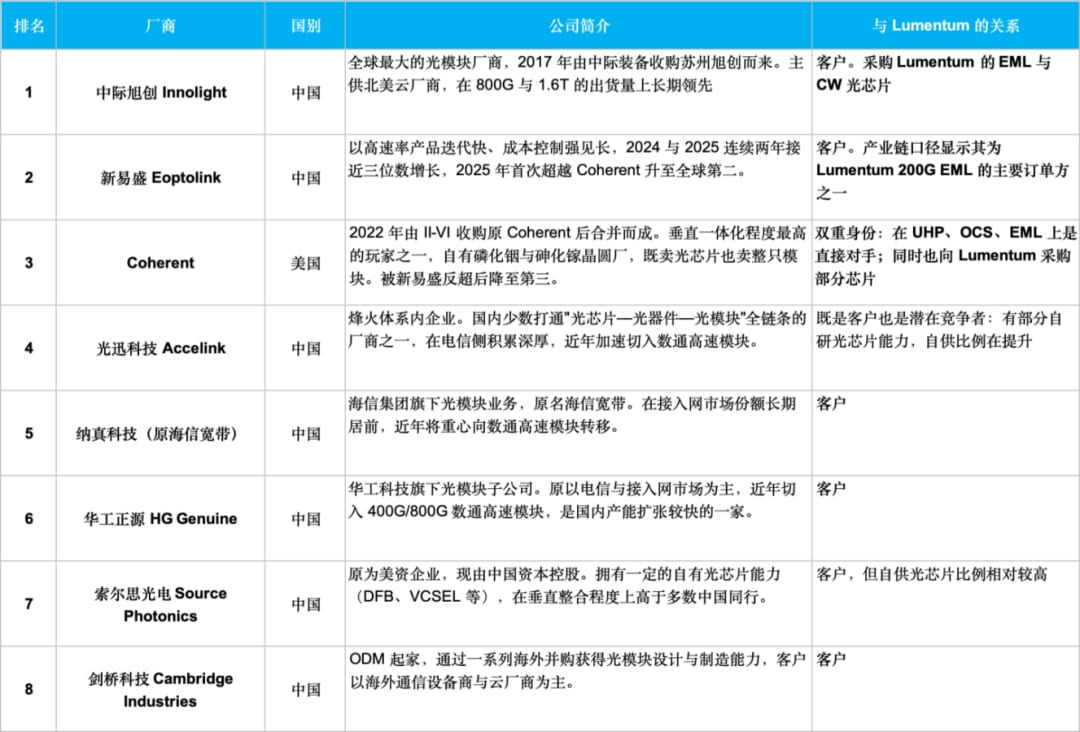
Based on the research, Lumentum currently generates about $720 million in annual optical module-related revenue, roughly 24% of the total, making it the company's largest single product line by revenue. However, its gross margin is only about 30%, clearly below the component businesses analyzed above.
The question is: since the pluggable module market is fiercely competitive and gross margins are low, why did Lumentum acquire Cloud Light? Dolphin Research sees two core reasons:
a. In-house proprietary light source integration improves module business profitability
Previously, Cloud Light purchased its lasers externally. The company is now gradually integrating its own CW lasers into its modules, with about 20% of modules currently using in-house light sources and that share expected to rise further. Increasing the proportion of self-supplied light sources allows the margin previously captured by external laser suppliers to be retained within the company, lifting gross margin in the module segment.
Given that the light source accounts for roughly 17%-18% of an optical module's selling price, a simple calculation shows that if Lumentum's in-house supply ratio rises from 20% to 50%, the module business's gross margin would improve by 3 percentage points.
b. Complete module-level packaging, full-system validation, and cloud-vendor system delivery qualifications to pave the way for NPO/CPO business
Based on information from the company's earnings call, some NPO and CPO project customers require suppliers to have subsystem and complete module delivery capabilities. If a supplier can only supply bare dies, even if its UHPCW chip performance meets the requirements, it cannot directly take on ELS complete-unit orders. Cloud Light's packaging, complete-unit testing, and cloud vendor certification capabilities close Lumentum's loop from chips to complete modules, effectively giving it an entry ticket into the ELS complete-unit supply chain.
4. OCS optical circuit switch: a bonus business enabled by technology reuse
Now for Lumentum's final business segment, OCS, an all-optical switch (replacing electrical switches at the data center SPINE layer) that delivers ultra-low latency and transparent transmission. For technical details, see "Challenging Nvidia's Dominance: What Makes Google's Optical Network So Special?".
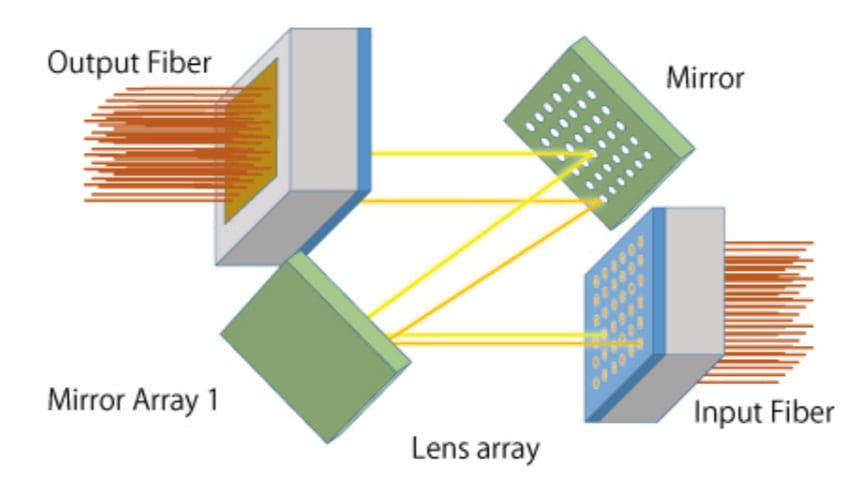
Why is Lumentum entering the OCS business? The reason is straightforward: it follows the same growth logic as DCI coherent components, both being reuse of Lumentum's existing technology.
The MEMS chip with hundreds of micromirrors in an OCS shares the same optical path routing technology used for two decades in wavelength selective switches (WSS) in telecom: both use micromirrors to precisely deflect light beams to designated ports. The difference is that WSS performs routing by wavelength, while OCS switches optical paths directly by physical port.
So when Google began replacing electrical switches with OCS optical switches on a large scale in its TPU clusters and needed an external supplier, Lumentum was one of the few vendors in the industry able to offer hundreds of ports, backed by decades of proven reliability of its underlying MEMS micromirror optical paths in live telecom networks.
In terms of the competitive landscape, five OCS approaches are currently competing: Lumentum's 3D-MEMS (micromirror deflection), Coherent's LCOS silicon-based liquid crystal solution (less than two years in commercial data center use), Polatis's piezoelectric ceramic approach, iPronics's silicon photonics (switching as fast as microseconds, but with limited port scalability), and Telescent's robotic fiber-switching solution. Dolphin will not go into the technical principles in detail here.
Based on current results, OCS technology routes have not yet fully converged. But if both hard requirements are met - hundreds of ports plus validated deployment in ultra-large-scale AI clusters - only the MEMS route has achieved implementation, and it has already passed large-scale validation in Google's TPU clusters.
Therefore, Lumentum's OCS advantage mainly comes from its first-mover position and large-scale live network validation. The technical barrier at the level of fundamental principles is not high; the core hurdles lie in mass production and cluster engineering validation.
In addition, the biggest risk for this business is that Google is currently Lumentum's largest OCS customer while also having in-house development capabilities, making it a potential competitor.
Further growth in the business will mainly depend on whether second-tier cloud providers such as Microsoft and Meta follow with large-scale deployments beyond Google. But so far only Google has completed large-scale deployment, while Microsoft, Meta, and AWS are all at the small-scale prototype validation stage and have not yet entered large-scale mass-production procurement.
Summary: The only all-scenario "water seller" in the optical connectivity industry
A review of the two articles shows that every evolution and expansion of the AI compute topology creates demand for Lumentum:
Horizontal scaling (scale-out, between racks): high-end EML laser chips defend the ultra-high-margin profit base of traditional pluggable optical modules;
Vertical density (scale-up, within racks): the rollout of next-generation CPO/NPO architectures, combined with UHP ultra-high-power CW chips, drives explosive growth;
Cross-region extension (scale-across, across campuses): to meet the distributed cluster demand driven by the "power bottleneck," coherent tunable light sources (ITLAs), pump lasers and ROADM/WSS capabilities originally used in telecom networks are redeployed for long-haul DCI links, giving existing assets a new lease on life;
Network topology (spine architecture layer): MEMS OCS optical circuit switches go straight after all-optical switching networks, opening a high-margin, high-volume second growth curve that consumes no indium phosphide wafers.
In other words, no matter which layer the AI optical connectivity network takes or how it evolves, Lumentum holds an indispensable position at the underlying level. In the next article, we will forecast the performance of each product segment and work out exactly what Lumentum is worth. Stay tuned!
<END>
- END -
// Reprint permission request
This article is original content from Dolphin Research. Please obtain authorization before republishing.
// Disclaimer and General Disclosure Notice
This report is for general aggregated data purposes only and is intended for general viewing and data reference by users of Dolphin Research and its affiliated institutions. It does not take into account the specific investment objectives, investment product preferences, risk tolerance, financial situation or special needs of any person receiving this report. Investors must consult an independent professional adviser before making any investment based on this report. Any person who makes an investment decision based on or with reference to the content or information mentioned in this report does so at their own risk. Dolphin Research accepts no liability or loss that may arise directly or indirectly from the use of the data contained in this report. The information and data contained in this report are based on publicly available sources and are for reference only. Dolphin Research strives for but does not guarantee the reliability, accuracy and completeness of the relevant information and data.
The information or views contained in this report shall not, in any jurisdiction, be treated as an offer to sell securities or an invitation to buy or sell securities, nor does it constitute any advice, solicitation or recommendation regarding the relevant securities or related financial instruments. The information, tools and data contained in this report are not for, or intended for, distribution to citizens or residents of any jurisdiction where such distribution, publication, provision or use would be contrary to applicable laws or regulations, or would subject Dolphin Research and/or its subsidiaries or affiliates to any registration or licensing requirements in that jurisdiction.
This report reflects only the personal views, opinions and analytical methods of the relevant authors and does not represent the position of Dolphin Research and/or its affiliated institutions.
This report is produced by Dolphin Research and the copyright is owned solely by Dolphin Research. Without the prior written consent of Dolphin Research, no institution or individual may (i) produce, copy, duplicate, reprint, forward or otherwise make any copies or reproductions in any form, and/or (ii) directly or indirectly redistribute or transfer the report to any other unauthorized person. Dolphin Research reserves all relevant rights.
Original title : Lumentum: Capacity Running Tight, What Other Signature Strengths Does the All-Round 'Water Seller' Have?
Source: OFweek Laser Network · News · laser.ofweek.com